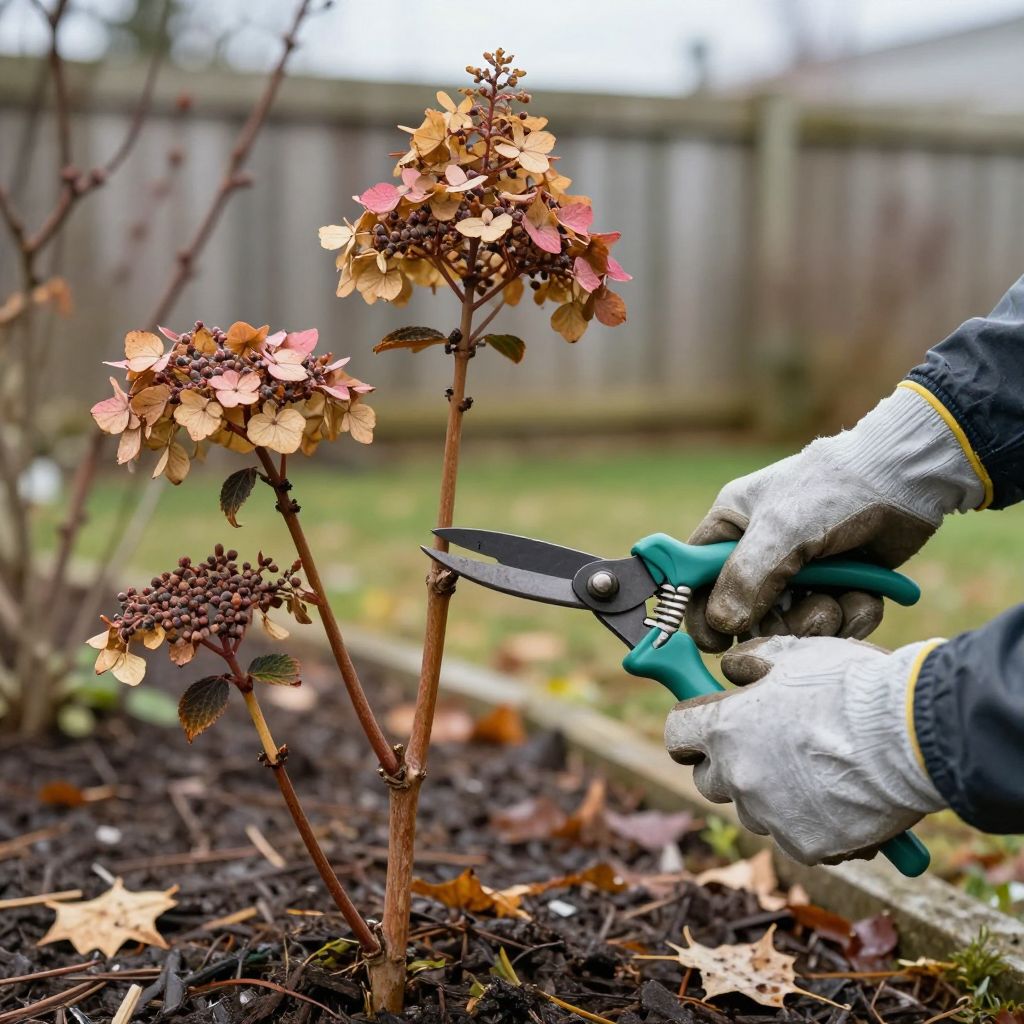
Wondering when to cut back hydrangeas for winter? The right timing depends on the type of hydrangea you grow, because some bloom on old wood and others on new wood. Pruning at the wrong time can remove next year’s flower buds, while leaving the right stems in place can protect the plant through cold weather.
In most gardens, the safest approach is to do only light cleanup in fall and wait until late winter or early spring for major pruning, unless you know your hydrangea blooms on new growth. The key is identifying your plant first, then pruning with the season and flower buds in mind.
When to cut back hydrangeas for winter?
For most hydrangeas, do not do a heavy cutback in fall. Leave the stems standing through winter and prune in late winter or early spring, after the worst cold has passed. If your hydrangea blooms on new wood, you can cut it back in late winter; if it blooms on old wood, only remove dead or damaged stems after flowering or in early spring.
Know which hydrangea you have before you prune
Timing depends on bloom type, not just the calendar. If you are unsure what you planted, look at the flower shape, stem thickness, and when it blooms.
Common hydrangea groups and pruning timing
- Bigleaf hydrangea (Hydrangea macrophylla) and oakleaf hydrangea (H. quercifolia): usually bloom on old wood, so prune lightly.
- Panicle hydrangea (H. paniculata): blooms on new wood, so it tolerates harder pruning in late winter or early spring.
- Smooth hydrangea (H. arborescens): also blooms on new wood and can be cut back more firmly before spring growth starts.
If you do not know the type, the safest winter strategy is to remove only dead wood, weak stems, and spent flower heads, then wait to see where new buds emerge in spring.
Why fall pruning can reduce blooms
Many hydrangeas form next year’s flower buds on stems that grew the previous season. If you cut those stems back in autumn, you may remove the buds before they ever open. That is why a “winter cleanup” should usually mean tidying, not reshaping.
What happens if you prune too early?
- You may lose flower buds on old-wood bloomers.
- Fresh cuts can be more vulnerable to winter injury in cold regions.
- Hard pruning can trigger tender new growth too late in the season.
In colder climates especially, leaving the stems in place can also offer some protection to the crown and buds. The dried flower heads are not essential, but the stems often help buffer the plant from harsh weather.
The best winter pruning approach by hydrangea type
Bigleaf and oakleaf hydrangeas
These are the hydrangeas most likely to disappoint if cut back hard in fall. After flowering, you can remove spent blooms and dead stems, but save major pruning for after winter or just after bloom, depending on your plant’s condition.
- Remove only dead, broken, or diseased wood in late winter.
- Do not shear the whole shrub into a neat shape.
- If needed, thin out a few of the oldest stems at the base to improve airflow.
Panicle and smooth hydrangeas
These bloom on current-season growth, so they are much more forgiving. You can cut them back in late winter, before buds swell, to encourage strong new stems and larger flower clusters.
- Cut stems back to a pair of healthy buds or to a sturdy framework, depending on plant size.
- Remove weak, crossing, or crowded stems.
- Keep the plant’s overall shape balanced, not flat-topped.
Important: Even with new-wood hydrangeas, wait until the coldest part of winter is mostly over. Pruning too early can expose fresh cuts to freeze damage in regions with severe winter weather.
How to cut back hydrangeas for winter, step by step
If your hydrangea only needs a light winter cleanup, keep the job simple and selective. Use clean, sharp pruners and work on a dry day if possible.
- Remove dead flower heads if they are damaged, moldy, or weighing down the stems.
- Cut out dead, broken, or diseased stems at the base or back to healthy wood.
- Thin a few crowded stems if the center is too dense.
- Leave healthy stems in place on old-wood bloomers.
- Rake up and discard diseased leaves or debris around the plant.
If you are pruning a panicle or smooth hydrangea in late winter, make each cut just above a healthy bud or node. Avoid leaving long stubs, which can die back and look messy.
What to do instead of hard pruning in fall
Many gardeners feel pressure to “clean up” the whole shrub before winter, but hydrangeas usually benefit more from restraint. A light touch keeps the plant healthier and helps preserve buds.
Better winter tasks than heavy pruning
- Add a 2- to 3-inch layer of mulch around the root zone, keeping it off the stems.
- Water deeply before the ground freezes if autumn has been dry.
- Remove fallen leaves that may harbor disease.
- Stake or loosely support large mophead-type shrubs if snow or ice is common.
Mulch is especially helpful for younger plants and for hydrangeas in exposed sites. It helps moderate soil temperature and reduce winter stress without interfering with next season’s growth.
How winter weather affects pruning timing
Your local climate matters. In mild regions, late winter pruning may happen earlier than in cold inland areas. In places with late hard freezes, it is often wise to leave stems until you are confident the worst cold has passed.
Adjust your timing to local conditions
- Mild climates: light cleanup can be done in fall, with major pruning delayed until late winter if needed.
- Cold climates: leave stems standing through winter and prune in early spring.
- Windy or snowy sites: keep stems longer for protection, but remove any that are cracked or bent.
If your hydrangea is in a container, it may be more exposed than one planted in the ground. Container-grown plants often need extra protection from freezing winds and should be pruned conservatively unless you know they bloom on new wood.
Common mistakes to avoid
Hydrangea pruning problems usually come from trying to make the shrub look tidy too soon. A few simple mistakes can cost you flowers for an entire season.
- Cutting everything back in fall on old-wood bloomers.
- Shearing like a hedge, which can remove buds and create weak growth.
- Pruning during a warm spell that encourages tender new shoots before winter.
- Ignoring dead or diseased wood, which can spread problems into spring.
- Using dull or dirty tools, which make ragged cuts and can spread disease.
Sanitize pruners if you are removing diseased stems, especially if you notice spotting, cankers, or dieback. Clean cuts heal better and reduce the chance of infection.
Signs your hydrangea needs more than winter pruning
Sometimes a plant that seems ready for a winter cutback actually has a bigger issue. Before pruning, check for damage or stress that may need a different fix.
Look for these problems
- Winter dieback: stems are brown and brittle, with no green tissue under the bark.
- Bud damage: buds are shriveled or blackened after a freeze.
- Poor drainage: yellowing leaves, weak growth, or root stress from soggy soil.
- Powdery mildew or leaf spots: especially if the plant was crowded or shaded.
If drainage is poor, pruning will not solve the problem. Hydrangeas need moisture, but they do not like sitting in waterlogged soil. Improving soil structure and drainage is often more important than cutting stems back.
How to keep hydrangeas healthy for next season
Winter pruning is only one part of hydrangea care. Strong plants bloom better and recover faster from seasonal stress.
Helpful growing conditions
- Plant in well-drained soil enriched with compost.
- Give morning sun and afternoon shade where summers are hot.
- Water deeply during dry spells, especially in the first year after planting.
- Keep mulch around the root zone to conserve moisture.
Healthy, well-sited hydrangeas usually need less pruning overall. When the plant is growing in the right light and soil, you can focus on selective cleanup rather than heavy shaping.
Quick seasonal guide: what to do and when
- After bloom: deadhead if desired, but avoid heavy pruning on old-wood types.
- Fall: remove only damaged or diseased wood and tidy the base lightly.
- Late winter to early spring: prune panicle and smooth hydrangeas more firmly; inspect old-wood types and remove dead growth only.
- After spring bloom: shape old-wood hydrangeas if they need it.
If you are ever unsure, the safest answer to when to cut back hydrangeas for winter is: wait. A little less pruning is usually better than losing next year’s flowers.
For more practical seasonal care, you may also want to read about how to prune flowering shrubs without losing blooms and mulching tips for protecting plants in winter.