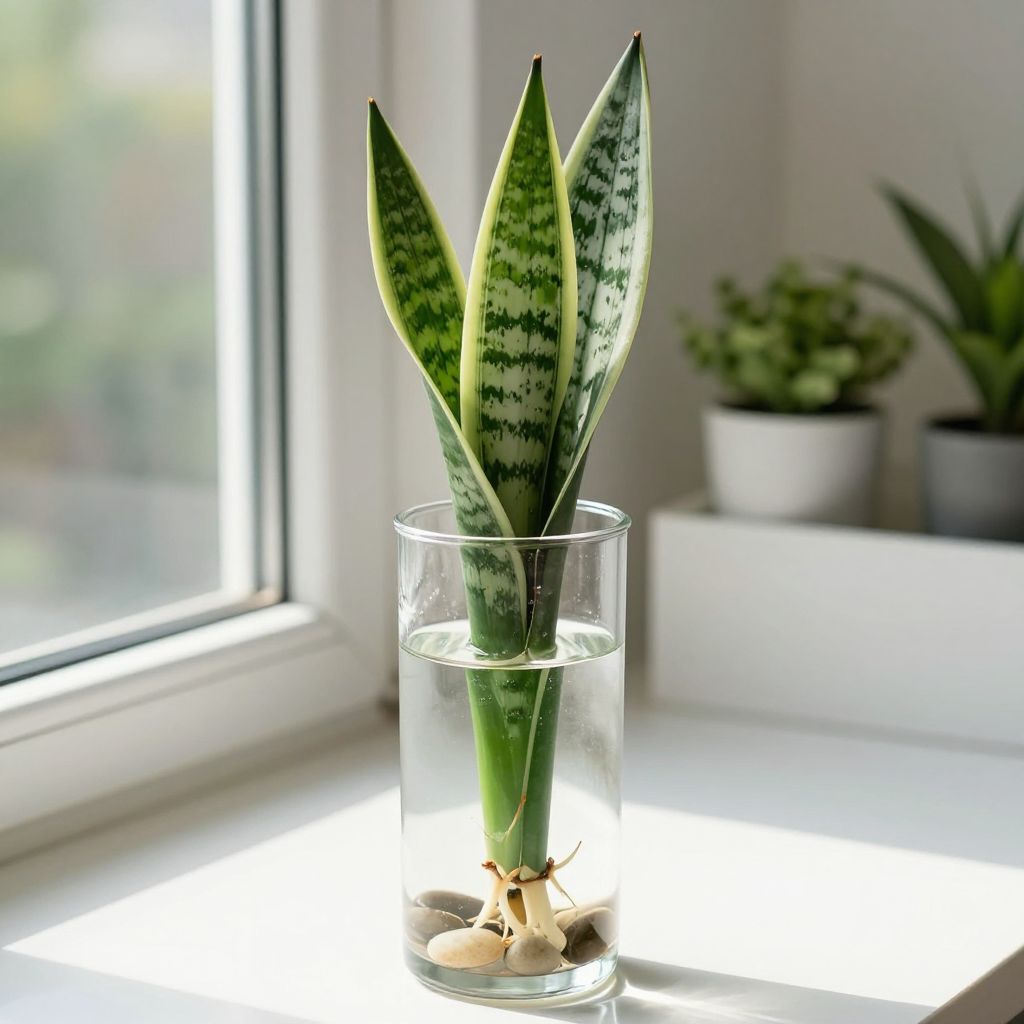
Can snake plants live in water? Yes, they can—at least for a long time, and often very successfully as a low-maintenance houseplant. Snake plants, or Dracaena trifasciata (formerly Sansevieria), can grow in water for propagation, display, or even semi-permanent indoor culture if you keep the water clean and the roots healthy.
The key is understanding that water-grown snake plants behave differently from soil-grown ones. They need bright indirect light, stable conditions, and regular monitoring to prevent rot, algae, and weak growth.
Can snake plants live in water?
Yes. Snake plants can survive and grow in water, especially when started from a leaf cutting or a division with roots. They usually grow more slowly than in soil, and they do best in clean water, indirect light, and a container that supports the roots without submerging the crown.
How snake plants grow in water
Snake plants are naturally drought-tolerant succulents, so they are adapted to storing moisture in their leaves and roots. In water culture, the plant can form water roots and continue growing, but it will not behave exactly like a soil-grown plant.
What to expect from water-grown snake plants
- Slower growth than in a well-draining potting mix.
- More frequent monitoring for rot and algae.
- Cleaner indoor display if the water is changed regularly.
- Less risk of underwatering, but a greater risk of over-submerging the plant.
For many home gardeners, water culture is best for propagation or for keeping a small plant attractive indoors. It is usually not the best choice if you want the fastest, fullest growth.
Best way to grow a snake plant in water
If you want to try water growing, start with a healthy leaf cutting or a division with some roots attached. Use a glass, vase, or jar that holds the plant upright and keeps only the roots or the very bottom of the cutting in water.
Step-by-step setup
- Choose a healthy leaf or a rooted division with no soft, mushy areas.
- Use a clean container with a narrow opening or support stones to hold the plant upright.
- Add room-temperature water so only the roots or lowest portion of the cutting touch the water.
- Place the container in bright, indirect light.
- Change the water every 1 to 2 weeks, or sooner if it looks cloudy.
Do not let the leaf base sit deeply in water. That is one of the fastest ways to trigger rot.
Water vs. soil: which is better?
Snake plants generally do better long-term in soil, but water growing can work well for certain situations. The best choice depends on your goal, your indoor conditions, and how much maintenance you want to do.
Choose water if you want:
- A decorative indoor plant in a vase or jar.
- A simple way to root a cutting.
- To observe root growth easily.
- A low-mess option for a desk, shelf, or windowsill.
Choose soil if you want:
- Faster, sturdier growth.
- Less frequent maintenance.
- A lower risk of root rot.
- A plant that can eventually become larger and fuller.
If your goal is long-term vigor, a fast-draining potting mix is usually the safer option. If your goal is a manageable indoor display or propagation, water can be a practical choice.
Light, temperature, and placement
Snake plants in water still need the right environment. Light affects growth rate and leaf color, while temperature affects how quickly the plant uses water and how likely rot is to develop.
Ideal growing conditions
- Light: bright, indirect light is best.
- Temperature: normal indoor temperatures are usually fine.
- Placement: away from cold drafts, heating vents, and harsh direct sun.
Direct sun through glass can overheat the container and encourage algae. Low light will not usually kill a snake plant quickly, but growth will be slower and weaker.
How to keep water-grown snake plants healthy
Clean water and good hygiene matter more in water culture than in soil. Since there is no potting mix to buffer mistakes, you need to watch the roots and water quality closely.
Maintenance checklist
- Replace the water regularly, especially if it becomes cloudy or slimy.
- Rinse the container when changing water to remove algae and residue.
- Trim off any black, mushy, or foul-smelling roots with clean scissors.
- Keep the crown and leaf base above the waterline whenever possible.
- Use clean tools to avoid introducing bacteria or fungi.
Some gardeners add a small amount of liquid fertilizer to water-grown plants, but that should be done cautiously. Too much fertilizer can burn roots or encourage algae. If you fertilize at all, use a very diluted houseplant fertilizer and only occasionally, not every time you change the water.
Common problems and how to fix them
Most issues with snake plants in water come from excess moisture, poor light, or dirty water. Catching problems early gives you the best chance of saving the plant.
Yellowing or soft leaves
This often means rot has started, especially if the base feels mushy. Remove the plant, cut away damaged tissue, let the healthy part dry briefly, and restart it in fresh water with less submersion.
Cloudy water or bad smell
Cloudy, smelly water usually means bacteria are building up. Empty the container, wash it well, and refill with fresh water. If the roots are slimy, trim the damaged parts before returning the plant to the container.
Algae in the container
Algae grows when light hits standing water. Use an opaque or tinted container, move the plant out of direct sun, and clean the vessel more often.
Wrinkled or stalled growth
Snake plants in water may grow slowly, but if they look stressed, check for poor light, cold temperatures, or root damage. Healthy roots should look firm, not black and mushy.
Can you root a snake plant cutting in water?
Yes, and this is one of the most common ways to use water with snake plants. Leaf cuttings can form roots in water before being potted up or kept in water longer term.
Propagation tips that improve success
- Use a healthy leaf with clean cuts.
- Let the cut end dry for a short time before placing it in water if the cutting is fresh.
- Keep the water level low enough that only the bottom portion is submerged.
- Be patient; rooting can take several weeks or longer.
One important note: leaf cuttings may root well but produce new growth slowly, and some cuttings may not keep the exact leaf pattern of the parent plant. If you want a faster, more reliable clone, a division with roots is often better than a single leaf cutting.
When to move a water-grown snake plant to soil
You do not have to move a snake plant to soil, but many gardeners eventually do because soil supports stronger long-term growth. If you decide to transition, do it carefully so the roots can adjust.
Signs it may be time to pot it up
- The plant has outgrown the container.
- Roots are crowded or difficult to keep submerged correctly.
- Growth has slowed and the plant looks weak.
- You want a more permanent, lower-maintenance setup.
To transition, use a pot with drainage holes and a gritty, well-draining mix suitable for succulents or cacti. Water lightly at first, then allow the mix to dry before watering again.
Best containers and tools for water culture
The right container makes water-grown snake plants easier to manage. A stable vessel reduces tipping, and a clean surface makes it easier to spot root problems early.
Useful supplies
- A glass jar, vase, or narrow-neck container
- Clean scissors or pruning snips
- Fresh water at room temperature
- Optional pebbles or glass stones for support
- A soft cloth or brush for cleaning the container
A narrow opening is especially helpful because it supports the plant and limits how much of the base can slip below the waterline.
Is water growing right for every snake plant?
Not always. Some plants adapt beautifully, while others decline if they were already stressed, damaged, or poorly rooted. A healthy plant with firm tissue and active roots is the best candidate.
If your snake plant is already struggling from rot, pests, or severe leaf damage, water culture may not be the best rescue method unless you first remove all affected tissue and start with clean, healthy material. In many cases, a fresh division or healthy cutting gives better results than trying to save a failing plant whole.
Final takeaways
Can snake plants live in water? Yes, they can, especially for propagation, display, or moderate-term indoor growing. The main rules are simple: keep the water clean, avoid submerging the crown, provide bright indirect light, and watch closely for rot.
If you want to try it, start with one healthy cutting or division and a clean glass container. For more houseplant care ideas, you may also want to read about houseplant care basics and succulent watering tips.