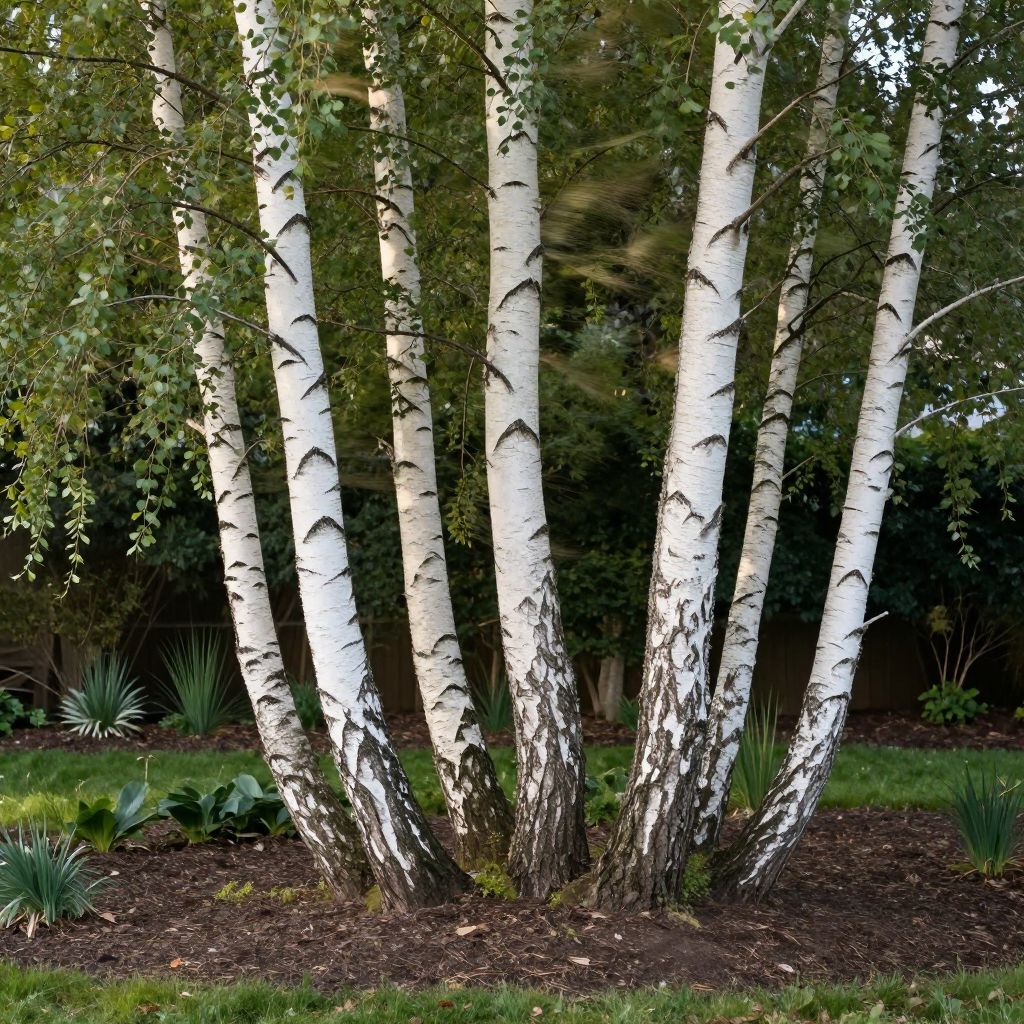
Are you wondering what trees have white bark and how to choose one for your garden? White-barked trees can add striking year-round contrast, brighten shady corners, and create a clean focal point in the landscape. The best-known examples are birches, but several other trees also have pale or peeling bark.
Not every white trunk is the same, though. Some trees have naturally bright bark, while others develop lighter bark as they mature or after shedding older layers. Knowing the species, site conditions, and maintenance needs helps you pick a tree that looks good and stays healthy.
What trees have white bark?
Several trees are known for white or pale bark, especially birches such as paper birch (Betula papyrifera) and river birch (Betula nigra). Other good examples include white poplar (Populus alba), Himalayan birch (Betula utilis var. jacquemontii), and some eucalyptus and sycamore species depending on climate and age.
Common white-barked trees to know
Birches
Birches are the classic white-barked trees for home gardens. Their bark may be bright white, creamy white, or white with dark markings, and many species have attractive peeling bark that adds winter interest.
- Paper birch (Betula papyrifera) — famous for its chalky white bark that peels in thin layers.
- Himalayan birch (Betula utilis var. jacquemontii) — often prized for especially white bark and a graceful habit.
- River birch (Betula nigra) — usually more heat-tolerant than many birches; bark can be tan, cinnamon, or creamy white and peels attractively.
White poplar
Populus alba has pale bark and silvery leaves that shimmer in the wind. It can be useful for quick shade or screening, but it is a vigorous tree and may not suit small gardens.
Sycamore and plane trees
Some sycamores and plane trees develop pale, patchy bark that can look white, cream, or mottled. These are often large trees, so they work best where you have room for mature spread and root growth.
Eucalyptus
Several eucalyptus species have smooth, pale bark that sheds in strips or patches. They are best suited to mild climates and well-drained soil, and they can become large very quickly.
Other trees with pale bark
- Aspens and some poplars can have light gray to whitish bark.
- Serviceberry and some ornamental cherries may have attractive pale bark, though not usually pure white.
- Beech trees can develop smooth, light gray bark that reads as pale from a distance.
How to choose the right white-barked tree for your garden
Start with your climate, soil, and available space. A tree that looks beautiful in a catalog may struggle if your garden is too hot, too dry, too wet, or too small for its mature size.
- For cool climates: birches are often the best fit, especially paper birch and Himalayan birch.
- For warmer gardens: river birch is usually a better choice than many other birches.
- For large spaces: white poplar, sycamore, or some eucalyptus species may work if they suit your region.
- For small gardens: choose a smaller ornamental tree or a compact birch selection rather than a fast-growing giant.
Also think about the bark effect you want. Some trees are white all year, while others look pale only on young trunks or after bark sheds. If winter color matters most, choose a species known for strong bark contrast.
Growing conditions white-barked trees usually need
Sunlight
Most white-barked trees grow best in full sun to light shade. Good light helps them develop a strong shape and can improve bark color and overall vigor.
Soil and drainage
Well-drained soil is important for many of these trees, especially birches. They often prefer evenly moist soil that does not stay soggy, while some species like eucalyptus need excellent drainage to avoid root problems.
Moisture
Many white-barked trees dislike drought stress, especially when young. A 5–8 cm layer of mulch helps conserve moisture, cool the roots, and reduce competition from grass.
Important: Avoid piling mulch against the trunk. Keep it a few centimeters away from the bark to prevent rot and pest issues.
How to plant a white-barked tree
- Choose a site with enough room for the tree’s mature height and spread.
- Dig a hole only as deep as the root ball and about 2 to 3 times as wide.
- Loosen circling roots gently if the tree is container-grown.
- Set the tree so the root flare sits at or slightly above soil level.
- Backfill with native soil unless your soil is extremely poor; excessive compost in the planting hole can create drainage problems.
- Water thoroughly to settle the soil around the roots.
- Apply mulch in a wide ring, keeping it off the trunk.
If your soil is heavy clay, improve drainage by planting slightly high or choosing a species that tolerates wetter ground, such as river birch. If your soil is sandy, expect to water more often until the tree is established.
Watering and feeding tips
Newly planted trees need regular moisture while roots establish, but the exact schedule depends on weather, soil type, and season. In general, water deeply when the top few centimeters of soil begin to dry, then let the soil partially dry again before watering.
- Water slowly so moisture reaches deeper roots.
- Check soil with your finger rather than watering by the calendar alone.
- Reduce watering in cool, wet periods.
- Increase watering during heat, wind, or drought.
Most healthy trees do not need heavy fertilizing. If growth is weak and a soil test shows a deficiency, correct the specific problem rather than applying fertilizer blindly. Too much nitrogen can create weak growth and make the tree more vulnerable to stress.
Pruning white-barked trees without ruining the look
Prune lightly and with purpose. The bark is part of the ornamental value, so avoid unnecessary cuts that scar the trunk or create awkward branch stubs.
- Remove dead, damaged, or crossing branches first.
- Prune during the dormant season for many deciduous trees, unless your local climate or species suggests otherwise.
- Use clean, sharp tools to make smooth cuts.
- Do not top the tree; this weakens structure and spoils the natural form.
Young birches and other pale-barked trees often look best with a single, clear trunk and well-spaced scaffold branches. If you want that elegant look, start shaping early rather than waiting until the tree is large.
Common problems with white-barked trees
Sunscald and bark splitting
Thin-barked trees can suffer sunscald in winter, especially on exposed trunks. Young trees may benefit from trunk protection in cold, sunny climates, such as a breathable tree wrap or white trunk guard used correctly and removed when no longer needed.
Heat and drought stress
Birches often decline in hot, dry sites. If your summers are intense, choose a more tolerant species such as river birch and keep the root zone mulched and evenly moist.
Pests and diseases
Stressed trees are more likely to attract borers, aphids, leaf miners, or fungal diseases. Good site selection, proper watering, and avoiding trunk injury are your best defenses.
Dirty or peeling bark
Some white bark naturally flakes or peels, which is part of the appeal. However, if bark looks blackened, soft, oozing, or damaged in patches, inspect for injury or disease rather than assuming it is normal.
How to use white-barked trees in landscape design
White bark stands out best against dark evergreens, brick walls, shaded backgrounds, or winter snow. A single tree can brighten a corner, while a small grove creates a dramatic, layered effect.
- Plant near evergreen shrubs for strong contrast.
- Use as a focal point where the trunk is visible from windows or paths.
- Group several birches for a woodland feel.
- Leave enough open space so the bark can be seen clearly.
Because white-barked trees often have seasonal interest beyond flowers or fruit, they are especially useful in gardens that need structure in winter. Their trunks can become a major design feature even when the tree is leafless.
Best practices for long-term success
- Match the species to your climate before buying.
- Choose a site with the right sun and drainage.
- Mulch properly and keep the root zone evenly moist.
- Prune only when necessary and avoid damaging the trunk.
- Watch for stress early, especially during heat or drought.
If you’re still deciding which tree is right for your yard, start by identifying your space, soil, and climate, then compare a few white-barked options that fit those conditions. For more help choosing a tree, see this guide to identifying tree types.