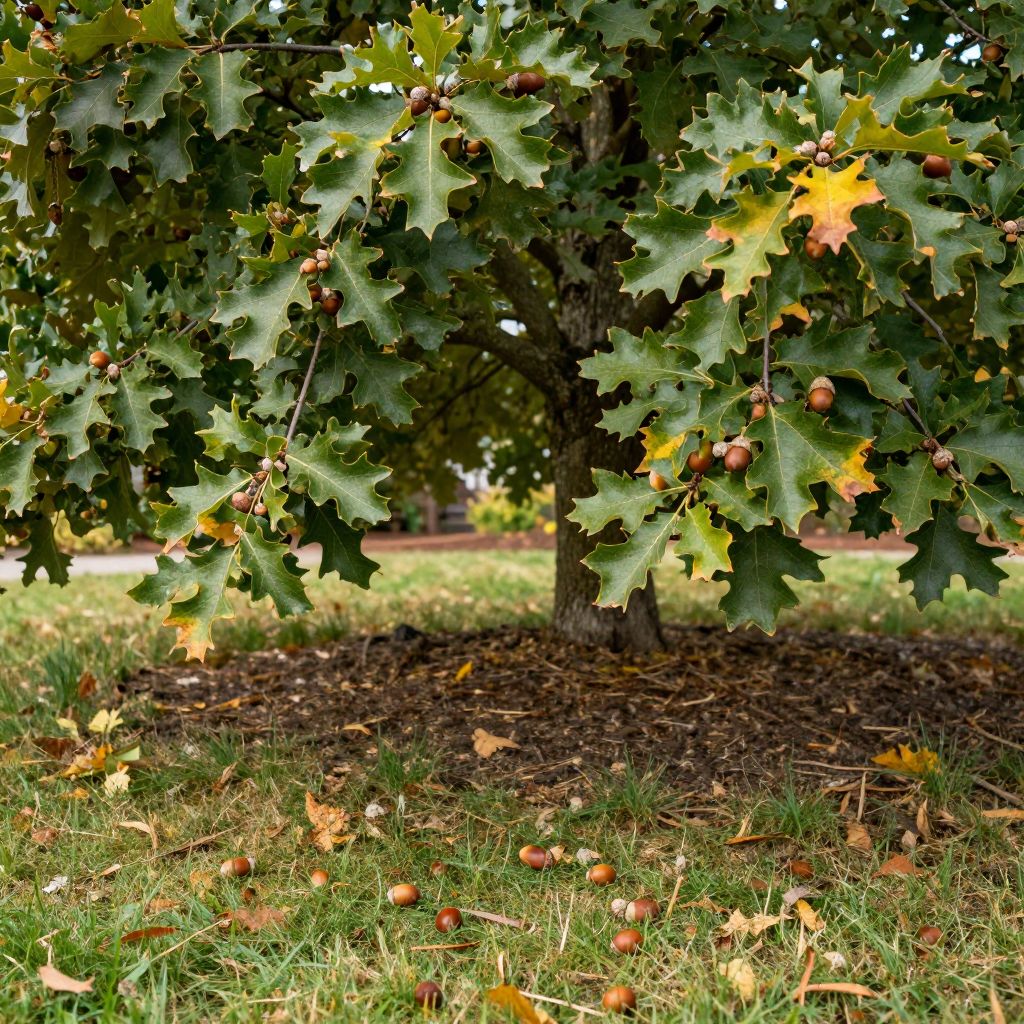
If you’re asking, “What tree drops acorns?” the short answer is that acorns come from oak trees, which belong to the genus Quercus. If you’re finding acorns in your yard, you likely have one or more oaks nearby, even if the tree is off your property or overhanging from a neighbor’s lot.
Acorn drop is a normal part of the oak life cycle, but the amount can vary a lot from year to year. Understanding which oak you have, how it grows, and what to do about fallen acorns can help you manage cleanup and decide whether the tree is a good fit for your landscape.
What tree drops acorns?
Acorns are the nuts produced by oak trees (Quercus species). Both red oaks and white oaks drop acorns, though the timing, size, and quantity can differ by species and by year. If you see acorns, look for lobed leaves, furrowed bark, and a spreading canopy to confirm an oak tree.
How to tell if the acorns are coming from your tree
Sometimes the source is obvious, but in many yards acorns fall from a tree several feet or even farther away. Wind, slope, and rooflines can also move them around, making it look like one tree is responsible when another is actually the source.
Signs you have an oak tree
- Leaves with lobes rather than smooth edges, though the exact shape depends on the species.
- Acorns with a cap-like cupule at one end.
- Rough, ridged bark on mature trees.
- Broad, spreading canopy that casts deep shade.
Common oak groups that drop acorns
- White oaks often produce rounder lobes on leaves and typically mature acorns in one season.
- Red oaks usually have pointed leaf lobes and often take two seasons to mature acorns.
If you are unsure which oak you have, compare the leaves, bark, and acorns together. A tree identification guide can help you narrow it down without guessing.
Why oak trees drop so many acorns
Oaks do not produce the same amount of acorns every year. Many trees follow a pattern of heavy crops in some years and lighter crops in others, which is a normal reproductive strategy rather than a sign of poor health.
A heavy acorn year can happen after favorable weather, when the tree has enough energy to produce a large seed crop. In lean years, you may see far fewer acorns, even on the same tree.
Factors that affect acorn production
- Tree age: mature oaks produce more acorns than young trees.
- Weather: spring frosts, drought, or prolonged rain can reduce production.
- Species: some oaks are more prolific than others.
- Pollination: acorn set depends on successful pollination, which can vary by season.
Should you worry if your tree is dropping acorns?
In most cases, no. Normal acorn drop is expected from a healthy oak tree. It becomes a concern only if the tree also shows signs of stress, such as thinning leaves, dead branches, bark damage, or a sudden change in overall vigor.
If acorn production seems unusually sparse or excessive compared with past years, look at the whole tree and its growing conditions before assuming there is a problem. Soil compaction, root damage, drought stress, or disease can affect fruiting.
When to inspect the tree more closely
- Leaves are smaller than usual or drop early.
- Major branches are dying back.
- The trunk has cracks, cankers, or oozing areas.
- Acorns are malformed, insect-damaged, or falling before they mature.
How to manage fallen acorns in the yard
Fallen acorns can make lawns slippery, attract wildlife, and create a messy surface under the tree. The best cleanup method depends on how many acorns have dropped and whether you want to keep the area usable for walking, mowing, or play.
Practical cleanup methods
- Rake or blow them into piles for easier collection.
- Use a lawn vacuum or bagging mower for heavy drops on turf.
- Pick them up regularly before they sprout.
- Compost only healthy acorns if you do not want volunteers, but be aware that some may still germinate.
Mowing tips
If acorns are scattered across the lawn, mowing can help break them up, but it will not remove them completely. Use a mower with a bagging attachment if you want the cleanest result, and avoid mowing when the ground is wet and slippery.
How to prevent unwanted seedlings
- Remove acorns promptly after they fall.
- Mulch beds with a layer deep enough to reduce germination.
- Pull seedlings while they are small and the soil is moist.
Can you plant acorns on purpose?
Yes. Healthy acorns can be used to grow new oak trees, though not every acorn will sprout. If you want to propagate an oak, collect fresh acorns from the current season and choose plump, undamaged ones.
Simple acorn propagation steps
- Collect acorns soon after they fall.
- Discard any with holes, cracks, mold, or obvious damage.
- Test viability by placing them in water; many sound acorns sink, while many poor ones float.
- Plant them in a pot or outdoor nursery bed with well-drained soil.
- Cover lightly with soil, keeping the planting depth modest.
- Water so the soil stays evenly moist, not soggy.
Young oak seedlings develop a strong taproot, so use a deep container if starting them in pots. Transplant carefully, because root disturbance can set them back.
Growing conditions oak trees prefer
Most oaks grow best in full sun and well-drained soil, though some tolerate partial shade when young. Once established, many oaks are drought-tolerant, but they still perform better with deep, infrequent watering during dry periods.
Soil and drainage
Oaks generally dislike waterlogged soil. If your yard stays wet after rain, improve drainage where possible or choose a site better suited to the tree’s needs. Compacted soil around roots can also reduce vigor and affect acorn production.
Watering young vs. mature oaks
- Newly planted oaks need regular watering while roots establish.
- Mature oaks usually need less frequent watering, but may benefit from deep soaking during prolonged drought.
Avoid shallow, frequent watering that keeps the surface damp but does not encourage deep roots. Deep roots help the tree handle heat and dry weather more effectively.
Pruning and maintenance tips for oak trees
Pruning can improve structure, but it should be done carefully. Remove dead, damaged, or crossing branches, and avoid heavy pruning that stresses the tree or changes its natural form too much.
Good pruning practices
- Use clean, sharp tools.
- Make cuts just outside the branch collar.
- Remove only what is needed for safety or structure.
- Do not top the tree.
If you are pruning a large oak near buildings or power lines, hire a certified arborist. Large cuts can invite decay and create long-term problems.
Common pests and diseases that can affect acorn production
Several pests and diseases can reduce acorn quality or cause early drop. Not every fallen acorn is a sign of disease, but repeated damage may point to an issue worth investigating.
Problems to watch for
- Weevils can damage acorns from the inside, leaving small exit holes.
- Fungal diseases may affect leaves, twigs, or developing fruit.
- Stress from drought or root damage can reduce the tree’s ability to set acorns.
If you notice widespread leaf spotting, branch dieback, or many damaged acorns, consult a local extension service or arborist. Local conditions matter, and diagnosis is often easier when someone can inspect the tree in person.
Landscape considerations before planting an oak
Oaks are excellent shade trees, but they are not small-yard plants. Before planting one, think about mature size, root spread, leaf litter, and the seasonal drop of acorns and twigs.
Best uses in the landscape
- Large shade areas
- Wildlife-friendly yards
- Windbreaks and shelterbelts
- Long-term canopy trees in spacious lawns
Do not plant an oak too close to sidewalks, driveways, septic systems, or foundations. Mature roots and canopy spread can create maintenance problems later.
Common mistakes to avoid
- Assuming every round nut is an acorn; some other trees produce similar seeds.
- Ignoring the tree’s overall health and focusing only on the acorns.
- Overwatering mature oaks, especially in poorly drained soil.
- Planting in cramped spaces without considering mature size.
- Leaving acorns on the ground too long if you want to prevent seedlings.
Conclusion
If you’re wondering what tree drops acorns, the answer is an oak tree. From there, the next step is to identify the oak, check whether the tree is healthy, and decide whether you want to manage fallen acorns, encourage seedlings, or simply enjoy the wildlife they attract.
For more help identifying trees in your yard, you may also find what type of tree is this? useful when you want to narrow down the species before making pruning or planting decisions.