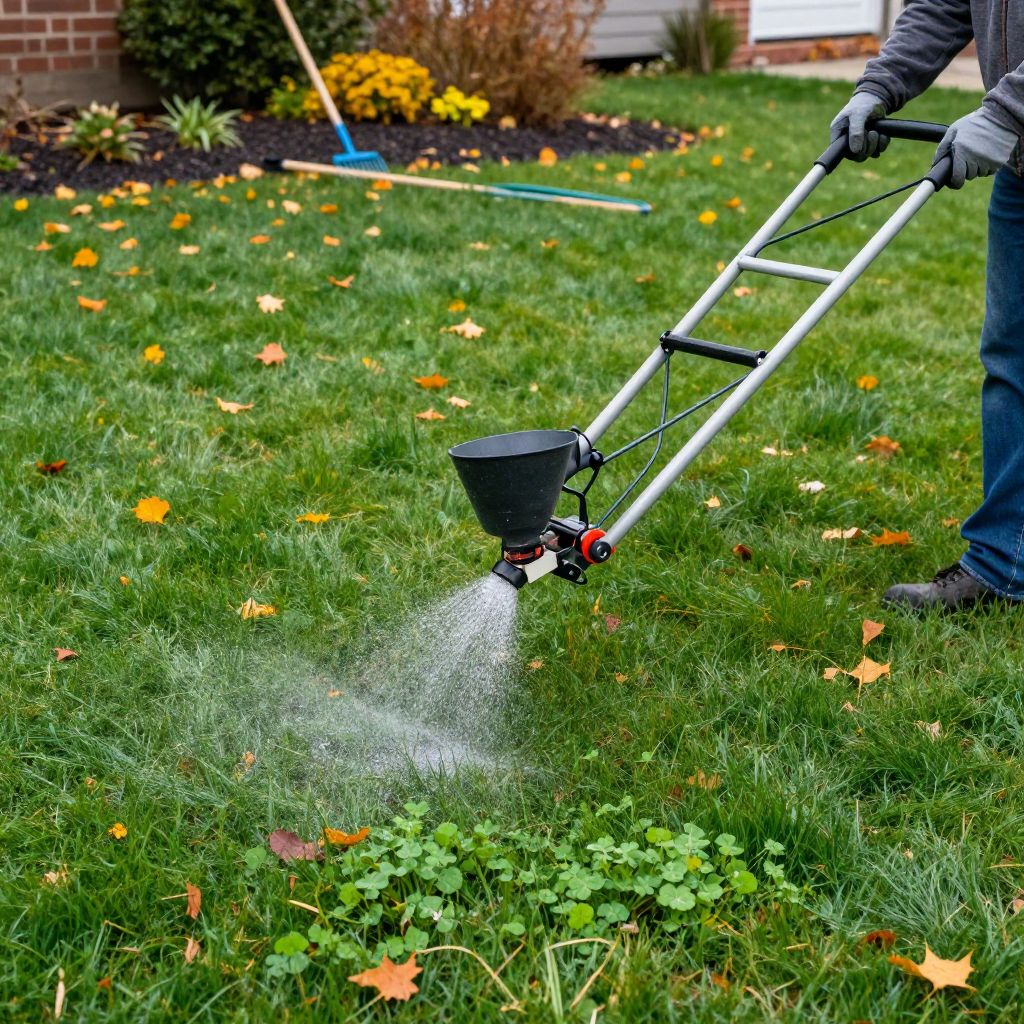
Wondering when to apply weed and feed in the fall so it actually helps your lawn instead of wasting product? Timing matters because fall is often the best season for lawn recovery, but only if your grass is actively growing and the weeds are still taking up herbicide.
Apply it at the right moment, and you can feed turf roots while knocking back certain broadleaf weeds. Apply it too late, on stressed grass, or before the weather cools enough, and you may get poor weed control, uneven growth, or even lawn damage.
When to apply weed and feed in the fall?
The best time to apply weed and feed in the fall is when your lawn is still actively growing, daytime temperatures are cooling, and weeds are young and actively absorbing nutrients. In many climates, that means early to mid-fall, after summer heat eases but before the grass goes dormant or the first hard frost arrives.
Why fall timing matters for weed and feed
Fall is a strong lawn-care window because cool-season grasses such as Kentucky bluegrass, perennial ryegrass, and tall fescue often recover well then. Weeds like dandelion, clover, and plantain may also be drawing resources downward, which can improve herbicide uptake.
At the same time, weed and feed is not a cure-all. It works best when the lawn is healthy enough to grow, the soil has some moisture, and the weeds are small to moderate in size.
What “active growth” looks like
- Grass is still producing new leaves after mowing.
- The lawn is green and not drought-stressed.
- Soil is moist, not waterlogged.
- Weeds are visible and not fully hardened off for winter.
How to choose the right fall window
Because climates vary, use your local weather and grass type to guide timing rather than a fixed calendar date. In general, wait until summer heat has passed and apply before the lawn slows down for winter.
For cool-season lawns
Cool-season lawns usually benefit most from fall feeding. If your lawn is actively growing again after summer, that is often the best time to use a weed and feed product, especially if broadleaf weeds are still present.
For warm-season lawns
Warm-season grasses such as bermudagrass, zoysiagrass, centipedegrass, and St. Augustinegrass often slow down as temperatures drop. In many regions, fall weed and feed is less useful for these lawns because the grass may not be growing enough to use the fertilizer well.
If you have a warm-season lawn, focus on local conditions. In some areas, a fall herbicide-only treatment or a separate soil test and fertilizer plan may be a better choice than weed and feed.
Best conditions for applying weed and feed
For the product to work well, both the lawn and the weeds need favorable conditions. Read the label carefully, because product directions vary by formulation and grass type.
- Temperature: Apply when daytime temperatures are moderate, not during extreme heat or when frost is imminent.
- Moisture: The lawn should be slightly moist, not parched.
- Weed stage: Broadleaf weeds should be actively growing and preferably young.
- Mowing: Mow a day or two before application if needed, but avoid mowing immediately before or after if the label says otherwise.
- Rain: Check the label for rainfast timing; many products need time before irrigation or rainfall.
Timing around frost
Do not wait until the lawn is going dormant. Herbicides in weed and feed products are less effective when weeds are no longer actively growing, and fertilizer can push tender growth at the wrong time. A light frost is not the same as full dormancy, but repeated frosts usually signal that the window is closing.
How to apply weed and feed in the fall
Use the product exactly as directed on the label. Different products are made for different grass types, weeds, and application methods, so the label is the most important guide.
- Identify your grass type. Make sure the product is safe for your lawn species.
- Check the weeds. Weed and feed is most effective on broadleaf weeds, not grassy weeds.
- Mow first if needed. Shorter leaf surfaces can help the product reach the soil and weeds more evenly.
- Apply evenly. Use a spreader for granular products or a sprayer for liquid products, following label directions.
- Water only if directed. Some products need watering in; others need to remain on the leaf surface for a period first.
- Keep people and pets off the lawn until the product has settled or dried according to the label.
Granular vs. liquid products
Granular weed and feed is often spread with a broadcast or drop spreader and may be easier for large lawns. Liquid formulations can provide more even leaf coverage on weeds, but they are more sensitive to spray technique and drift.
Whichever form you choose, calibration matters. Too much product can burn turf or stress roots, while too little may not control weeds effectively.
Common mistakes to avoid in fall
Many weed and feed failures come from poor timing or using the wrong product for the lawn. Avoid these common errors.
- Applying to drought-stressed grass: Stressed turf absorbs fertilizer poorly and may be damaged more easily.
- Using it on the wrong grass type: Some products are not safe for certain warm-season lawns or newly seeded areas.
- Applying too late in the season: If weeds are slowing down or frost is frequent, herbicide performance drops.
- Expecting it to fix bare spots: Weed and feed will not repair thin turf by itself.
- Overapplying: More is not better and can injure grass.
- Using it near newly seeded lawns: Many weed killers can interfere with seed germination or young seedlings.
When not to use weed and feed in the fall
Sometimes a different lawn-care step is the better choice. Skip weed and feed if your lawn is in one of these situations unless the label specifically says it is appropriate.
- The lawn was just seeded or overseeded.
- The grass is dormant or nearly dormant.
- The lawn is under severe drought stress.
- You have mostly grassy weeds, which weed and feed usually does not control well.
- You want to renovate thin turf with seed, because many herbicides can interfere with establishment.
If you need to seed in fall, focus on soil preparation, seed-to-soil contact, and starter fertilizer instead of a weed and feed product.
Better fall lawn strategy if weeds are the main problem
If your lawn has a lot of weeds, a single weed and feed application may not be enough. Fall is also a good time to improve turf density so weeds have less room to return.
Support the lawn after treatment
- Water according to your grass type and local weather.
- Mow at the recommended height for your lawn species.
- Aerate compacted soil if your lawn needs it and the timing is right for your grass type.
- Overseed thin cool-season lawns where appropriate.
- Keep leaves from smothering the grass for long periods.
Thicker turf is one of the best long-term weed controls because it shades the soil and reduces open space for germination.
Troubleshooting poor results
If weed and feed did not seem to work, the issue is often timing, weather, or weed type rather than the lawn itself.
No weed control
Broadleaf weeds may be too mature, the lawn may have been too dry, or the product may not target the weed species present. Some weeds also need repeat treatments at the proper interval, as directed by the label.
Lawn looks yellow or scorched
This can happen from overapplication, applying during heat or drought stress, or using a product not suited to your grass. Water only if the label recommends it, and avoid adding extra fertilizer to “fix” the damage right away.
Weeds come back quickly
Weed and feed often suppresses existing weeds but does not stop future germination. A thicker lawn, proper mowing height, and spot treatments when needed usually work better over time than repeated blanket applications.
Simple fall timing checklist
Before you apply weed and feed in the fall, run through this quick checklist:
- My grass is still actively growing.
- Weeds are present and actively growing too.
- The lawn is not drought-stressed.
- Frost is not expected immediately.
- The product is labeled for my grass type.
- I have not recently seeded or overseeded, unless the label allows it.
- I know whether the product needs watering in after application.
Conclusion
The best answer to when to apply weed and feed in the fall is: during the lawn’s active growth period, after summer stress has eased and before frost or dormancy shuts things down. If you match the product to your grass type, follow the label, and avoid drought or seeding conflicts, you give your lawn the best chance to recover.
For more lawn-care timing help, you may also want to read about how to overseed a lawn in fall and when to fertilize cool-season grass.