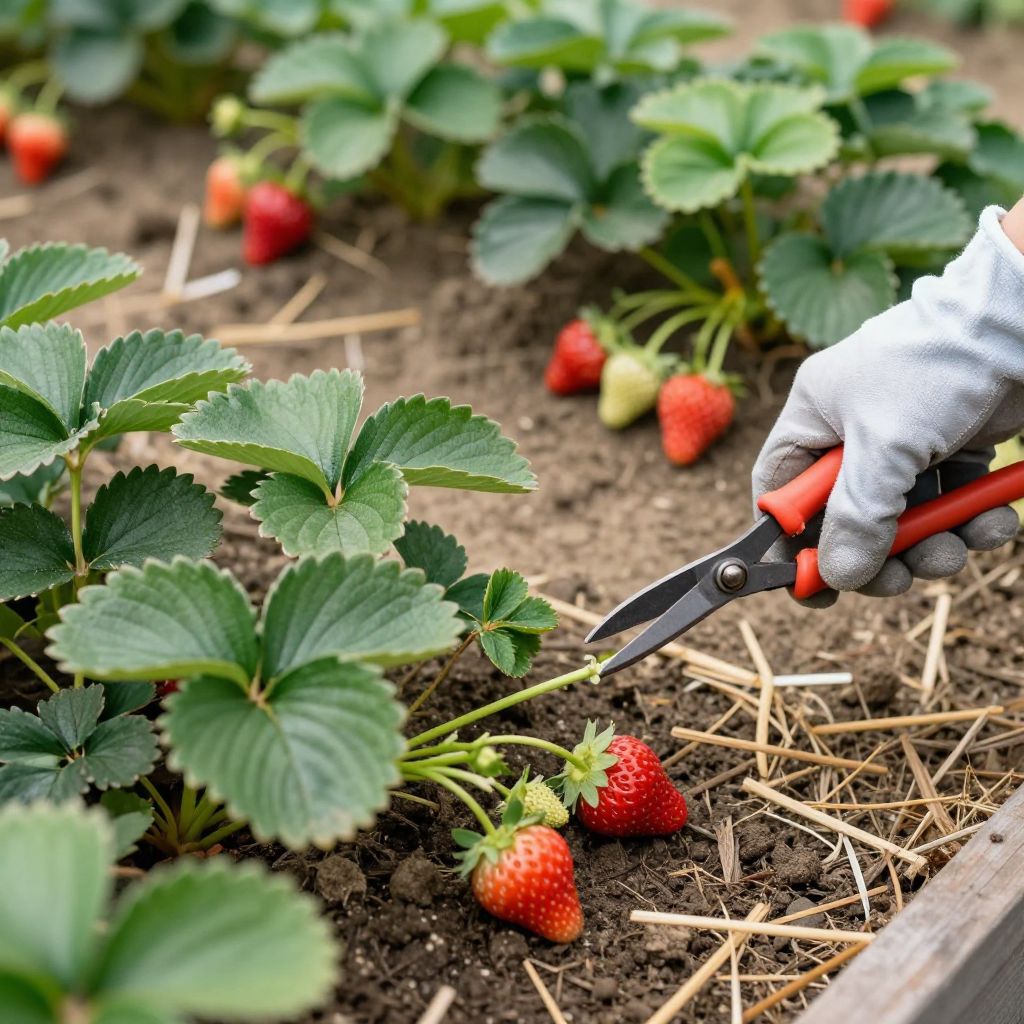
Wondering when to cut strawberry runners from mother plant so you can keep the plant healthy and still grow new strawberry plants? The right timing depends on whether you want more fruit from the mother plant or new plants from the runners. Cut too early and you may weaken young plantlets; cut too late and the mother plant can waste energy on extra growth.
The good news is that strawberry runners are easy to manage once you know what to look for. With a little timing and a clean cut, you can balance fruit production, propagation, and plant vigor in the same season.
When To Cut Strawberry Runners From Mother Plant?
Cut strawberry runners from the mother plant after the new plantlet has rooted well and can grow on its own, usually once it has several leaves and resistance when gently tugged. If you want the mother plant to focus on fruiting, remove excess runners earlier; if you want new plants, wait until the daughter plant is established before separating it.
What strawberry runners are and why they matter
Strawberry runners, also called stolons, are long stems that grow outward from the crown and produce new baby plants at the nodes. This is the plant’s natural way of spreading and reproducing.
For gardeners, runners are useful because they let you propagate strawberries without buying new plants. But they also draw energy away from fruit production, so managing them is part of good strawberry care.
Mother plant vs. daughter plant
- Mother plant: the original strawberry plant that sends out runners.
- Daughter plant: the new plantlet forming on the runner.
- Runner stem: the connecting stem between them.
If you leave runners unchecked, the bed can become crowded, fruit size may decline, and airflow can suffer. If you remove them at the right time, you can keep the patch productive and still expand it.
Best seasonal timing for cutting strawberry runners
In most gardens, the best time to cut strawberry runners is during the growing season after the daughter plant has rooted, often in late spring through summer. The exact timing depends on your climate, strawberry type, and whether you are growing for fruit or propagation.
Spring
In spring, young mother plants often benefit from having early runners removed so they can build strong crowns and roots. If the plant is still establishing, cutting runners early can improve fruiting later in the season.
Summer
Summer is the most common time to root and separate runner plants. Once the daughter plant has formed a good root system, you can cut the runner and move the new plant to its final spot or a nursery bed.
Late season
Late summer or early fall can still work in mild climates, but avoid separating weak plantlets too close to cold weather. New transplants need time to settle in before winter dormancy or seasonal stress.
Rule of thumb: cut the runner only after the daughter plant is rooted and self-supporting, not just because it looks large enough above ground.
How to tell when a runner is ready to cut
A runner is ready when the new plantlet has enough roots and leaves to survive independently. The plant should look like a real strawberry plant, not just a tiny tuft attached to a stem.
Signs the daughter plant is ready
- It has several healthy leaves.
- It shows visible roots in the soil or pot.
- It stays upright without being propped up.
- A gentle tug meets resistance.
- It is still green and actively growing.
Signs you should wait
- The plantlet is tiny or floppy.
- There are no visible roots yet.
- The leaves are pale, wilted, or damaged.
- The mother plant is stressed from heat, drought, or disease.
If you are unsure, wait a little longer. A few extra days or even a couple of weeks is usually safer than cutting too soon.
How to cut strawberry runners the right way
Use clean, sharp scissors, pruners, or snips to cut the runner between the mother plant and the rooted daughter plant. Make the cut cleanly so you do not crush the stem or tear the crown.
- Choose a runner with a healthy, rooted daughter plant.
- Water the area lightly beforehand if the soil is dry.
- Lift the runner gently to see where the daughter plant is rooted.
- Cut the connecting stem on the mother-plant side of the daughter plant.
- Leave the daughter plant in place if it is already rooted where you want it.
- Water the new plant after cutting if the soil is dry.
If you are transplanting the daughter plant, dig it carefully and keep as much root as possible. Handle the crown gently, because that is the growing point of the strawberry plant.
Tools that help
- Clean hand pruners or scissors
- Small trowel for transplanting
- Labels if you are tracking varieties
- Watering can or hose with a gentle setting
Should you cut all runners off the mother plant?
Not always. If your goal is larger harvests from established plants, removing most or all runners can help the mother plant put energy into flowers and fruit. If your goal is propagation, allow a few strong runners and remove the rest.
Choose based on your goal
- For fruit production: remove most runners, especially on young or newly planted strawberries.
- For propagation: keep a few healthy runners and root the best plantlets.
- For crowded beds: thin runners to improve airflow and reduce disease pressure.
Many gardeners do best by selecting only the strongest plantlets and cutting away the extras. That gives you better stock for future planting without exhausting the mother plant.
What happens if you cut runners too early or too late?
Cutting too early can leave you with weak, poorly rooted plantlets that struggle after separation. Cutting too late can crowd the bed, reduce airflow, and allow the mother plant to spend more energy on spreading than on fruiting.
If you cut too early
- The daughter plant may wilt or stall.
- Roots may be too small to support transplanting.
- You may lose the new plant if weather is hot or dry.
If you cut too late
- The bed can become tangled and overcrowded.
- Fruit quality may decline from competition.
- Disease can spread more easily in dense foliage.
The best approach is to inspect runners regularly during active growth so you can separate them at the right stage.
Aftercare for cut runners and mother plants
After cutting, keep both plants lightly moist and out of unnecessary stress. New transplants need steady moisture, while the mother plant benefits from good airflow and room to keep growing.
For the daughter plant
- Water well after transplanting.
- Keep soil evenly moist, not soggy.
- Provide bright sun and good drainage.
- Protect from harsh afternoon heat if newly moved.
For the mother plant
- Remove dead or crowded leaves if needed.
- Keep weeds down around the crown.
- Maintain even moisture during fruiting.
- Watch for signs of stress after runner removal.
If you are growing strawberries in containers, runner management is even more important because pots fill quickly. For more on that setup, see growing strawberries indoors and in small spaces.
Common mistakes to avoid
Most runner problems come from cutting at the wrong stage or ignoring plant stress. A little observation prevents most of the trouble.
- Cutting before roots form: wait until the daughter plant is established.
- Leaving too many runners on one plant: this can weaken flowering and fruiting.
- Using dirty tools: clean blades help reduce disease spread.
- Transplanting in extreme heat: choose cooler parts of the day when possible.
- Letting runners root wherever they land: this can create a tangled, overcrowded patch.
Propagation tips for stronger new strawberry plants
If you want new strawberry plants from runners, root the best plantlets in small pots or directly in prepared soil while they are still attached to the mother plant. This gives them time to build roots before separation.
Simple rooting method
- Place a small pot of moist potting mix beside the mother plant.
- Set the daughter plant on top of the mix.
- Pin it in place with a wire, stone, or U-shaped pin if needed.
- Keep the mix lightly moist until roots develop.
- Cut the runner once the plant is firmly rooted.
This method is especially helpful if your garden soil is heavy, dry, or poorly drained. It gives the new plant a better start and makes transplanting easier.
When to leave runners alone
There are times when it is better not to cut runners immediately. If the mother plant is healthy and you want replacement plants for next season, letting a few runners root can be a smart way to renew your patch.
Leave runners alone temporarily if the daughter plant is still rooting, the weather is mild, and you have space for new plants. Just be sure to return later and separate the strongest ones before the bed becomes crowded.
Final advice for healthy strawberry plants
To decide when to cut strawberry runners from mother plant, look for rooted, self-supporting daughter plants and match your timing to your goal: fruit production or propagation. Keep a few runners if you want new plants, but remove excess growth to protect the mother plant’s energy and airflow.
Check your strawberry patch regularly during active growth, use clean snips, and separate only the strongest plantlets. That simple routine will help you keep both your harvest and your future plants in good shape.