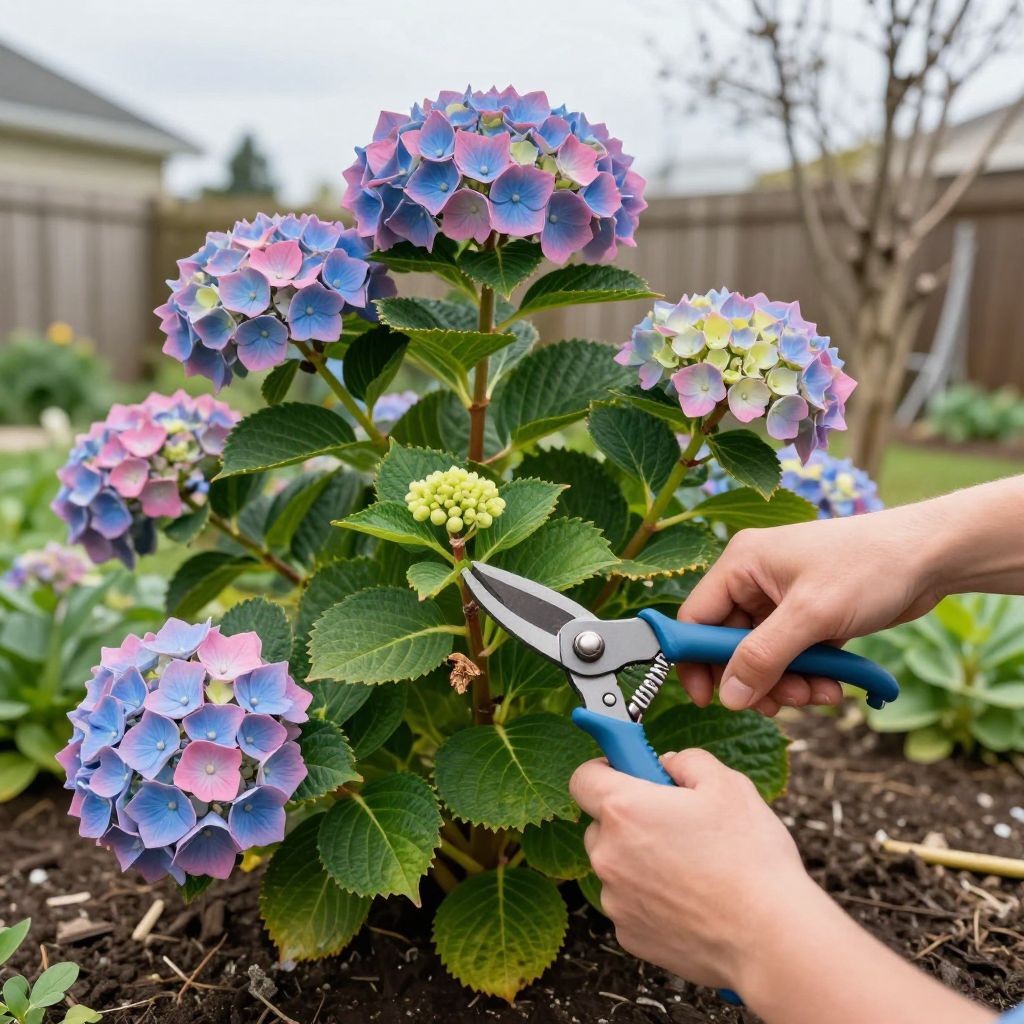
Wondering when to prune Endless Summer hydrangeas without cutting off next season’s blooms? The short answer is that these reblooming bigleaf hydrangeas are usually pruned lightly in late winter or early spring, after the worst cold has passed but before strong new growth begins.
Because they bloom on both old and new wood, timing matters less than it does with old-wood-only hydrangeas. Still, the right pruning approach helps you keep a fuller plant, remove winter damage, and encourage more flowers without sacrificing the first flush of bloom.
When to prune Endless Summer hydrangeas?
Prune Endless Summer hydrangeas in late winter to early spring, once you can clearly see the stems and before active growth starts. In colder climates, wait until the risk of hard frost is mostly past; in milder areas, you can prune earlier. Avoid heavy pruning in fall, which can reduce winter protection and remove flower buds.
Why timing matters for Endless Summer hydrangeas
Endless Summer hydrangeas are reblooming bigleaf hydrangeas, so they can flower on both older stems and new growth. That gives you more flexibility than with many other hydrangeas, but it does not mean you should prune randomly.
These plants often set flower buds on old wood during the previous season. If you prune too hard at the wrong time, you may remove some of those buds and reduce the first wave of blooms.
The safest rule
- Wait until late winter or early spring to do most pruning.
- Remove only dead, damaged, or weak stems first.
- Shape lightly rather than cutting the shrub back hard.
- Leave healthy stems with visible buds whenever possible.
How much should you prune?
For most Endless Summer hydrangeas, pruning should be light to moderate. Think of it as cleanup and shaping, not a full renovation cut.
If the shrub is healthy and already has a good shape, you may only need to remove a few stems. If it has become leggy, crowded, or winter-damaged, you can thin it a bit more, but still avoid severe cutting unless the plant truly needs rejuvenation.
What to remove first
- Dead wood: stems that are brown, brittle, or hollow.
- Winter damage: tips that are blackened, dried, or split.
- Crossing stems: branches rubbing against each other.
- Weak growth: thin, spindly stems that won’t support good blooms.
Step-by-step pruning tips
Use clean, sharp bypass pruners for small stems and loppers for thicker canes. Sanitize tools if the plant has shown signs of disease, and make cuts just above a healthy bud or side branch.
- Start by removing all dead or broken stems at the base.
- Cut back winter-killed tips to healthy tissue.
- Thin out a few crowded stems from the center to improve airflow.
- Shorten overly long shoots slightly to keep the plant balanced.
- Step back often and check the shape before making more cuts.
Try to keep the shrub naturally rounded. A few thoughtful cuts usually do more good than a heavy shearing job.
How far back should you cut?
There is no single correct height for every plant, but a good guideline is to remove only the part that is clearly dead or poorly placed. If you need to reduce size, make small cuts rather than taking large sections off all at once.
Avoid cutting every stem to the ground unless the plant is severely damaged and you understand that bloom may be delayed or reduced that year.
Can you prune Endless Summer hydrangeas in summer?
Yes, but only lightly. Summer pruning should be limited to removing spent flowers, damaged stems, or a few overly long shoots that are spoiling the shape.
If you prune heavily in summer, you may remove developing flower buds and reduce later blooms. For most gardeners, summer is the time for deadheading and light correction, not major reshaping.
Deadheading vs. pruning
- Deadheading means removing faded flower heads.
- Pruning means cutting stems back to shape or reduce the plant.
Deadheading is optional on many hydrangeas, but it can tidy the plant and encourage energy into new growth. If you like the look of dried blooms in fall and winter, you can leave them in place until late winter pruning time.
What happens if you prune at the wrong time?
Endless Summer hydrangeas are forgiving, but bad timing can still affect flowering. The most common issue is losing the first bloom cycle because you removed stems that already held flower buds.
Late fall pruning can also expose stems to winter injury. In colder regions, trimmed stems may dry out more easily, and the plant may need extra time in spring to recover.
Common pruning mistakes to avoid
- Pruning hard in fall.
- Shearing the shrub into a tight ball.
- Cutting off healthy stems just because they look long.
- Ignoring dead wood and leaving damaged stems in place.
- Using dull or dirty tools that crush stems.
How climate affects pruning timing
Your local climate should guide your pruning window. In colder areas, wait until late winter or very early spring so you can see which stems survived. In warmer regions, pruning can often begin earlier, but you should still avoid stimulating tender new growth too soon before a late cold snap.
If your area gets unpredictable spring freezes, delay pruning until the danger of severe frost has mostly passed. That small delay can protect buds and reduce dieback.
Regional adjustment tips
- Cold climates: leave more stem length over winter and prune after bud swell is visible.
- Mild climates: prune in late winter for shape and cleanup.
- Windy or exposed sites: keep some extra stem length to help buffer winter damage.
Supporting strong blooms after pruning
Pruning is only one part of hydrangea care. To get the best flowering, the plant also needs the right growing conditions.
Endless Summer hydrangeas generally perform best with morning sun and afternoon shade, especially in hotter climates. They prefer evenly moist, well-drained soil enriched with organic matter.
Helpful care after pruning
- Add a layer of compost around the root zone, keeping it away from the stems.
- Mulch to help hold moisture and moderate soil temperature.
- Water deeply during dry spells, especially as new growth begins.
- Avoid overfertilizing, which can push leafy growth at the expense of flowers.
If the plant is in too much shade, it may bloom less. If it gets too much hot afternoon sun, the leaves and flowers may wilt faster, especially in summer.
How to tell if a stem should be cut
Not every stem that looks old is a problem. Before you cut, scratch the bark lightly with a fingernail or pruner blade. Green tissue underneath usually means the stem is alive; brown, dry tissue suggests it is dead.
Also look for swelling buds along the stem. Healthy buds are a good sign that the branch can still produce leaves or flowers.
Quick stem check
- Green and flexible: usually worth keeping.
- Brown and brittle: remove it.
- Split or damaged: cut back to healthy tissue.
- Thin and weak: remove if it crowds stronger stems.
What if your Endless Summer hydrangea is overgrown?
If the shrub has become too large, resist the urge to cut it back drastically in one season. A gentler approach is usually better for flowering and plant health.
Spread rejuvenation over two or three seasons, removing a portion of the oldest stems each year. This keeps the plant flowering while gradually improving its size and structure.
Safer rejuvenation approach
- Remove the weakest and oldest stems first.
- Shorten only a few long shoots.
- Leave enough healthy stems to support bloom.
- Repeat lightly next season if needed.
Pruning tools and cleanup
Sharp tools make cleaner cuts and reduce stress on the plant. For most home gardeners, bypass pruners are enough for smaller stems, while loppers help with thicker wood.
After pruning, clean up fallen leaves and cut stems from around the base. This helps reduce hiding spots for pests and disease and makes it easier to monitor new growth.
Tool care basics
- Wipe blades clean after use.
- Sharpen pruners regularly.
- Disinfect tools if disease is suspected.
- Store tools dry to prevent rust.
Common problems after pruning
Sometimes a hydrangea looks slow to recover after pruning, but that does not always mean something is wrong. New growth can take time, especially after a cold winter or if the plant was stressed by drought.
If you see few blooms, the cause may be pruning too late, winter bud damage, too much shade, or a plant that is still establishing after transplanting.
Troubleshooting bloom problems
- No early blooms: buds may have been pruned off or winter-killed.
- Lots of leaves, few flowers: too much shade or too much nitrogen.
- Brown leaf edges: heat, wind, or inconsistent watering.
- Weak stems: overcrowding or poor light.
Conclusion: the best pruning habit to follow
If you remember one thing, make it this: prune Endless Summer hydrangeas lightly in late winter or early spring, not in fall. Focus on dead wood, winter damage, and a little shaping, and you’ll protect more buds while keeping the shrub healthy and attractive.
Before your next pruning session, take a few minutes to inspect each stem and decide what truly needs removing. If you want more hydrangea care guidance, look for related articles on soil preparation, mulching, and keeping hydrangeas blooming well through the season.