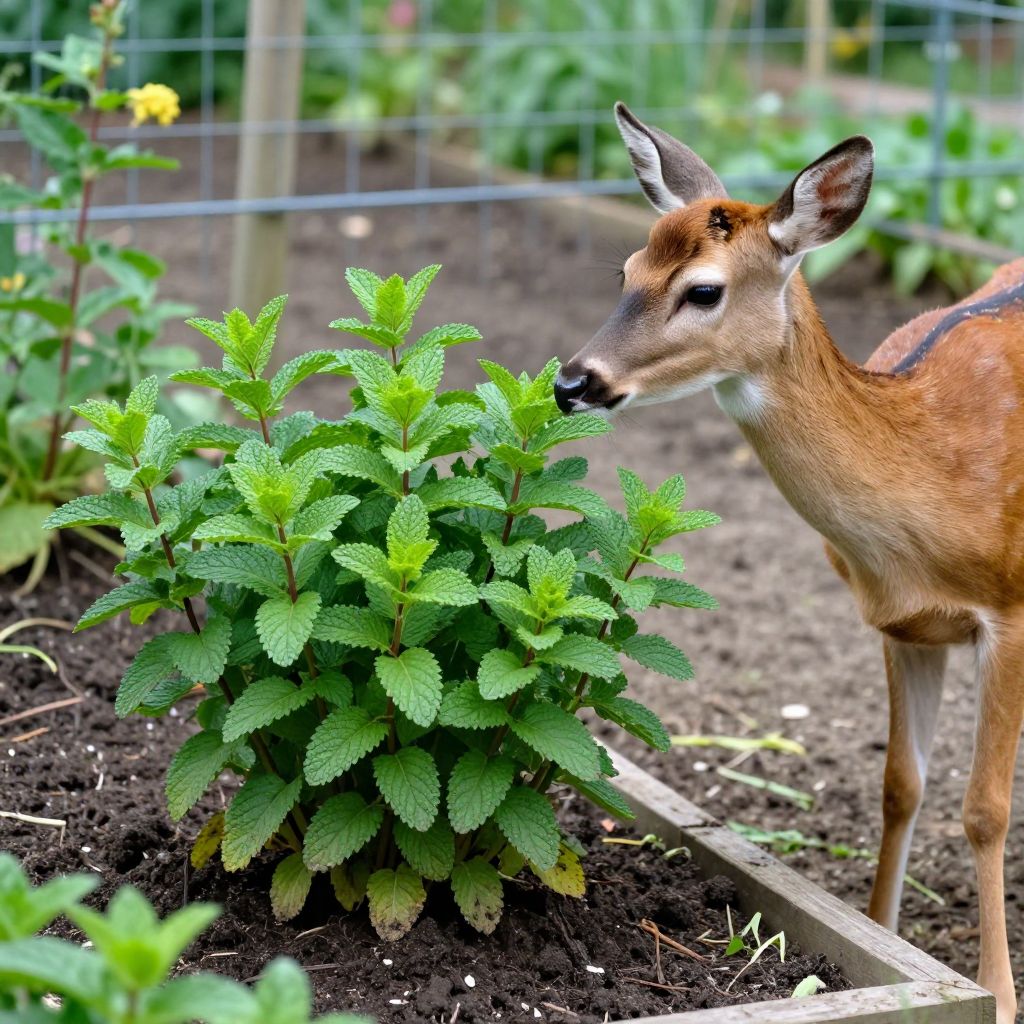
Do deer like peppermint? If you’ve planted minty herbs to protect a bed, you may be hoping peppermint will keep browsing deer away. The short answer is that deer usually avoid peppermint because of its strong scent and taste, but they may still sample it when food is scarce or the plant is very young.
Peppermint can help in a deer-resistant planting scheme, but it is not a guarantee. The best results come from combining peppermint with smart garden design, healthy plant care, and other deterrents rather than relying on one plant alone.
Do deer like peppermint?
Deer generally do not like peppermint. Its strong aromatic oils make it less appealing than many tender ornamentals, so deer often pass it by. However, hungry deer, new plantings, or plants growing in exposed areas can still be nibbled, especially if other food is limited.
Why peppermint is usually deer-resistant
Peppermint, Mentha × piperita, has a sharp scent and flavor that many deer find unappealing. Deer tend to prefer soft, mild, high-moisture foliage, especially spring growth and young shoots. Peppermint’s fragrance can make it a useful companion plant near vulnerable beds, paths, or garden borders.
What makes deer browse some plants and not others?
- Smell: Strongly scented plants are often less attractive.
- Taste: Bitter or pungent foliage is usually avoided.
- Texture: Coarse, fuzzy, or tough leaves are less appealing.
- Availability: Deer will eat less-preferred plants when food is limited.
That said, deer behavior changes with season, pressure, and local habitat. In some gardens, peppermint may be ignored for years; in others, it may be lightly browsed once deer become accustomed to it.
How to use peppermint in a deer-resistant garden
Peppermint works best as part of a layered strategy. Use it near the edge of beds, along walkways, or around plants that deer typically target, such as tulips, hostas, or young shrubs. Its scent is most useful when the foliage is healthy and undisturbed.
Good placement ideas
- Plant peppermint near entrances to beds where deer first step in.
- Use it as a low, fragrant border around more vulnerable plants.
- Place it near patios or paths where foot traffic releases more scent.
- Grow it in containers if you want the deterrent effect without letting it spread.
For stronger protection, combine peppermint with fencing, motion-activated sprinklers, or other deer-resistant plants. A single aromatic herb rarely stops a determined deer on its own.
Growing peppermint successfully
Healthy peppermint is more fragrant and more likely to be left alone. It is a vigorous perennial herb that spreads quickly, so it needs the right setup to thrive without taking over your garden.
Sunlight and site
Peppermint grows best in full sun to partial shade. In hotter climates, afternoon shade can help prevent stress and keep leaves tender. In cooler regions, more sun usually improves growth and aroma.
Soil and drainage
Choose moist, fertile soil that drains well. Peppermint likes soil that stays evenly damp but not soggy. Heavy clay can be improved with compost, while very sandy soil may need more organic matter to hold moisture.
- Work in compost before planting to improve soil structure.
- Avoid waterlogged spots where roots can rot.
- If drainage is poor, grow peppermint in a raised bed or container.
Watering
Peppermint prefers consistent moisture, especially during establishment and hot weather. Water when the top inch of soil begins to dry, adjusting for rainfall, container size, and temperature. Containers dry faster than in-ground plantings, so they need closer attention.
Mulching
A light mulch helps conserve moisture and suppress weeds, but keep mulch a little away from the stems. Too much mulch packed against the crown can invite rot and reduce air circulation.
Planting peppermint without letting it take over
Peppermint spreads by underground runners, so it can quickly become invasive in a garden bed. If you want the deer-deterring benefit without constant spreading, container growing is often the easiest option.
Best ways to contain it
- Use a pot: Choose a container with drainage holes and a quality potting mix.
- Sink a barrier: In-ground, use a root barrier or a bottomless nursery pot sunk into the soil.
- Trim runners: Check the edges regularly and remove wandering stems.
- Divide as needed: Refresh crowded plants before they become woody or weak.
If you plant peppermint directly in the ground, place it where spreading is not a problem, or you may spend more time controlling it than enjoying it.
Pruning and harvesting for better fragrance
Regular trimming keeps peppermint bushy and encourages fresh growth. Pinching stems back also helps release scent, which can make the plant more noticeable in the garden.
How to harvest peppermint
- Snip stems just above a leaf pair to encourage branching.
- Harvest lightly and often rather than cutting the whole plant at once.
- Remove flower buds if you want more leafy growth and a tidier look.
Use clean, sharp scissors or pruners to avoid tearing stems. If the plant becomes leggy, cut it back by about one-third to stimulate fresh shoots, provided the plant is actively growing and not stressed by heat or drought.
Common problems that can reduce deer resistance
Even a strongly scented plant can become less effective if it is weak, sparse, or neglected. A stressed peppermint plant may lose vigor and produce less aroma, making it less useful as a deterrent.
Watch for these issues
- Powdery mildew: White coating on leaves, often in humid conditions or poor airflow.
- Rust: Orange-brown spots that can weaken foliage.
- Root rot: Caused by soggy soil and poor drainage.
- Aphids or spider mites: More common on stressed plants, especially in hot, dry weather.
To reduce disease, space plants so air can move through them, avoid overhead watering late in the day, and remove damaged leaves promptly. If peppermint is in a container, make sure excess water can drain freely.
Can peppermint alone keep deer out?
No single plant reliably keeps deer out of a garden. Peppermint can discourage browsing, but deer may still enter if they are hungry, if your garden is near a strong deer trail, or if they have become used to ornamental plantings.
For better protection, use peppermint as one layer in a broader plan:
- Mix deer-resistant herbs and aromatic plants throughout beds.
- Protect young plants with temporary fencing or netting.
- Rotate repellents if you use them, since deer can adapt.
- Keep the garden tidy so deer are less likely to bed down nearby.
Indoor and container growing tips
If you grow peppermint in a pot on a patio, porch, or sunny windowsill, it can still offer some deer resistance outdoors because of its scent. Container plants are also easier to move if deer pressure changes or if you want to protect the plant from browsing entirely.
Container care basics
- Use a pot at least 8 to 12 inches wide for a small plant, larger if you want fuller growth.
- Choose a well-draining potting mix, not heavy garden soil.
- Water more often than in-ground plants, but never leave the pot sitting in water.
- Refresh or divide the plant when roots crowd the container.
Common mistakes to avoid
- Assuming peppermint is deer-proof instead of deer-resistant.
- Planting it in soggy soil where roots decline.
- Letting it spread unchecked into nearby beds.
- Ignoring weak or diseased growth that reduces fragrance.
- Using peppermint alone instead of combining it with other deterrents.
When peppermint is healthy and well placed, it can be a useful part of a deer-aware garden. When it is crowded, dry, or stressed, it loses much of that benefit.
Conclusion
So, do deer like peppermint? Usually not. Its strong scent and flavor make it a smart choice for gardeners who want a fragrant, useful herb that deer often avoid. Plant it in well-drained soil, keep it trimmed, and use it alongside other protective strategies for the best results. If you want to build a stronger deer-resistant planting plan, you may also want to read about what to feed deer so you can better understand their habits and your local deer pressure.