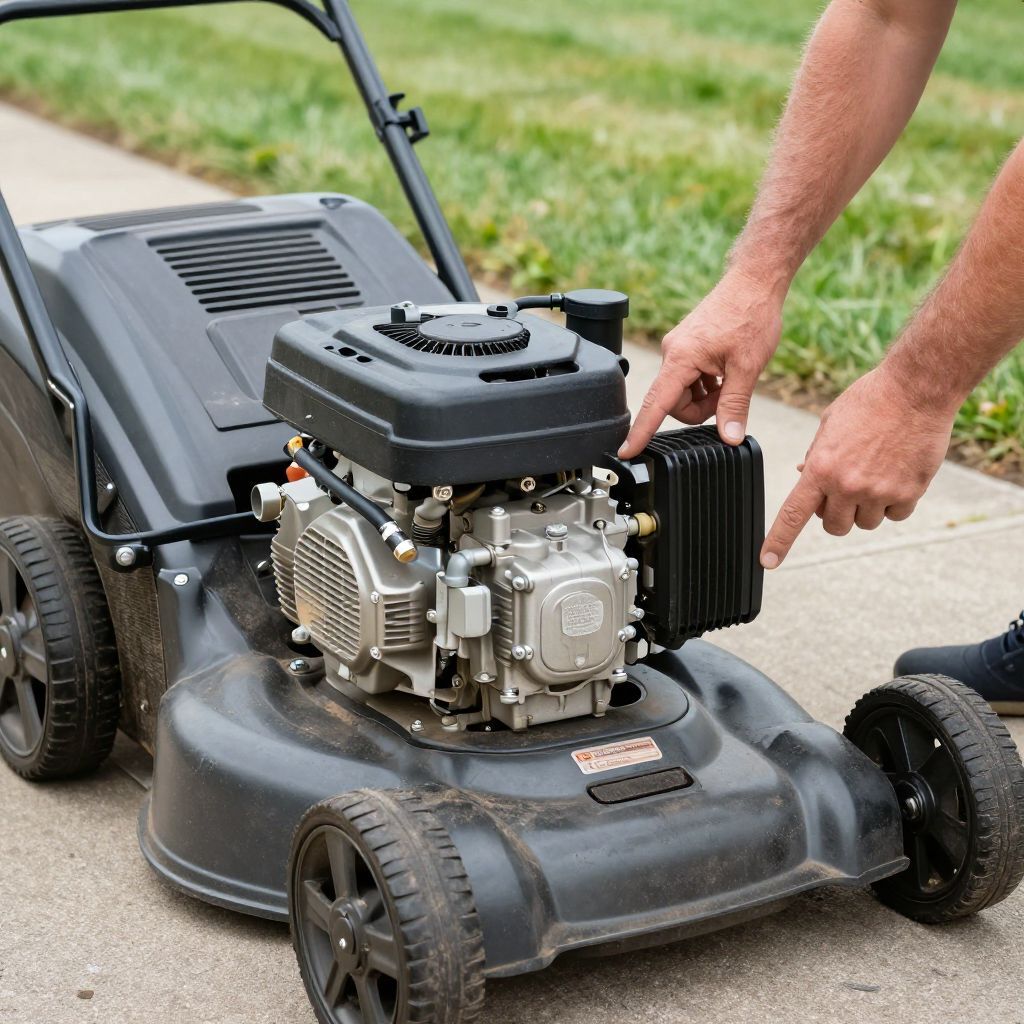
Where is the carburetor on a lawn mower? If your mower is hard to start, surging, or stalling, the carburetor is one of the first parts worth checking. On most walk-behind mowers, it sits on the side or top of the engine, tucked behind the air filter housing and connected to the fuel line and throttle linkage.
Knowing where it is makes basic cleaning and troubleshooting much easier. You do not need to strip the whole mower apart to inspect it, but you do need to work carefully and identify the engine layout before removing any parts.
Where is the carburetor on a lawn mower?
The carburetor is usually mounted on the engine near the air intake, often directly behind the air filter cover and in front of the engine block. On many push mowers, it is on the side of the engine under a plastic or metal air cleaner housing. On riding mowers, it may be lower on the engine and partially hidden by shrouds, but it will still sit where air and fuel meet.
How to find the carburetor step by step
If you are not sure what you are looking at, follow the air path and fuel path. The carburetor is the point where those two systems meet, so tracing them is the fastest way to locate it.
- Turn off the mower and disconnect the spark plug wire. This prevents accidental starting while you inspect the engine.
- Find the air filter housing. It is usually a small cover on the side of the engine, held by one or two screws, clips, or a wing nut.
- Remove the air filter cover. Behind it, you will usually see the carburetor or the intake area leading directly to it.
- Look for the fuel line. A small rubber hose from the fuel tank often runs into the carburetor bowl or body.
- Check for throttle and choke linkages. Thin metal rods or springs attached to the carburetor are another clear sign you have found it.
What the carburetor looks like
The carburetor is usually a small metal component with a bowl, body, and linkages attached. On many engines, it has a round or oval air intake opening and a fuel bowl underneath. Some models have a primer bulb or choke lever nearby, which can make the area look more complicated than it is.
Why the carburetor matters for mower performance
The carburetor mixes air and fuel in the correct ratio so the engine can run smoothly. If it is dirty, clogged, or out of adjustment, your mower may be difficult to start, run unevenly, or lose power under load. A clean carburetor helps the engine respond properly when mowing thick grass or working on slopes.
Common symptoms of carburetor trouble
- Engine starts, then dies after a few seconds
- Mower surges up and down while running
- Engine stalls when you engage the blades or push into heavy grass
- Hard starting after storage
- Fuel leaking from the carburetor area
- Black smoke, rough idling, or poor throttle response
How to inspect the carburetor safely
Before cleaning or adjusting anything, make a quick visual inspection. This often reveals the real problem without taking the mower apart further.
- Check the air filter for dirt, oil saturation, or damage.
- Inspect the fuel line for cracks, kinks, or loose connections.
- Look for stale fuel, varnish, or debris around the carburetor bowl.
- Make sure the choke and throttle move freely.
- Check that all screws, springs, and linkages are in place.
A dirty air filter can mimic carburetor problems. If the filter is clogged, the engine may run rich, smoke, or stall even when the carburetor itself is fine.
Cleaning the carburetor: what usually helps
For many home gardeners, a basic cleaning is enough to restore mower performance. This is especially true if the mower sat with fuel in the tank over winter or between mowing seasons.
Basic cleaning steps
- Shut off the fuel supply if your mower has a fuel valve.
- Disconnect the spark plug wire.
- Remove the air filter housing if needed for access.
- Take off the carburetor bowl carefully, keeping track of the gasket.
- Drain old fuel and wipe away residue.
- Clean visible varnish or debris with a carburetor-safe cleaner.
- Check the float and needle for sticking if your model has them.
- Reassemble with the gasket seated properly.
If the mower still runs poorly after a careful cleaning, the carburetor may need a rebuild kit or replacement. That is more common when the engine has been stored with untreated fuel for a long time.
When to stop and get help
If you see broken linkages, a cracked carburetor body, stripped screws, or fuel leaking from multiple points, it may be wiser to have the mower serviced. For many gardeners, a repair shop can save time when the mower is older or the engine design is difficult to access.
How mower storage affects the carburetor
Storage is one of the biggest reasons carburetors clog. Fuel left in the tank and carburetor can evaporate and leave sticky deposits that block jets and passages. This is common after a season ends, especially if the mower is stored in a shed or garage for months.
Good storage habits to prevent clogs
- Use fresh fuel when possible.
- Run the mower long enough to finish the job, but avoid leaving old fuel sitting for long periods.
- Store the mower in a dry place away from moisture.
- Keep the air filter clean so dirt does not enter the intake.
- Inspect fuel lines and primer bulbs before the mowing season begins.
Seasonal maintenance matters. A quick pre-season check is often easier than troubleshooting a mower that will not start on the first warm weekend of spring.
Common mistakes to avoid
Many mower problems get worse because of simple handling errors during inspection or repair. Avoid these common mistakes so you do not create a bigger issue than the one you started with.
- Forgetting to disconnect the spark plug wire
- Removing parts without noting how linkages are attached
- Ripping or misplacing the carburetor gasket
- Using excessive force on plastic covers or small screws
- Reassembling the air filter housing incorrectly
- Ignoring stale fuel and cleaning only the outside of the carburetor
How the carburetor location differs by mower type
The carburetor is not always in exactly the same place, and mower design changes how easy it is to reach. Knowing the general pattern helps you save time.
Push mowers
On most push mowers, the carburetor is on the side of the engine behind the air filter cover. It is usually fairly accessible once the cover is removed.
Self-propelled mowers
These often have a similar engine layout to push mowers, but the drive components can make access a little tighter. You may need to move cables or covers carefully to reach the carburetor.
Riding mowers and lawn tractors
On riding mowers, the carburetor may be deeper in the engine compartment and partially hidden by shrouds, belts, or frame parts. You may need to remove more covers to inspect it safely.
Small-engine equipment with mower-style engines
Some other outdoor power equipment uses similar carburetor layouts. The same rule applies: follow the air filter and fuel line, and you will usually find the carburetor near the intake side of the engine.
Troubleshooting after you find the carburetor
Once you know where the carburetor is, you can narrow down the problem more effectively. Start with the simplest issues first, then move to deeper cleaning or repair if needed.
- Check the fuel. Old or contaminated fuel is a frequent cause of starting trouble.
- Inspect the air filter. Replace it if it is dirty or damaged.
- Look for blocked jets or passages. Dirt or varnish can prevent proper fuel flow.
- Verify the choke position. A stuck choke can flood or starve the engine.
- Examine the spark plug. A fouled plug can make carburetor problems seem worse than they are.
If the mower starts with starting fluid but will not keep running, the carburetor is often involved. If it will not start at all, though, the issue may also involve the spark plug, ignition, fuel supply, or safety switches on riding mowers.
When a carburetor problem is really a lawn care problem
Sometimes poor mower performance is caused by the mowing conditions rather than the carburetor itself. Cutting grass that is too tall, wet, or dense can overload the engine and make a healthy mower seem weak.
- Raise the cutting height if the lawn is overgrown.
- Mow when the grass is dry enough to cut cleanly.
- Do not force the mower through thick patches all at once.
- Keep the blade sharp so the engine does not work harder than necessary.
These simple mowing adjustments reduce strain on the engine and can prevent symptoms that look like fuel-system trouble.
Conclusion: what to do next
If you are asking where is the carburetor on a lawn mower, start by removing the air filter cover and tracing the fuel line to the engine intake. That is usually the fastest way to find it. Once located, inspect the air filter, fuel, and linkages before deciding whether to clean, rebuild, or service the mower.
For related maintenance help, you may also want to read about what kind of oil a lawn mower takes so you can keep the engine running smoothly through the mowing season.