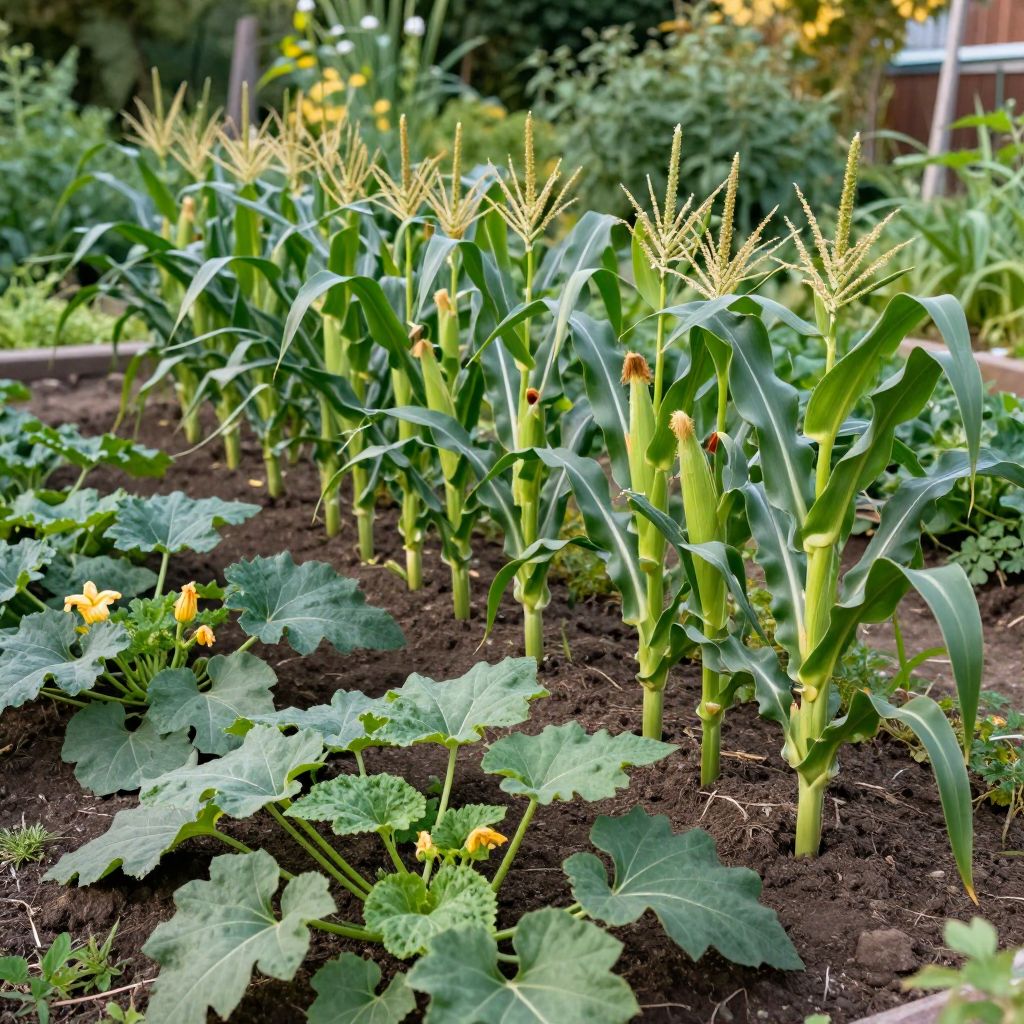
Wondering what to plant with corn so your garden uses space well and your plants help each other instead of competing? Corn can be a strong backbone crop, but it needs the right companions to avoid shade, nutrient stress, and pest problems.
The best companions for corn are plants that fit between rows, grow quickly, or benefit from the corn’s height and structure. With a little planning, you can improve pollination, make better use of soil, and sometimes reduce pests while keeping the patch productive.
What to plant with corn?
The best plants to grow with corn are beans, squash, cucumbers, melons, pumpkins, and some herbs and flowers that attract beneficial insects. These companions work best when they match corn’s need for full sun, steady moisture, and rich soil, while not crowding the stalks or stealing too much light or nutrients.
Why companion planting works in a corn patch
Corn grows tall and upright, which creates a useful vertical structure in the garden. That leaves room for lower-growing crops underneath or beside it, especially plants that sprawl, climb, or mature quickly.
Good companion planting is not about cramming in as many plants as possible. It is about pairing crops with similar needs and growth habits so they share space without becoming competitors.
What corn needs to grow well
- Full sun: at least 6 to 8 hours daily.
- Rich soil: corn is a heavy feeder and does best in fertile, well-drained soil.
- Even moisture: dry spells can reduce ear development and pollination.
- Good spacing: corn should be planted in blocks, not a single long row, for better pollination.
Best companion plants for corn
Beans
Beans are one of the classic companions for corn. Pole beans can use the stalks as a natural support, while bush beans fit well in nearby rows or blocks.
Beans are often chosen because they do not take up much vertical space, and in traditional “three sisters” planting, they help fill the garden efficiently. Just remember that beans do not literally feed corn in the same season in a quick, dramatic way; the real benefit is mostly in smart space use and soil management over time.
Best tip: wait until corn is well established before sowing pole beans, so the beans do not overwhelm young seedlings.
Squash and pumpkins
Squash and pumpkins spread across the ground and can help shade the soil, which may reduce weeds and slow moisture loss. Their broad leaves also make good use of the open space between corn rows.
These crops work best when the corn is planted in a block with enough room for the vines to roam. If your patch is small, choose compact squash varieties rather than large, aggressive vines.
Cucumbers
Cucumbers can grow well near corn if they have enough room and airflow. They may sprawl along the ground or climb a support placed away from the corn stalks.
Because cucumbers are also sun-loving and fairly quick to mature, they can fit into the same warm-season planting window. Keep them from tangling too tightly into the corn, or harvesting becomes difficult.
Melons
Melons can be planted near corn in larger gardens where there is enough space for vines. Like squash, they benefit from the partial soil shade that a sprawling companion can create.
Use melons only if your corn block is roomy. Melons need warmth, sun, and good drainage, and they can become unruly if the planting area is too tight.
Low-growing herbs and flowers
Some herbs and flowers can help attract pollinators and beneficial insects to the garden. Good choices include dill, cilantro, calendula, and nasturtiums, especially around the edges of the corn bed rather than directly under the stalks.
These plants are usually best used as border companions. They should not compete heavily with corn roots or shade the base of the plants.
What not to plant with corn
Not every crop belongs beside corn. Avoid pairing corn with plants that need the same space, compete heavily for nutrients, or create too much shade and crowding.
- Other tall, heavy feeder crops: they can compete too strongly for light and soil nutrients.
- Plants that need very dry soil: corn prefers consistent moisture, so mismatched crops can suffer.
- Dense, slow-growing crops in the center of the patch: they may be shaded out before they mature.
If you are unsure, ask whether the companion has similar water, sun, and spacing needs. If not, it is usually better placed in a separate bed.
How to plant corn with companions
Step 1: Prepare the soil
Choose a sunny spot with fertile, well-drained soil. Work in compost before planting to improve soil structure and moisture retention, especially if your garden soil is sandy or low in organic matter.
Corn responds well to rich soil, but avoid overloading the bed with fresh manure or too much nitrogen right before planting. Excess nitrogen can push leafy growth at the expense of ears.
Step 2: Plant corn in blocks
For good pollination, plant corn in a square or rectangular block rather than one long row. This helps pollen move more effectively from tassels to silks.
A block planting also creates a better framework for companion crops. You can place beans between rows and trailing crops along the outer edges.
Step 3: Add companions at the right time
- Beans: sow after corn is several inches tall and sturdy enough to support or shade them lightly.
- Squash, cucumbers, and melons: plant near the edges or between rows where they will not smother young corn.
- Herbs and flowers: tuck into borders or corners so they attract beneficial insects without crowding the main crop.
Timing matters. If you plant fast-growing companions too early, they may outpace the corn. If you plant them too late, they may not have enough time to produce before the season ends.
Step 4: Mulch and water carefully
Mulch helps conserve moisture and suppress weeds, which is especially useful in a corn patch. Keep mulch a little away from the base of the stalks so the stems do not stay too wet.
Water deeply when needed rather than giving frequent shallow sprinklings. Corn and its companions do best when the soil stays evenly moist but not soggy.
Spacing and layout ideas
Layout depends on your garden size and the companion plants you choose. The goal is to keep air moving and roots from becoming overcrowded.
Simple layout for a small garden
- Plant corn in a block of several short rows.
- Sow beans between corn rows once stalks are established.
- Place squash or cucumbers on the outer edges.
- Use herbs or flowers at the corners or border.
Things to watch for
- Do not let vining crops climb into the corn too aggressively.
- Leave enough space to walk through for weeding and harvest.
- Keep taller companions from shading the corn block.
If you are gardening in a windy area, a tighter block can also help corn support itself better than a single exposed row.
Common problems when planting with corn
Too much crowding
Crowding is the most common mistake. When plants are packed too tightly, corn may produce smaller ears, and companion plants may become weak or disease-prone.
Fix: thin seedlings early and remove extra vines that are smothering the patch.
Poor pollination
Corn needs good pollen transfer to fill ears properly. Sparse planting, isolated rows, or uneven growth can all reduce pollination.
Fix: plant in blocks and avoid placing tall companion plants where they block airflow or access to tassels and silks.
Moisture stress
Dry soil during tasseling and ear development can reduce harvest quality. On the other hand, soggy soil can encourage root problems.
Fix: water deeply during dry spells and improve drainage with compost if soil stays wet too long.
Pests and disease pressure
Corn can be affected by pests such as corn earworm, cutworms, and aphids, while crowded plantings may also encourage fungal issues. Companion flowers can help attract beneficial insects, but they are not a cure-all.
Fix: inspect plants regularly, remove damaged leaves, keep weeds down, and rotate crops from year to year if possible.
Best care tips for a mixed corn planting
- Keep the bed weed-free, especially while corn is young.
- Mulch after the soil has warmed to help retain moisture.
- Water at the base of plants rather than soaking the foliage.
- Monitor for lodging, where stalks lean or fall over in wind or heavy rain.
- Harvest companions promptly so they do not overtake the corn.
In mixed plantings, the timing of harvest matters just as much as planting. Early removal of beans, cucumbers, or squash that have finished producing can reduce crowding and improve airflow around the corn.
Harvesting from a corn companion bed
Harvest each crop at its own best stage. Beans are usually picked young and tender, cucumbers before they become oversized, and squash or melons when fully mature for the variety you are growing.
Corn itself is ready when the ears have filled out and the silks have dried and darkened, though exact signs vary by type. Check ears gently rather than pulling them too early.
Final advice for choosing companions
If you want the simplest answer to what to plant with corn, start with beans and one spreading crop such as squash or cucumbers. Add herbs or flowers at the edges if you have room, and keep the whole bed open enough for sun, airflow, and easy harvest.
For more planning help, you may also want to read about three sisters gardening and planting guides for your local climate so you can match your corn patch to the season in your area.