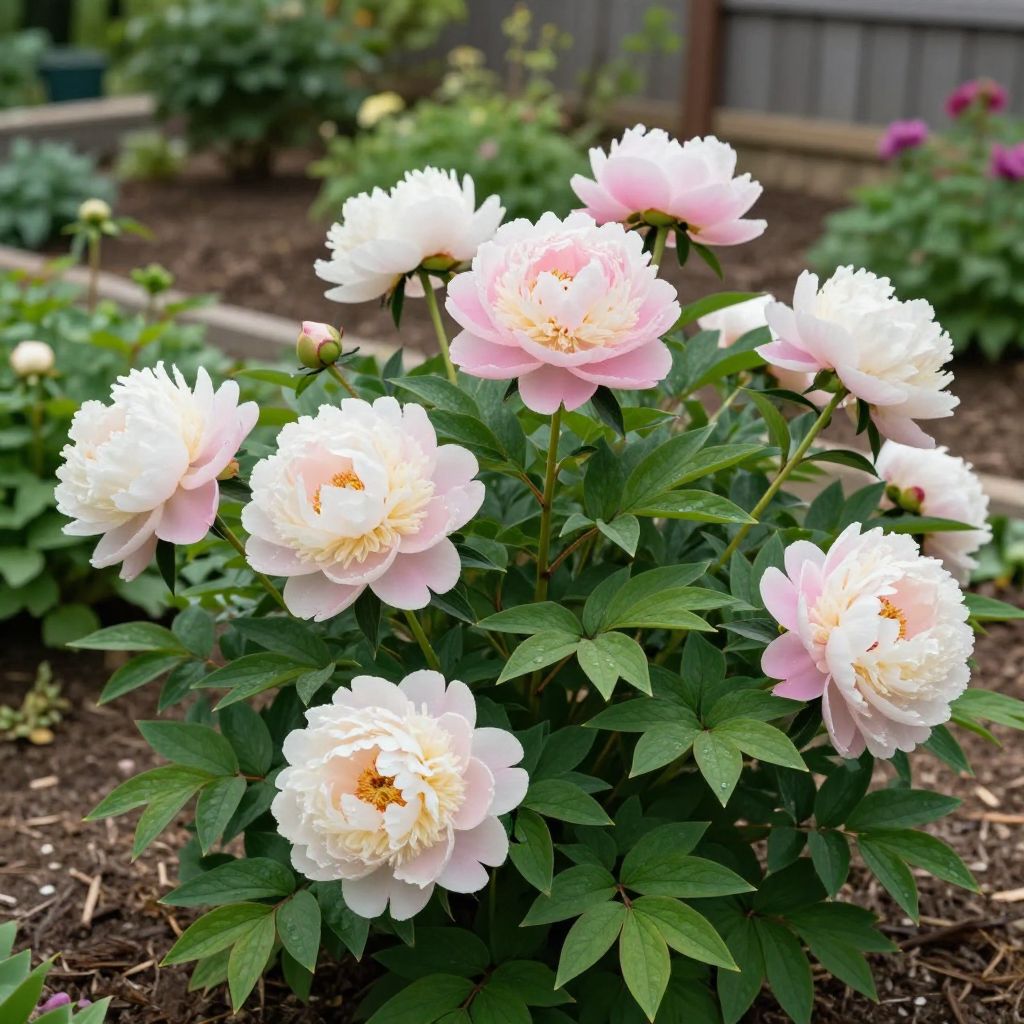
What do peonies look like? If you’re trying to identify one in a garden, peonies are easy to recognize once you know their main features: big, glossy, divided leaves; sturdy stems; and large, often fragrant flowers that can be single, semi-double, or fully double.
They’re classic perennial plants that return each year from underground roots or tubers. Depending on the type, peonies may grow as herbaceous clumps, woody shrubs, or intersectional hybrids, but all share that lush, romantic look gardeners love.
What do peonies look like?
Peonies are clump-forming perennials with thick stems, deeply cut dark green leaves, and large showy blooms in spring or early summer. Flowers may be white, pink, red, coral, or yellow, and the buds often resemble round, soft balls before they open.
How to identify peonies by their leaves, stems, and flowers
Leaves
Peony foliage is one of the easiest clues. The leaves are usually broad, divided into leaflets, and arranged along sturdy stems in a way that gives the plant a full, bushy appearance.
In herbaceous peonies, the leaves are soft green to deep green and look fresh and glossy during the growing season. In tree peonies, the foliage appears on woody stems rather than dying back completely in winter.
Stems
Herbaceous peonies have strong but soft stems that can flop if the flowers are very heavy or if the plant is in too much shade. Tree peonies have woody stems that stay above ground year-round.
If you see a plant with thick, upright stems supporting oversized blooms, that is often a peony. Many gardeners use rings or support cages because the flowers can be too heavy for the stems after rain.
Flowers
Peony flowers are usually large and rounded, sometimes as wide as a dinner plate. They may open into a single layer of petals with a visible center, or into a dense, ruffled bloom that looks almost like a pom-pom.
Before opening, peony buds are often plump and round, sometimes called “marshmallow buds” because of their soft, swollen shape. This bud stage is a useful identification clue in spring.
Plant habit
Most peonies grow as long-lived clumps that get larger over time. Mature plants can become quite wide, so they need room to spread without crowding nearby perennials.
Unlike annuals, peonies do not usually look tidy all season. They bloom spectacularly, then continue as attractive foliage plants until frost or autumn dieback, depending on the type.
Common types of peonies and how they differ
Herbaceous peonies
These are the most familiar garden peonies. They die back to the ground in fall and regrow from the roots each spring.
They usually form rounded clumps and are the type most people picture when they ask, “What do peonies look like?”
Tree peonies
Tree peonies have woody stems that remain above ground through winter. They often look more shrub-like, with larger, more open flowers and a slightly different overall shape.
They can be impressive focal plants in the landscape, especially when mature.
Intersectional peonies
Also called Itoh peonies, these are hybrids between herbaceous and tree peonies. They tend to have strong stems, large flowers, and a broad, mounded shape.
They often hold their blooms well without as much flopping, which makes them popular for home gardens.
What peonies look like through the seasons
Spring
In spring, peonies emerge as reddish or pinkish shoots that quickly grow into leafy stems. Buds form and swell before flowering begins.
This is the stage when many gardeners first notice them in the border, especially if they were cut back the previous year.
Bloom time
When peonies bloom, they become the star of the garden. The flowers are large, lush, and often fragrant, with colors ranging from soft pastel shades to deep reds.
Bloom time varies by type and climate, so peonies may flower earlier in warmer areas and later in cooler ones.
After flowering
After the blooms fade, the plant still looks attractive because of its foliage. The leaves remain useful for feeding the roots through photosynthesis, so they should be left in place until they naturally decline.
Healthy foliage is a good sign that the plant is storing energy for next year’s flowers.
Fall and winter
Herbaceous peonies die back to the ground after frost. Tree peonies keep their woody framework, though leaves may drop in autumn.
If a peony disappears completely in winter, that is normal for herbaceous types. If it is a tree peony, the woody stems should still be visible.
Growing peonies so they look their best
Sunlight
Peonies usually flower best in full sun, which means at least 6 hours of direct light most days. In hotter climates, a little afternoon shade can help protect blooms from scorching.
Too much shade is a common reason peonies grow leaves but produce few flowers.
Soil and drainage
Peonies prefer fertile, well-drained soil. Heavy, waterlogged ground can rot the roots and reduce flowering.
If your soil holds water after rain, improve it with compost and consider raised beds or mounded planting areas. Good drainage matters more than rich soil alone.
Planting depth
Plant peonies at the correct depth, especially bare-root divisions. The eyes, or growth buds, should usually sit just below the soil surface rather than deep underground.
Planting too deep is one of the most common reasons peonies fail to bloom.
Watering
Newly planted peonies need regular moisture while they establish, but mature plants prefer deep, occasional watering rather than constant wet soil.
Water at the base of the plant when the top few inches of soil dry out, adjusting for rainfall, soil type, and temperature. Avoid overhead watering late in the day if possible, since wet foliage can encourage disease.
Mulch and compost
A light layer of compost in spring can help feed the soil. Mulch is useful for moisture retention, but keep it a few inches away from the crown to avoid rot.
In colder regions, winter mulch may help protect newly planted divisions, but remove or thin it in spring so shoots can emerge freely.
How to tell peonies apart from similar plants
Peonies vs. roses
Roses have thorny stems and different leaf structure. Peonies do not have thorns, and their leaves are more deeply divided and softer in appearance.
Peonies vs. ranunculus
Ranunculus flowers can look similar in a bouquet, but the plants are much smaller and do not form the same large perennial clumps in the garden.
Peonies vs. poppies
Poppies often have thinner stems and more delicate foliage. Peonies are sturdier, with thicker stems and broader, more substantial leaves.
Common problems that change how peonies look
Few or no flowers
If your peony looks healthy but does not bloom, the most common causes are too much shade, planting too deep, or recent transplant shock.
Sometimes young plants also need time to mature before they flower well.
Flopping stems
Large double flowers can weigh stems down, especially after rain. Use a peony ring, stake, or soft plant support early in the season before the stems get tall.
Support works best when placed early, not after the plant has already fallen over.
Brown spots and mildew
Leaf spots and powdery mildew can make peonies look tired or dusty. Improve air circulation, remove badly affected leaves, and avoid crowding the plants.
Always clean up fallen foliage in autumn to reduce disease carryover.
Ants on buds
Ants are often seen on peony buds, but they are usually not harming the plant. They are attracted to the sweet nectar on the buds and flowers.
You do not need to treat ants unless there is a separate pest problem.
Pruning, cleanup, and maintenance
Deadheading
Remove spent flowers after blooming if you want a tidier look. Cut just below the faded flower, but leave the foliage in place.
Leaving the leaves helps the plant store energy for next year’s growth.
Fall cleanup
For herbaceous peonies, cut stems down after frost or when foliage has died back naturally. Dispose of diseased material rather than composting it if leaf problems were severe.
Tree peonies should not be cut to the ground. Only remove dead or damaged wood as needed.
Dividing and transplanting
Peonies dislike disturbance, so divide or move them only when necessary. If you must transplant, do it during dormancy and replant promptly in a suitable spot.
After moving, expect a pause in flowering while the plant re-establishes.
Propagation basics
Division
The most reliable way to propagate herbaceous peonies is by dividing mature clumps. Each division should have several healthy eyes and a good portion of root.
Keep divisions from drying out, and replant them at the correct depth right away.
Seed
Peonies can be grown from seed, but this is slow and unpredictable. Seed-grown plants may take years to flower and may not look exactly like the parent plant.
For most home gardeners, division is the practical method.
Using peonies in the landscape
Peonies work well in borders, cottage gardens, foundation plantings, and mixed perennial beds. Their broad shape pairs nicely with irises, catmint, salvia, daylilies, and ornamental grasses.
Because they can be long-lived, choose a spot where they can stay for years without frequent digging or disturbance.
They also make excellent cut flowers. Harvest blooms when the buds are soft and showing color if you want them to open indoors, or pick fully open flowers for immediate display.
Quick checklist for healthy-looking peonies
- Give them full sun or light afternoon shade in hot climates.
- Plant in well-drained soil enriched with compost.
- Keep the crown at the proper depth.
- Water deeply during dry spells, especially in the first year.
- Support tall or heavy-flowered stems early.
- Remove spent blooms and clean up diseased foliage.
- Leave healthy leaves in place until frost.
Conclusion
If you were wondering what peonies look like, remember the key signs: divided leaves, sturdy stems, and large, often fragrant blooms that emerge from round buds in spring. Once you know those features, peonies are easy to spot and even easier to appreciate in the garden.
For more practical help with perennial borders and flower care, you may also want to read about how to plant perennials correctly and simple ways to support heavy garden flowers.