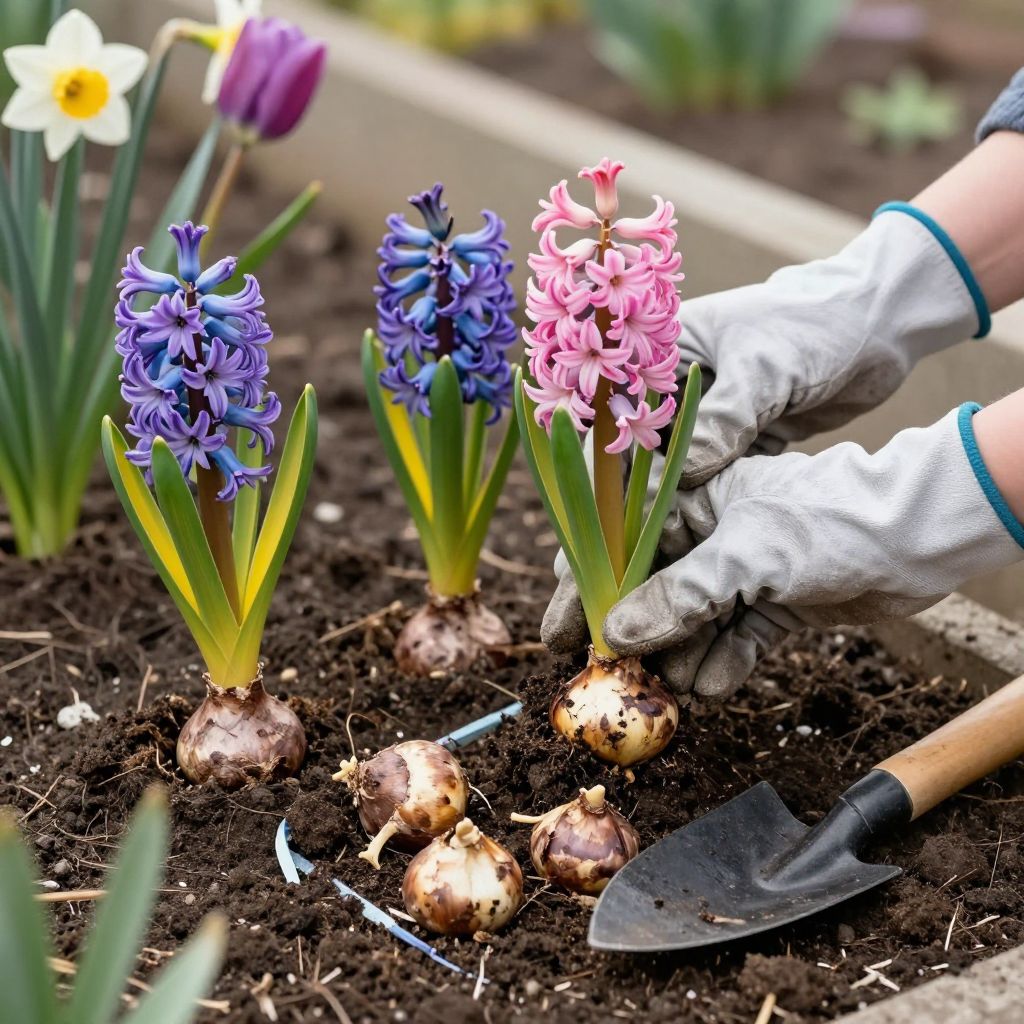
Wondering what to do with hyacinth bulbs after flowering? The short answer is: let the foliage die back naturally, then decide whether to leave the bulbs in the ground, lift and store them, or replant them according to your climate and growing conditions. The leaves feed the bulb for next year’s bloom, so the post-flowering period matters more than many gardeners realize.
Hyacinths can be treated as short-lived spring bulbs in some gardens and as reliable perennials in others. With the right aftercare, you can improve the chances of strong flowers next season and avoid common problems like rot, weak blooms, or bulbs that disappear entirely.
What to do with hyacinth bulbs after flowering?
After hyacinths finish blooming, remove the spent flower stalk, keep the leaves growing until they yellow naturally, and water lightly only while the foliage is active. Once the leaves die back, you can either leave the bulbs in well-drained soil, lift and dry them for storage, or compost them if they are declining and you prefer to replace them.
Step 1: Remove the faded flower spike, not the leaves
As soon as the flowers fade, cut off the flower stalk at the base. This prevents the plant from putting energy into seed production, while the leaves continue to photosynthesize and recharge the bulb.
Do not tie, braid, or cut back the leaves early. The foliage is the bulb’s energy source for next year’s flowers.
What to leave in place
- Keep the green leaves intact.
- Leave the bulb in the soil or pot while the foliage is still active.
- Continue normal care until the leaves begin to yellow and collapse naturally.
How long should hyacinth leaves stay on the plant?
Usually, the foliage should remain for several weeks after flowering, until it turns yellow or straw-colored. The exact timing depends on temperature, sunlight, and whether the bulbs are growing in the ground or in containers.
If the leaves are still green, they are still working. Cutting them too soon often leads to smaller blooms or no bloom at all the following season.
Should you leave hyacinth bulbs in the ground?
In a well-drained garden bed, you can often leave hyacinth bulbs in place after flowering. They may bloom again, though garden hyacinths sometimes perform best for one strong season and then gradually decline, especially in warm climates or heavy soil.
Leave them in place if:
- The soil drains well and does not stay soggy.
- The bulbs are in a sunny or lightly shaded spot.
- You want a low-maintenance approach and are happy with possibly smaller blooms later.
Lift them if:
- The bed is wet, heavy, or prone to summer rot.
- You want to replant them elsewhere.
- You grow them in a climate where summer heat and humidity reduce bulb performance.
Care after flowering in the garden
Once the blooms are gone, the goal is to help the bulb store energy without creating conditions that encourage rot. Hyacinths prefer moist but not wet soil while the leaves are active.
- Deadhead the flower stalk after blooming.
- Keep the plant in bright light.
- Water only when the soil begins to dry slightly.
- Avoid heavy feeding unless your soil is poor.
- Allow the foliage to fade naturally.
If your soil is rich and well prepared, extra fertilizer is often unnecessary. If you do feed, use a light, balanced bulb fertilizer or compost top-dressing according to local practice, not a heavy dose that can increase leafy growth at the expense of flowers.
What to do with hyacinth bulbs after flowering in pots
Container-grown hyacinths need a little more attention because pots dry out and heat up faster than garden soil. After flowering, keep the pot in a bright location and water sparingly so the compost stays lightly moist, not saturated.
Container aftercare checklist
- Remove the spent flower spike.
- Keep the pot in bright light, ideally outdoors if conditions allow.
- Water only when the top layer of compost starts to dry.
- Do not let the pot sit in a saucer of water.
- Wait for the leaves to yellow before lifting the bulbs.
Once the foliage dies back, you can either store the bulbs dry and replant them in autumn, or plant them into the garden if the soil and climate are suitable.
Can you replant hyacinth bulbs after flowering?
Yes, but timing and bulb condition matter. If the bulbs are firm and healthy, you can replant them after the foliage has finished dying back. In many gardens, the best time to replant is during the normal bulb-planting season in autumn, when the soil cools and roots can establish before winter.
If you lift bulbs too early, while the leaves are still green, they may not store enough energy to flower well. If you wait until the foliage has fully died, the bulbs are easier to handle and store.
How to replant successfully
- Choose a sunny, well-drained site.
- Plant bulbs at about 2 to 3 times their own depth, pointy end up.
- Space them so air can move between bulbs.
- Mix in compost if your soil is poor, but avoid waterlogged conditions.
How to store hyacinth bulbs after flowering
If you are not replanting right away, store the bulbs once the foliage has dried down. Good storage keeps them firm and dry until autumn planting or the next suitable season.
Storage steps
- Lift the bulbs gently from the soil or pot.
- Brush off loose compost, but do not wash them unless necessary.
- Let them dry in a cool, airy place out of direct sun.
- Remove any obviously soft, moldy, or damaged bulbs.
- Store them in a mesh bag, paper bag, or tray with airflow.
Avoid airtight plastic bags. Trapped moisture encourages mold and soft rot.
What if the bulbs look weak after flowering?
Some hyacinth bulbs decline after one display, especially if they were forced indoors or grown in a warm climate. Weak leaves, poor flowering, or soft bulbs are signs that the bulb may not perform well again.
Common signs and what they mean
- Yellowing too early: The bulb may be stressed by drought, disease, or poor roots.
- Soft or mushy bulb: Likely rot; discard it.
- Few or no flowers next year: The bulb may not have stored enough energy.
- Lots of leaves, few blooms: Too much shade, too much nitrogen, or a bulb that is declining.
If a bulb is clearly deteriorating, it is often better to replace it than to keep nursing a poor performer for another season.
Indoor hyacinths after flowering: different from garden bulbs
Forced hyacinths grown indoors often bloom beautifully once, then struggle to repeat the performance indoors. After flowering, cut off the spent flower stalk and keep the leaves in bright light near a cool window if possible.
You can move the pot outdoors after frost danger passes, or plant the bulb in the garden once the foliage has yellowed. This gives it a chance to rebuild strength naturally.
Indoor bulbs are usually not worth forcing again immediately indoors the next season. They often need a full recovery period in the garden before they can bloom well again.
Common mistakes to avoid
- Cutting leaves too soon: This is the most common reason for poor flowering later.
- Overwatering after bloom: Wet soil can rot resting bulbs.
- Storing bulbs while damp: Moisture leads to mold and decay.
- Planting in heavy, poorly drained soil: Hyacinths dislike soggy conditions.
- Expecting perfect repeat blooms every year: Some bulbs naturally decline over time.
How to improve next year’s bloom
If you want the best chance of flowers next spring, focus on bulb recovery and good planting conditions. Hyacinths need enough sun, decent drainage, and time to recharge after blooming.
Best practices for stronger bulbs
- Plant in a sunny spot or bright partial shade.
- Use loose, well-drained soil amended with compost if needed.
- Keep foliage healthy until it dies back naturally.
- Lift and store bulbs if your soil stays wet in summer.
- Replant in autumn at the proper depth for your climate.
In colder regions, mulching can help protect bulbs through winter. In warmer regions, good drainage and avoiding excessive summer moisture are often more important than insulation.
When to divide or replace hyacinth bulbs
Hyacinths can multiply slowly over time, but they do not always need frequent division. If clumps become crowded or flowering declines, you can lift and separate offsets once the foliage has died back and the bulbs are dormant.
That said, many gardeners simply replace weak bulbs every few years rather than trying to maintain old ones indefinitely. This is often the easiest route for dependable spring color.
Quick after-flowering checklist
- Deadhead the spent bloom stalk.
- Keep the leaves growing until they yellow naturally.
- Water lightly while the foliage is active.
- Lift and store bulbs only after the leaves die back, if needed.
- Replant in autumn in well-drained soil, or discard weak bulbs.
Conclusion
What to do with hyacinth bulbs after flowering depends on your soil, climate, and whether the bulbs are growing in the garden or a pot. The most important step is simple: let the leaves finish feeding the bulb before you cut them back or store it.
If you want to keep learning about spring bulbs and seasonal garden care, you may also enjoy reading more about hyacinth growing advice and general bulb planting guidance.