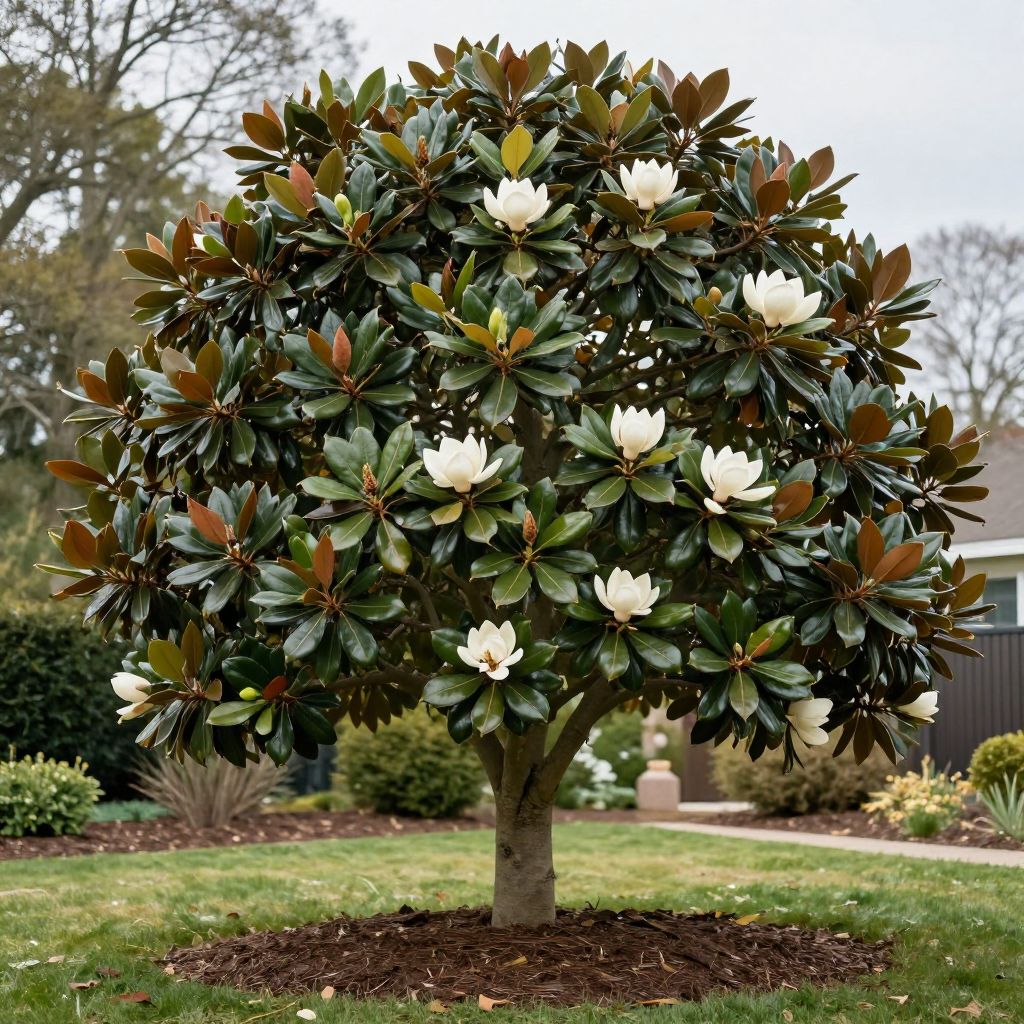
If you’re asking, “What does a magnolia tree look like?” the short answer is: broad, elegant, and often very showy. Magnolias can be evergreen or deciduous, but most are recognized by their large, glossy leaves, smooth gray bark, and big, fragrant flowers that appear before or with the leaves.
They are one of the easiest ornamental trees to identify once you know what to look for, and they can be outstanding landscape trees when planted in the right spot. Below, you’ll learn how to recognize a magnolia, how it grows, and how to care for one successfully.
What does a magnolia tree look like?
A magnolia tree is usually a medium to large ornamental tree with a rounded or pyramidal shape, thick leaves, and large flowers in white, pink, purple, or yellow depending on the species. Many magnolias have smooth gray bark, a dense canopy, and a striking silhouette that stands out in any garden.
Key features that help you identify a magnolia tree
Leaves
Magnolia leaves are often one of the first clues. They are typically large, leathery, and glossy, with smooth edges and a deep green color on top.
- Evergreen magnolias usually keep leaves year-round and may have rusty brown fuzz underneath.
- Deciduous magnolias drop their leaves in fall and often have thinner, softer-looking foliage.
- Leaf size varies by species, but many are noticeably bigger than the leaves of nearby landscape trees.
Flowers
Magnolia flowers are usually the most memorable feature. They are large, waxy, and often fragrant, with petals that can be tulip-shaped, cup-shaped, or star-shaped depending on the type.
- Flowers may appear before the leaves in early spring on deciduous types.
- Some bloom again lightly in summer, especially evergreen varieties.
- Colors commonly include white, cream, pink, purple, and yellow.
Bark and branches
Young magnolia bark is often smooth and gray, while older trees may develop a more textured look. Branches can spread wide and low, giving the tree a layered, graceful shape.
Many magnolias have a naturally horizontal branching habit, which makes them look broad and sculptural even when not in bloom.
Fruit and seed pods
After flowering, magnolias often produce cone-like seed pods. These are not true cones, but they look similar and split open to reveal bright red or orange seeds.
If you see these pods, it is another strong sign you’re looking at a magnolia tree.
Common magnolia types and how they differ
Southern magnolia
Magnolia grandiflora is a classic evergreen magnolia with very large, glossy leaves and huge creamy white flowers. It often has a dense, upright form and is commonly used as a shade or specimen tree in warmer climates.
Star magnolia
Magnolia stellata is a smaller deciduous magnolia with narrow petals that create a star-like bloom. It is often grown as a large shrub or small tree and is valued for early spring flowers.
Saucer magnolia
Magnolia x soulangeana is a popular deciduous hybrid known for large tulip-shaped flowers in pink, purple, and white. It usually blooms early and has a rounded, ornamental shape.
Cucumber tree magnolia
Magnolia acuminata has more understated yellow-green flowers and a taller, more upright habit. Its leaves are typically large and smooth, but the bloom is less dramatic than many other magnolias.
How magnolia trees grow in the landscape
Magnolias are usually grown as specimen trees, meaning they are planted to stand out as a focal point. Their size and form make them useful near lawns, entryways, and open garden beds where their flowers can be seen clearly.
Depending on the species, they may grow as a small tree, large shrub, or full-sized shade tree. Mature size can vary a lot, so always check the specific type before planting.
Best growing conditions
- Sunlight: Most magnolias flower best in full sun to light shade.
- Soil: They prefer rich, well-drained soil with plenty of organic matter.
- Moisture: Even moisture is important, especially while the tree is young.
- Drainage: Poor drainage can lead to root stress and decline.
In hot climates, a little afternoon shade can help reduce leaf scorch. In cooler regions, more sun usually supports better flowering.
How to plant a magnolia tree
Planting correctly matters because magnolias dislike root disturbance. Choose the site carefully before you dig, since moving an established magnolia can be difficult.
- Pick a location with enough room for the mature spread.
- Test drainage by watering the hole and seeing whether water drains within a reasonable time.
- Dig a hole only as deep as the root ball and roughly 2 to 3 times as wide.
- Set the tree so the root flare sits at or slightly above soil level.
- Backfill with native soil if it is workable, improving only lightly with compost if needed.
- Water thoroughly after planting and mulch around the base.
Avoid planting too deep. This is one of the most common magnolia mistakes and can lead to poor establishment and root problems.
Mulching tips
Apply 2 to 4 inches of mulch over the root zone, but keep it a few inches away from the trunk. A mulch ring helps conserve moisture, moderate soil temperature, and reduce weeds.
Watering and feeding a magnolia tree
Young magnolias need regular watering while they establish, especially during dry spells. Mature trees are more tolerant, but they still perform best with consistent moisture rather than repeated drought stress.
Water deeply and less often instead of giving shallow, frequent sprinklings. The goal is to moisten the root zone, not just the surface.
When to fertilize
Magnolias usually do well in moderately fertile soil and may not need much feeding if the soil is healthy. If growth is weak or leaves look pale, a soil test is the best place to start before adding fertilizer.
- Compost can improve soil structure and organic matter.
- Overfertilizing can push weak growth and reduce flowering.
- Always follow local soil conditions rather than guessing based on a calendar.
Pruning a magnolia tree
Magnolias generally need little pruning. Their natural shape is part of their appeal, and heavy pruning can spoil the form and reduce flowering.
What to prune
- Dead, damaged, or crossing branches
- Low branches that interfere with paths or structures
- Small corrective cuts to improve structure when the tree is young
Light pruning is best done after flowering on spring-blooming types, or during a mild dormant period if necessary. Avoid major cuts unless you have a clear reason, because magnolias can be slow to recover from severe pruning.
Common problems to watch for
Yellowing leaves
Yellow leaves can signal poor drainage, compacted soil, nutrient imbalance, or root stress. Check the soil first. If it stays wet for long periods, drainage is likely the issue.
Leaf scorch or browning
Brown edges or scorched leaves often happen during heat, drought, or windy exposure. Mulch, deep watering, and some afternoon shade can help in stressful sites.
Few or no flowers
If a magnolia is not blooming well, the cause may be too much shade, late frost damage, overpruning, or a young tree that is still establishing. Some species also flower more heavily in certain years than others.
Pests and diseases
Magnolias are relatively resilient, but they can occasionally have scale insects, aphids, leaf spot, or sooty mold. Inspect the leaves and stems regularly, especially on stressed trees.
- Remove heavily affected leaves if disease is limited.
- Improve airflow around the tree.
- Keep the tree healthy with proper water and mulch.
Can you grow a magnolia in a small garden?
Yes, but choose the right type. Smaller magnolias, such as star magnolia or some compact hybrids, are better suited to limited spaces than large evergreen species.
Check the mature height and spread before buying. A tree that looks manageable in a nursery pot may become much larger than expected in a few years.
How to recognize a magnolia at different times of year
In spring
Look for large, dramatic blooms, often appearing before leaves on deciduous types. This is the easiest season for identification.
In summer
Focus on leaf texture, growth habit, and bark. Evergreen magnolias are especially easy to spot because of their glossy foliage.
In fall and winter
Deciduous magnolias may show bare branches, fuzzy flower buds, and seed pods. Evergreen types remain leafy and keep their strong structure through colder months in suitable climates.
Simple checklist for identifying a magnolia tree
- Large, glossy, or leathery leaves
- Big white, pink, purple, or yellow flowers
- Fragrant blooms on many species
- Smooth gray bark or a broad branching form
- Cone-like seed pods after flowering
Conclusion
A magnolia tree is usually easy to recognize once you notice its bold leaves, showy flowers, and elegant branching habit. If you’re planning to grow one, give it room, well-drained soil, and steady care while it establishes.
If you want help identifying another tree in your yard, you may also find this guide useful: what type of tree is this?