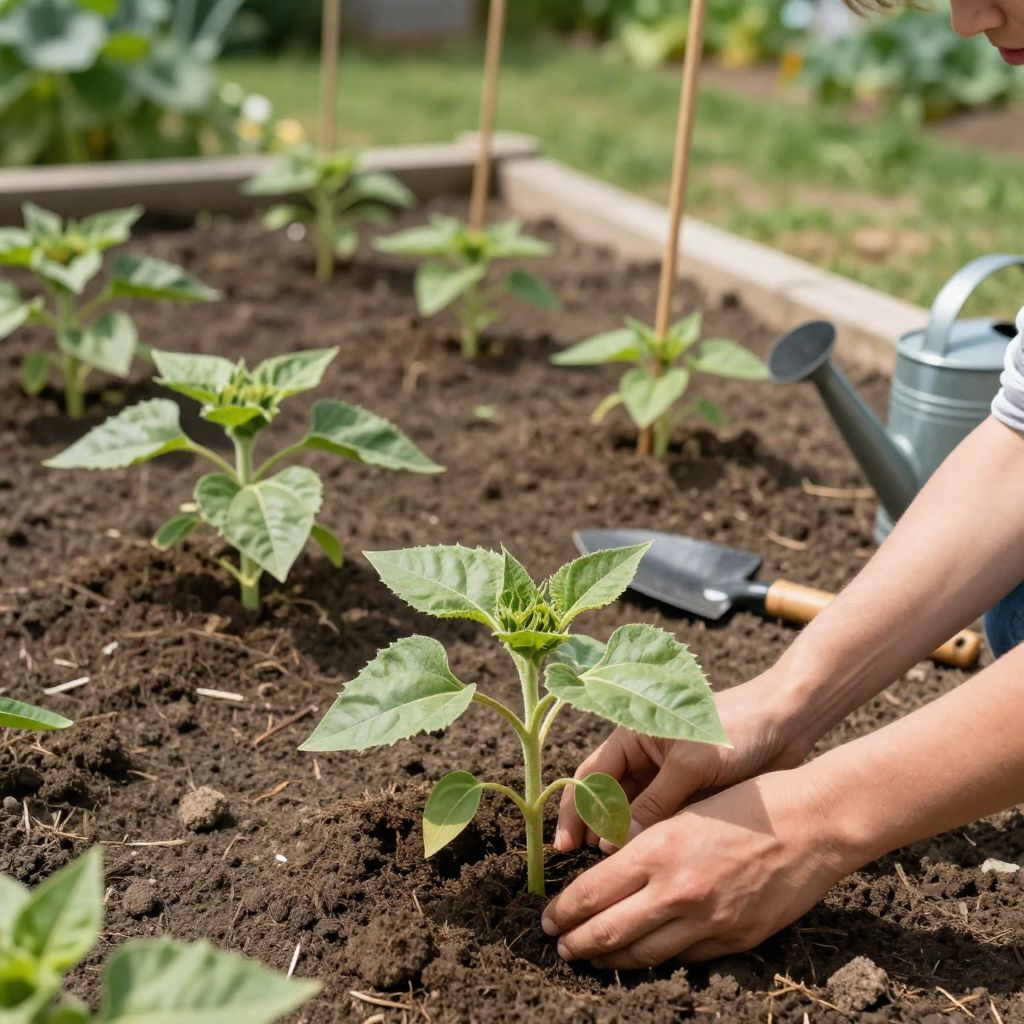
Wondering where to plant sunflowers so they grow tall, sturdy, and full of blooms? The right spot makes a big difference, especially because sunflowers need strong light, good drainage, and room for their roots and stems to develop properly.
Choose a location with full sun, loose soil, and protection from strong wind if you’re growing tall varieties. Sunflowers do best when they get at least 6 to 8 hours of direct sunlight a day, and they should be planted where they won’t be shaded by trees, fences, or buildings.
Where to plant sunflowers?
Plant sunflowers in the sunniest part of your garden, in well-drained soil that stays evenly moist but never soggy. Give tall types extra space and, if possible, a sheltered position out of harsh wind. A spot with room for roots, airflow, and easy watering will produce stronger plants and better blooms.
Best locations for sunflowers in the garden
Sunflowers are flexible, but they perform best in a few specific places. The goal is to match the plant’s height, root needs, and sun requirements with the right site.
Open, full-sun beds
An open vegetable bed, flower border, or dedicated cutting patch is often ideal. Sunflowers grow best where nothing blocks the light for most of the day.
If you are deciding between several spots, choose the one that gets morning through late-afternoon sun. Less sun usually means fewer flowers, weaker stems, and slower growth.
Along fences or property edges
Fences can be useful as long as they do not cast too much shade. Shorter sunflowers can work well in front of a fence, while taller types can be planted where they won’t lean into it or be crowded by nearby shrubs.
A fence can also give some wind protection, which is helpful for tall single-stem sunflowers that may otherwise snap or topple.
Behind lower plants in mixed borders
Sunflowers can be used as a seasonal backdrop behind shorter annuals or vegetables. This works best when you place them where they won’t shade sun-loving plants too early in the season.
Keep in mind that mature sunflowers can cast a lot of shade later on, so avoid planting them where that shade would interfere with nearby crops.
In large containers on sunny patios
Dwarf or shorter sunflower varieties can grow well in containers if the pot is large enough and the site is bright. Use a container with drainage holes and place it where it receives full sun.
Container-grown sunflowers dry out faster than those in the ground, so this option works best if you can check moisture regularly.
What sunflowers need from the site
Before you plant, check the conditions in the spot you’re considering. Sunflowers are not especially fussy, but they do have a few non-negotiables.
- Sunlight: At least 6 to 8 hours of direct sun daily.
- Soil drainage: Soil should drain well and not stay waterlogged after rain.
- Space: Enough room for the mature width and height of the variety.
- Airflow: Good circulation helps reduce disease problems.
- Wind protection: Tall varieties do better with some shelter.
If your soil is heavy clay, choose a raised bed or improve the planting area with compost so water moves through more easily. If your soil is very sandy, adding organic matter helps it hold moisture longer.
How much sun do sunflowers really need?
Sunflowers are true sun lovers. They need full sun to produce strong stems, large flower heads, and good seed development.
In partial shade, they may still grow, but they often become leggy and lean toward the light. Flowers can be smaller, and stems may be weaker than those grown in a brighter location.
Signs the site is too shady
- Long, thin stems that flop over
- Plants leaning strongly toward one direction
- Fewer buds or smaller flowers
- Slow growth compared with nearby plants in better light
If you only have one partly shaded area, choose the brightest section and avoid placing sunflowers directly under trees or beside tall structures that block the afternoon sun.
Soil and drainage: the foundation of healthy sunflowers
Sunflowers grow best in soil that is loose, fertile, and well drained. They are not usually demanding, but they dislike sitting in wet ground.
Before planting, loosen the soil to help roots grow deeply. Mixing in compost is often enough to improve structure and fertility in average garden soil.
Good soil preparation steps
- Remove weeds and large stones from the planting area.
- Loosen the soil to a moderate depth so roots can spread.
- Work in compost if the soil is poor, compacted, or thin.
- Check drainage after rain or watering.
- Plant where water does not pool for long periods.
Avoid over-enriching the soil with too much nitrogen-rich fertilizer. That can encourage leafy growth at the expense of flowers and may make tall plants more likely to flop.
How to choose the right spot based on sunflower height
Not all sunflowers need the same amount of space. The variety you choose should guide where you plant it.
Tall sunflowers
Tall types are best placed at the back of borders, along fences with support, or in open areas where wind is not extreme. They need room to rise without shading smaller plants too soon.
Give them space so they do not crowd one another. Crowding can reduce airflow and make stems more vulnerable to disease and breakage.
Medium and dwarf sunflowers
Shorter varieties are easier to place in front of borders, in vegetable beds, and in containers. They still need full sun, but they are less likely to need staking.
These are often the best choice if your garden is small or if you want sunflowers near a patio, walkway, or entryway.
Should you plant sunflowers near vegetables?
Yes, but with planning. Sunflowers can fit well in a vegetable garden if you place them where they will not shade crops that need full sun all day.
They can also attract pollinators and add height to a mixed planting. However, in a small bed, a mature sunflower may compete with nearby plants for light, water, and nutrients.
Good companion uses
- At the north side of a bed, where they are less likely to shade other crops
- As a temporary screen or backdrop
- In pollinator-friendly borders near herbs and flowers
What to avoid
- Planting them in front of low-growing vegetables that need full sun
- Putting them too close to root crops that dislike competition
- Using them in cramped beds where airflow is poor
Container growing: where to place potted sunflowers
If you are growing sunflowers in pots, location matters even more. Containers heat up and dry out faster than garden soil, so the plants need a bright, stable spot.
Place the pot where it gets full sun and where you can water it easily. A windy balcony may need a more sheltered position, especially for taller plants.
Container placement tips
- Use a pot with drainage holes.
- Set it on a stable surface so it will not tip over.
- Choose a location with strong sun and easy access for watering.
- Rotate the pot if the plant leans toward the light.
If your patio gets reflected heat from walls or paving, check moisture more often. Containers can dry out quickly in hot weather.
When to plant sunflowers in relation to location
The best place is only useful if the timing is right. Sunflowers are usually planted after the danger of frost has passed, once soil has warmed enough for good germination.
In cooler climates, a warm, sheltered location can help young seedlings establish faster. In hot climates, a spot with morning sun and some protection from scorching afternoon heat may reduce stress, especially for young plants.
Because local weather varies, it is best to follow your region’s frost dates and soil conditions rather than using a fixed calendar date.
Common mistakes when choosing where to plant sunflowers
A few site-selection errors can limit sunflower growth even when the plants are otherwise healthy.
- Too much shade: Leads to weak, stretched stems and fewer blooms.
- Poor drainage: Can cause root stress and disease problems.
- Overcrowding: Reduces airflow and makes plants compete for light.
- Excess wind exposure: Tall stems may bend or break.
- Planting too close to other large plants: Causes competition for water and nutrients.
If you are unsure about a site, observe it for a full day before planting. Watch where the sun falls, where water collects, and how much wind the area gets.
How to improve a less-than-perfect spot
Not every garden has an ideal sunflower location, but you can often make a workable one better.
- Increase sunlight by trimming back nearby overgrowth if appropriate.
- Improve drainage with compost or by planting in a raised bed.
- Choose a shorter variety if the site is windy or limited in space.
- Stake tall plants early before they start leaning.
- Water deeply when the top layer of soil dries out, especially during establishment.
These adjustments can make a big difference, especially for young sunflowers that are just getting established.
Simple planting checklist
Use this quick checklist before you put sunflowers in the ground or in pots:
- Full sun for most of the day
- Well-drained soil or a container with drainage holes
- Enough space for the mature size
- Some shelter from strong wind if growing tall types
- Easy access for watering and maintenance
Conclusion
The best answer to where to plant sunflowers is simple: choose the sunniest, best-drained spot you have, with enough room for the variety you’re growing. If you match the location to the plant’s height and your local conditions, you’ll give your sunflowers the strongest start possible.
If you want to keep planning your flower bed, you may also enjoy reading about how to grow sunflowers from seed and best companion plants for a sunny garden.