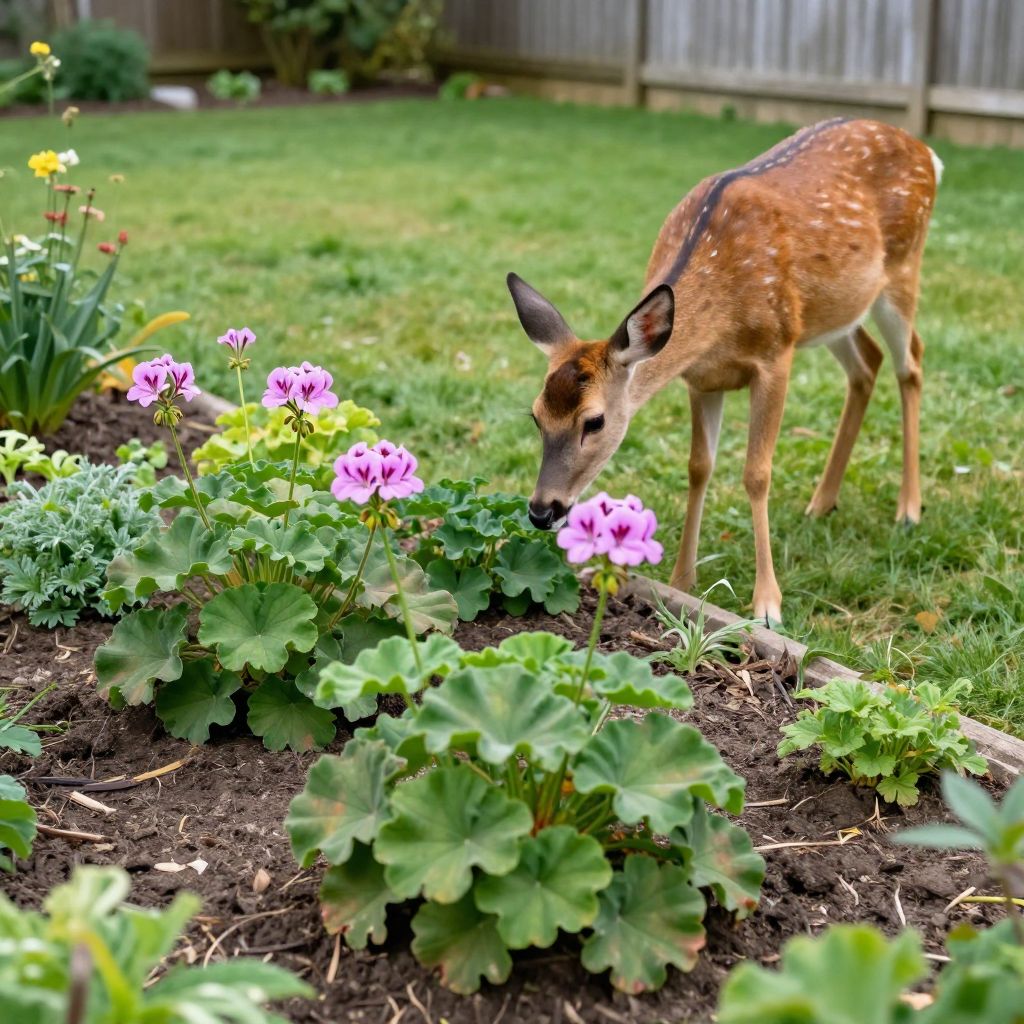
Are geraniums deer resistant? In many gardens, yes—geraniums are usually one of the plants deer are less likely to browse, especially compared with tender annuals and leafy perennials. But “resistant” does not mean “deer-proof,” and hungry deer may still sample them when food is scarce.
If you want to use geraniums for color without inviting constant damage, it helps to understand why deer tend to avoid them, which types are most dependable, and how to grow them so they recover quickly if nibbled.
Are geraniums deer resistant?
Yes, geraniums are generally considered deer resistant, not deer proof. Their aromatic foliage and slightly fuzzy, textured leaves are often unappealing to deer, so they are usually passed over in favor of tastier plants. However, heavy deer pressure, drought, or limited food can still lead to browsing.
Why deer usually leave geraniums alone
Deer choose plants based on scent, texture, moisture, and how easy they are to chew. Geraniums tend to score lower on their preference list because the foliage is often fragrant and somewhat coarse.
What makes geraniums less attractive
- Strong foliage scent: Many geraniums release a noticeable aroma when touched.
- Textured leaves: The leaves are not as tender as many deer favorites.
- Less palatable growth: Deer often prefer softer, moisture-rich plants first.
That said, deer behavior is local and unpredictable. A plant that is usually ignored in one yard may be eaten in another, especially near woods, during dry weather, or when deer populations are high.
Which geraniums are most likely to be deer resistant?
Gardeners often use the word geranium for several different plants, but the most common bedding plant is Pelargonium, often called zonal geranium, ivy geranium, or scented geranium. These are the plants most often described as deer resistant in home gardens.
Common types you may see
- Zonal geraniums (Pelargonium hybrids): popular for beds, containers, and edging.
- Ivy geraniums (Pelargonium peltatum): trailing plants for baskets and window boxes.
- Scented geraniums: grown mainly for fragrant foliage rather than showy flowers.
True hardy geraniums, also called cranesbills, are a different group of plants. Many are also considered deer resistant, but their growth habit, hardiness, and garden use differ from the bedding geraniums most people picture.
How to grow geraniums so they stay healthy
Healthy geraniums are better able to tolerate occasional browsing and bounce back after minor damage. Give them the right light, soil, and drainage, and they’ll usually perform much better than stressed plants.
Sunlight
Geraniums bloom best in full sun in most climates, usually with at least 6 hours of direct light. In very hot regions, afternoon shade can help prevent stress and wilting.
Soil and drainage
Use loose, well-drained soil. Geraniums dislike soggy roots, so heavy clay should be improved with compost and planted in raised beds or containers if drainage is poor.
- Mix in compost to improve structure and moderate moisture.
- Choose pots with drainage holes.
- Avoid low spots where water collects after rain.
Watering
Water deeply, then let the top layer of soil dry slightly before watering again. Overwatering is a common mistake and can lead to root problems, weak growth, and fewer flowers.
In containers, check moisture more often because pots dry out faster than garden beds. In cooler or humid weather, geraniums usually need less frequent watering than in hot, windy conditions.
Feeding
Too much fertilizer can create lush foliage with fewer blooms. A light, balanced feeding program is usually enough, especially if your soil already contains organic matter. Follow the product label and adjust to your plant’s growth and your soil type.
Planting geraniums in deer-prone gardens
If deer visit your yard regularly, placement matters as much as plant choice. Geraniums do best when they are easy for you to maintain but not isolated as the only food source in an open area.
Best planting strategies
- Plant geraniums near the house, patio, or other high-traffic areas where deer feel less comfortable.
- Use them as part of a mixed border with other deer-resistant plants.
- Group several plants together so browsing on one edge does not ruin the whole display.
- Keep them well watered and mulched to reduce stress during dry spells.
Tip: Deer are more likely to browse isolated plants at the edge of a property than dense plantings near human activity.
What to do if deer do nibble your geraniums
Even deer-resistant plants can be damaged. The good news is that geraniums often recover well if the stems are not heavily stripped and the roots remain healthy.
After browsing damage
- Trim torn stems back to healthy tissue with clean pruners.
- Remove crushed leaves that may invite disease.
- Water normally, but do not overwater stressed plants.
- Watch for new growth from remaining nodes.
If deer repeatedly return, you may need to combine plant choice with physical protection. A plant that is “resistant” may still need help in a high-pressure area.
How to protect geraniums from deer
No single method works everywhere, so the best approach is usually a combination of deterrents. Start with the least disruptive option and increase protection if browsing continues.
Practical deer-control options
- Fence barriers: The most reliable solution for heavy deer pressure.
- Netting or cages: Useful for containers, young plants, or small beds.
- Motion-activated devices: Can help, though deer may adapt over time.
- Repellent sprays: Often need reapplication after rain and may work better when rotated.
- Plant layering: Surround geraniums with strongly scented or less palatable plants.
Repellents work best when applied before deer establish a feeding pattern. If deer have already found your geraniums, you may need to reapply more often and combine sprays with barriers.
Common growing problems that can look like deer damage
Not every chewed-looking leaf is the result of deer. Other pests and environmental stress can create similar damage, so it helps to check carefully before assuming browsing.
Look for these clues
- Deer damage: stems and leaves are torn or missing, often higher up on the plant.
- Insects: ragged holes, stippling, or sticky residue may point to caterpillars, aphids, or beetles.
- Slugs and snails: irregular holes, usually lower on the plant, often with slime trails.
- Heat stress: wilting, scorched edges, and flower drop during hot afternoons.
Inspect the plant in the early morning or evening, when pests are more active and damage is easier to spot. If you find insects, treat the actual pest problem rather than assuming deer are responsible.
Pruning and maintenance for better regrowth
Regular grooming keeps geraniums fuller and more resilient. Pinching back leggy stems encourages branching, which can help the plant recover more quickly if a deer nips the tips.
Simple maintenance routine
- Deadhead spent flowers to keep blooms coming.
- Pinch back long stems to promote bushier growth.
- Remove yellowing leaves to improve airflow.
- Check containers and beds for pests while you prune.
Clean tools matter. Use sharp pruners or snips so cuts heal cleanly and disease risk stays low.
Can you use geraniums in a deer-resistant landscape?
Yes, geraniums are a useful part of a deer-resistant planting plan, especially for seasonal color in beds, borders, and containers. They are best treated as one piece of the design, not the only defense.
Good companion ideas
- Lavender
- Salvia
- Catmint
- Yarrow
- Ornamental alliums
Mixing textures and scents can make the planting less appealing to deer overall, while still giving you a colorful display.
Bottom line
Geraniums are generally deer resistant, and many gardeners can grow them successfully even where deer are common. The best results come from pairing the right plant with good drainage, enough sun, careful watering, and a little extra protection if deer pressure is high.
If you want to reduce browsing in your garden, it also helps to learn what deer prefer elsewhere in the landscape. You may find this guide useful: what to feed deer.