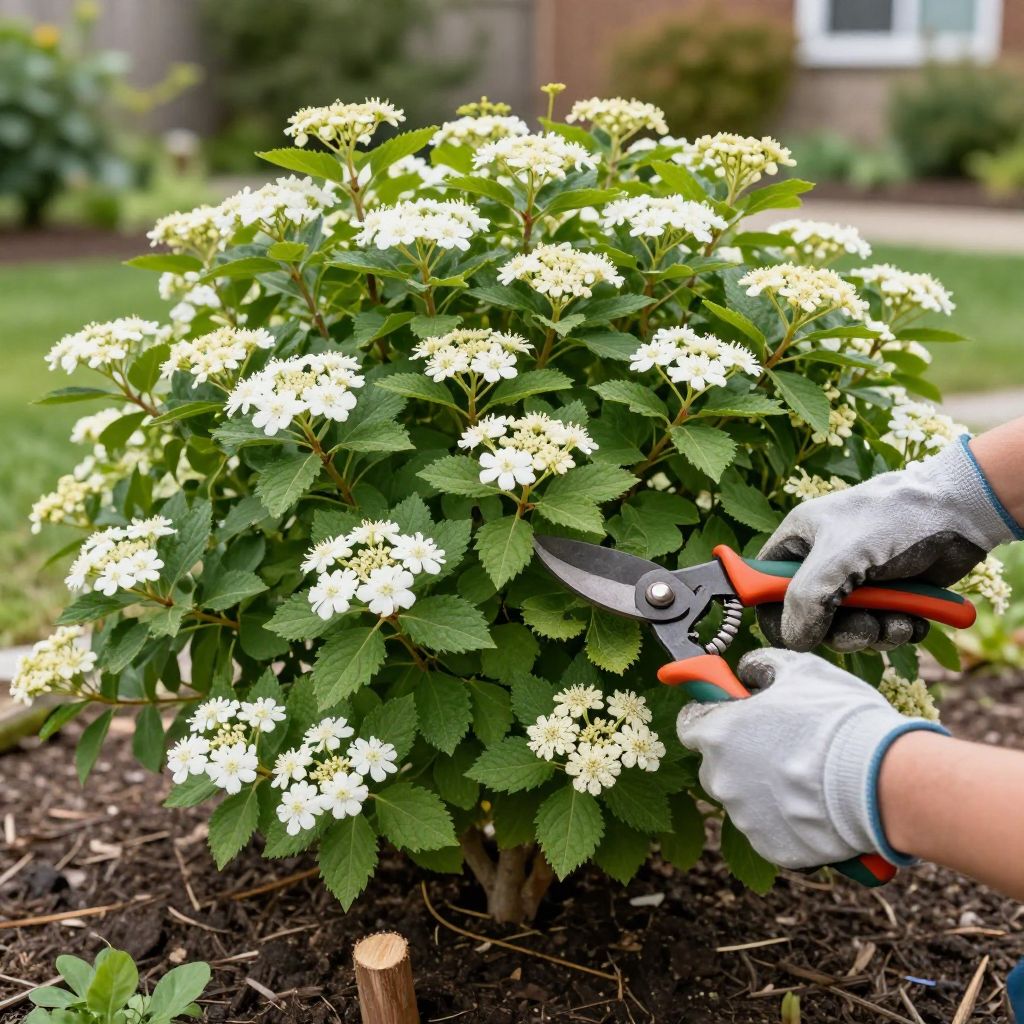
Wondering when to prune viburnum without losing flowers? The best time depends on the type of viburnum you grow and when it blooms. In general, prune spring-flowering viburnums right after they finish blooming, while summer- or late-flowering types are usually pruned in late winter or early spring before new growth starts.
Light shaping, deadheading, and removal of damaged wood can be done at almost any time, but heavy pruning at the wrong season can reduce flowering for a year or more. Knowing your shrub’s bloom habit is the key to pruning it well.
When to prune viburnum?
Prune viburnum based on bloom time: spring-flowering viburnums are best pruned immediately after flowering, while non-spring bloomers can usually be pruned in late winter or early spring before growth begins. Remove dead, damaged, or crossing stems anytime, but avoid major pruning just before buds form.
Why pruning timing matters
Viburnums set flower buds at different times depending on the species. If you prune a spring bloomer in winter, you may cut off the buds that would have opened that year.
That is why timing matters more than the pruning cut itself. A well-timed, moderate prune keeps the shrub full and healthy without sacrificing the display.
Spring-flowering viburnums
Examples include many popular landscape viburnums that bloom in spring on wood formed the previous season. These should be pruned right after flowering, giving the plant time to grow new shoots that will carry next year’s buds.
Summer- or late-flowering viburnums
Types that bloom later in the season often flower on current-season growth or set buds later. These are usually pruned in late winter or early spring, before active growth begins, so you can shape them without removing this year’s flower buds.
How to tell what kind of viburnum you have
If you are unsure of the exact species, watch when it blooms. A shrub that flowers in spring should generally be treated as a “prune after bloom” plant.
When the label is gone, use these clues:
- Spring bloom usually means prune after flowering.
- Late bloom often means prune in late winter or early spring.
- Old, overgrown shrubs may need renewal pruning regardless of bloom time, but that should be done carefully.
If you still are not sure, do only light pruning until you can identify the plant more confidently.
Best pruning times by season
Late winter to early spring
This is a good time for shaping viburnums that bloom later in the season or for removing winter damage. The shrub is still dormant or just waking up, so cuts are easy to make and new growth will soon cover them.
Avoid hard pruning spring-flowering viburnums at this time unless you are willing to lose blooms.
Right after flowering
This is the ideal window for most spring-blooming viburnums. Pruning soon after the flowers fade gives the shrub the rest of the growing season to produce new shoots and form next year’s flower buds.
If you wait too long into summer, you may still be okay with light shaping, but heavy cuts become riskier for next year’s bloom.
Mid- to late summer
Use this period mainly for light touch-up pruning, deadheading, or removing a stray branch. Avoid major cuts during heat or drought stress, because the shrub may struggle to recover.
Fall
Fall is usually not the best time for pruning viburnum. New cuts can stimulate tender growth that may be damaged by cold weather, and you may also remove buds for the next season.
How to prune viburnum correctly
Good pruning is more about selective cuts than shearing. The goal is to preserve the natural shape while improving airflow, reducing crowding, and encouraging healthy new growth.
- Start by removing dead, broken, or diseased stems.
- Cut out branches that rub, cross, or grow inward toward the center.
- Shorten overly long shoots back to a side branch or bud.
- Thin a few of the oldest stems at the base if the shrub is crowded.
- Step back often and keep the plant balanced and natural-looking.
Make clean cuts just above a healthy bud or branch junction. Use sharp bypass pruners for small stems and loppers for thicker wood.
How much to remove
For regular maintenance, remove only a modest amount of growth. A light annual prune is usually better than waiting several years and then cutting the shrub back hard.
As a general rule, avoid removing more than about one-third of the shrub in a single season unless you are doing a renewal pruning on an established, overgrown plant.
Can you hard prune an overgrown viburnum?
Some viburnums tolerate renovation better than others, but hard pruning should be a last resort. If the shrub is large, woody, and badly overgrown, you can sometimes renew it over two or three seasons rather than all at once.
A safer approach is to remove a few of the oldest stems at the base each year and shorten selected long branches gradually. This keeps the plant alive and reduces shock.
If you cut an overgrown viburnum back severely, expect a flush of leafy growth and possibly fewer flowers for a while. That is normal, but it is another reason to prune earlier and more lightly when possible.
Tools and pruning hygiene
Use the right tools so cuts heal cleanly and the shrub is less likely to develop problems.
- Bypass pruners for stems up to about pencil thickness.
- Loppers for thicker branches.
- Pruning saw for old, woody stems too large for loppers.
- Gloves and eye protection for comfort and safety.
Clean your tools before and after pruning, especially if you are removing diseased wood. Wipe blades with rubbing alcohol or a disinfectant suitable for garden tools.
Common pruning mistakes to avoid
- Shearing like a hedge unless the viburnum is specifically being maintained as a formal hedge.
- Pruning spring bloomers in winter and cutting off flower buds.
- Removing too much at once, which can stress the plant and cause weak regrowth.
- Leaving stubs that die back and invite disease.
- Pruning during drought or heat stress unless necessary for safety or disease control.
If your viburnum is flowering poorly, over-pruning is one possible cause, but so are too much shade, poor soil, or a plant that is still recovering from transplanting.
After pruning care
Most viburnums recover well if they are growing in decent soil and getting enough moisture. After pruning, water deeply if the soil is dry, especially during warm weather.
Adding a 2- to 3-inch layer of organic mulch around the root zone can help conserve moisture and moderate soil temperature. Keep mulch a few inches away from the stems to prevent rot.
If the shrub is in poor soil, a light topdressing of compost in spring can help improve structure over time. Avoid heavy fertilizing right after a hard prune, since that can push fast, weak growth.
What if your viburnum has pests or disease?
Pruning can help improve air circulation, which may reduce some fungal problems. It also gives you a chance to remove damaged leaves and twiggy growth where pests sometimes hide.
Look for signs such as leaf spotting, powdery coating, dieback, or clusters of insects on new growth. Remove affected stems where appropriate, but do not compost diseased material unless you know it is safe to do so.
If the shrub has widespread dieback, check drainage and watering habits too. Viburnums generally prefer evenly moist, well-drained soil and may struggle in waterlogged ground.
Growing conditions that support better pruning results
Pruning works best when the plant is already growing well. Viburnums usually do best in a site with good drainage, moderate fertility, and the right amount of sun for the species.
Many viburnums flower and grow best in full sun to part shade, though some tolerate more shade than others. In hotter climates, afternoon shade can reduce stress and help the shrub recover after pruning.
- Choose well-drained soil.
- Water during dry spells, especially for newly planted shrubs.
- Mulch to protect roots and conserve moisture.
- Avoid planting too deeply.
Quick pruning checklist
- Identify whether your viburnum blooms in spring or later in the season.
- Prune spring bloomers right after flowering.
- Prune late bloomers in late winter or early spring.
- Remove dead, damaged, and crossing branches first.
- Keep cuts clean and avoid heavy pruning in hot or dry weather.
- Do not remove too much at once.
Conclusion
If you are asking when to prune viburnum, the safest answer is to match pruning time to bloom season: after flowering for spring bloomers, and late winter or early spring for later bloomers. Start with light, selective cuts, and your shrub will stay healthier and flower better over time.
For more practical shrub care, you may also want to read about how to prune shrubs correctly and viburnum care and growing tips.