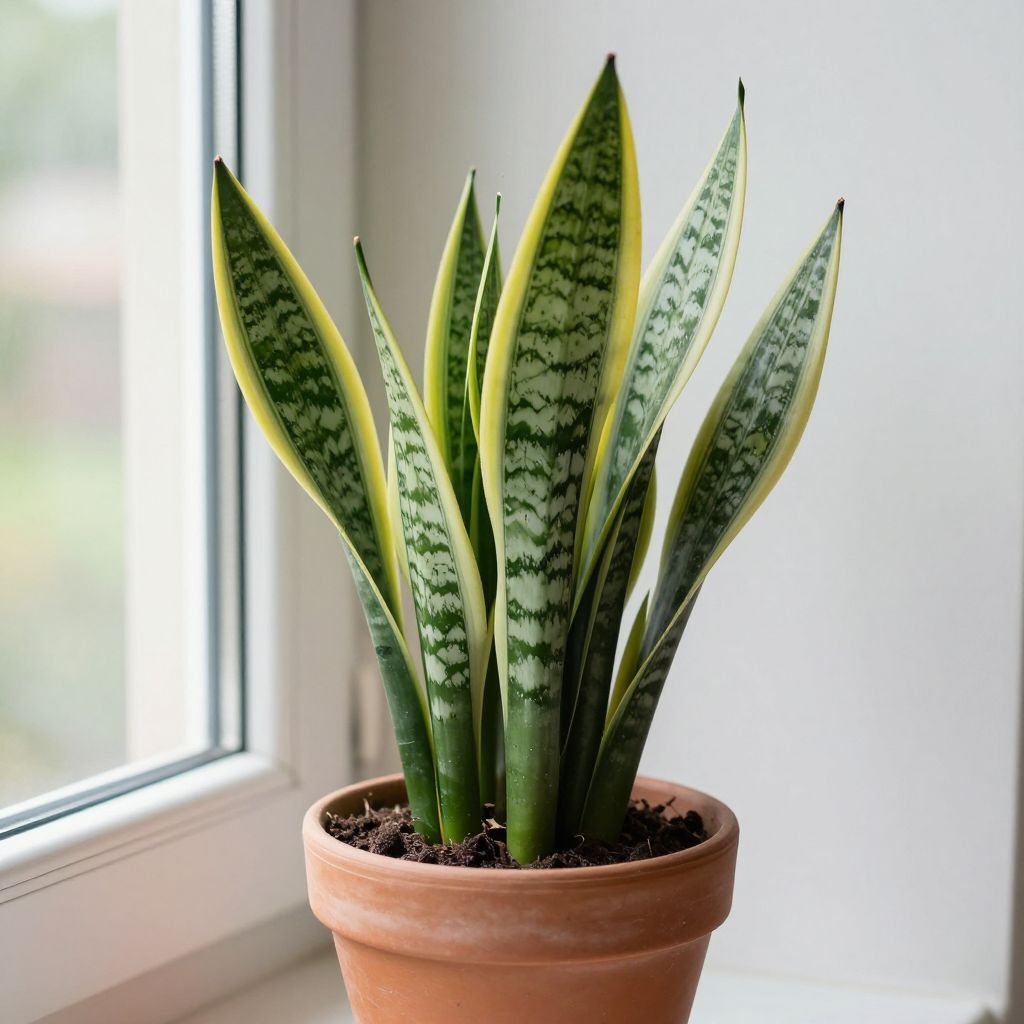
Do snake plants need sunlight? Yes, but not much. Snake plants (Dracaena trifasciata, formerly Sansevieria) are famous for tolerating low light, yet they grow best in bright, indirect light and can struggle if kept in very dark rooms for long periods.
If you want a snake plant that stays upright, grows steadily, and keeps its color, light matters more than many beginners expect. The good news is that this is one of the easiest houseplants to place well once you understand what “enough light” really looks like.
Do snake plants need sunlight?
Snake plants do not need direct sun all day, but they do need some light to stay healthy. Bright, indirect sunlight is ideal, while low light is acceptable for short periods. In very dim spaces, growth slows, leaves may weaken, and variegated types can lose their color.
How much light is best for snake plants?
Snake plants do best in bright, indirect light, such as near an east-facing window or a few feet back from a south- or west-facing window. They can also adapt to medium and low light, but they will grow more slowly and need less water in those conditions.
Best indoor light conditions
- Bright indirect light: Best for steady growth and strong leaves.
- Filtered sun: Good if direct rays are softened by a sheer curtain.
- Low light: Survives, but growth is minimal and the plant may become stretched over time.
Can snake plants take direct sun?
They can handle some direct sun, especially morning sun, but harsh afternoon sun through glass can scorch the leaves. If you move a plant from shade to strong sun, do it gradually over one to two weeks so the leaves can adjust.
What happens if a snake plant gets too little light?
Snake plants are tough, but low light has limits. The plant may survive for a long time, yet it often becomes thinner, slower-growing, and less attractive. Over time, poor light can also make watering mistakes more likely because the soil stays wet longer.
Common signs of insufficient light
- Leaves leaning toward the window
- Slow or no new growth during the growing season
- Paler color in variegated varieties
- Floppier leaves or a stretched look
- Soil that stays wet for too long after watering
If your snake plant is in a dark corner, it may not die quickly, but it will usually look less full and less vigorous. Moving it closer to a window often improves the plant more than adding fertilizer.
How to tell if your snake plant is getting too much sun
Too much direct sunlight can also cause trouble. Snake plants are sun-tolerant, but intense exposure, especially in hot climates or through hot glass, can damage the leaves.
Signs of excessive sun exposure
- Brown or bleached patches on the leaves
- Dry, crispy edges
- Leaves curling or looking washed out
- Sudden scorch after moving the plant outdoors
If you see scorch, move the plant to brighter shade or indirect light. Damaged leaf tissue will not turn green again, but new growth can still be healthy if the light is corrected.
Where should you place a snake plant indoors?
Placement is the easiest way to get light right. A snake plant near a window usually does best, but the exact spot depends on the direction, season, and how strong the sun is in your home.
- Start near a bright window. East-facing windows are often easiest because they give gentle morning light.
- Use a sheer curtain if the sun is strong in the afternoon.
- Pull the plant back a few feet from very bright south- or west-facing glass if the leaves show scorch.
- Rotate the pot every few weeks so growth stays even.
- Watch the plant, not just the room. A “bright” room can still be too dim in winter.
Low-light rooms: what to expect
Snake plants can live in hallways, offices, and bedrooms with limited natural light, but growth will be slower. In these spots, avoid overwatering and consider occasional rotation to a brighter room if the plant starts to decline.
Do snake plants need sunlight outdoors?
Outdoors, snake plants still prefer bright shade or filtered sun rather than intense all-day direct sun. In warm climates, they can work well in sheltered patios, under open shade, or in protected garden beds with excellent drainage.
Outdoor growing tips
- Choose a spot with morning sun and afternoon shade if summers are hot.
- Protect plants from heavy rain if the soil drains slowly.
- Bring container plants inside before cool weather if your climate is not suitable for year-round outdoor growth.
- Acclimate gradually when moving a plant from indoors to outdoors.
Outdoor snake plants usually fail more from excess moisture and sudden sun exposure than from lack of heat. If you move one outside, start it in bright shade or dappled light and increase exposure slowly.
How light affects watering and soil
Light and watering are closely connected. A snake plant in brighter light uses water faster, while one in low light dries slowly and is more vulnerable to root rot if you water on a fixed schedule.
Use a fast-draining potting mix
Snake plants need soil that drains quickly. A quality cactus or succulent mix works well, or you can improve regular potting soil with extra perlite, pumice, or coarse sand to reduce water retention.
- Use a pot with drainage holes.
- Avoid heavy garden soil in containers.
- Do not let the pot sit in a saucer of water.
In lower light, the soil should dry even more thoroughly before the next watering. This is one reason snake plants in dim rooms often suffer from root rot: the plant is using less water, but the owner keeps watering as if it were in bright light.
Common mistakes when growing snake plants
Most snake plant problems come from trying to treat them like thirstier houseplants. Light, watering, and drainage need to work together.
- Placing them in very dark corners for long periods.
- Watering too often because the plant looks “dry” or the top soil is dusty.
- Using a pot without drainage, which traps excess moisture.
- Moving them into strong sun too quickly and causing scorch.
- Expecting fast growth in winter or low light.
How to adjust care with the seasons
Snake plants usually grow more actively in spring and summer, especially if they receive bright light. In fall and winter, shorter days and weaker sun mean the plant uses less water and may pause growth.
Seasonal care adjustments
- Spring and summer: Water more often only after the soil dries fully; give brighter light if possible.
- Fall and winter: Reduce watering and keep the plant in the brightest practical spot.
- After moving the plant: Check for leaf scorch or stretching over the next few weeks.
If your home gets much less winter light, a snake plant may need to be moved closer to a window. Even a few extra hours of gentle light can help maintain firm, upright growth.
Pruning, propagation, and maintenance
Snake plants do not need frequent pruning, but you can remove damaged leaves at the base with clean, sharp tools. This keeps the plant tidy and helps redirect attention to healthy new growth.
Simple maintenance tasks
- Wipe dust from leaves so they can capture light more efficiently.
- Trim yellow, damaged, or badly scorched leaves at the soil line.
- Check the roots if the plant stays soggy or smells sour.
- Repot only when crowded or when the potting mix has broken down.
Propagation is usually done by division or leaf cuttings, but light still matters afterward. Newly divided plants should be kept in bright, indirect light while they recover and establish roots.
Pests and diseases linked to poor light
Snake plants are generally resilient, but weak light and excess moisture can invite trouble. Mealybugs, scale, and fungus gnats are more common when plants are stressed or overwatered.
Watch for these problems
- Mealybugs: White cottony clusters in leaf joints.
- Scale: Small brown bumps on leaves and stems.
- Root rot: Soft, mushy roots and yellowing leaves from wet soil.
Improving light alone will not cure pests, but it often helps the plant recover faster. Always remove badly rotted tissue, let the mix dry appropriately, and treat pests promptly if you spot them.
Quick answer: the best light setup for snake plants
If you want the simplest rule, give your snake plant bright indirect light, use a pot with drainage, and water only when the soil has dried out well. That combination supports healthy growth far better than a dark room and frequent watering.
Start by moving your plant to a brighter spot this week, then watch the leaves for a month. If they stay firm and upright and new growth appears, you have found a better balance of sunlight and care.
For more houseplant care ideas, you may also want to read about snake plant care basics and how to choose the right light for houseplants.