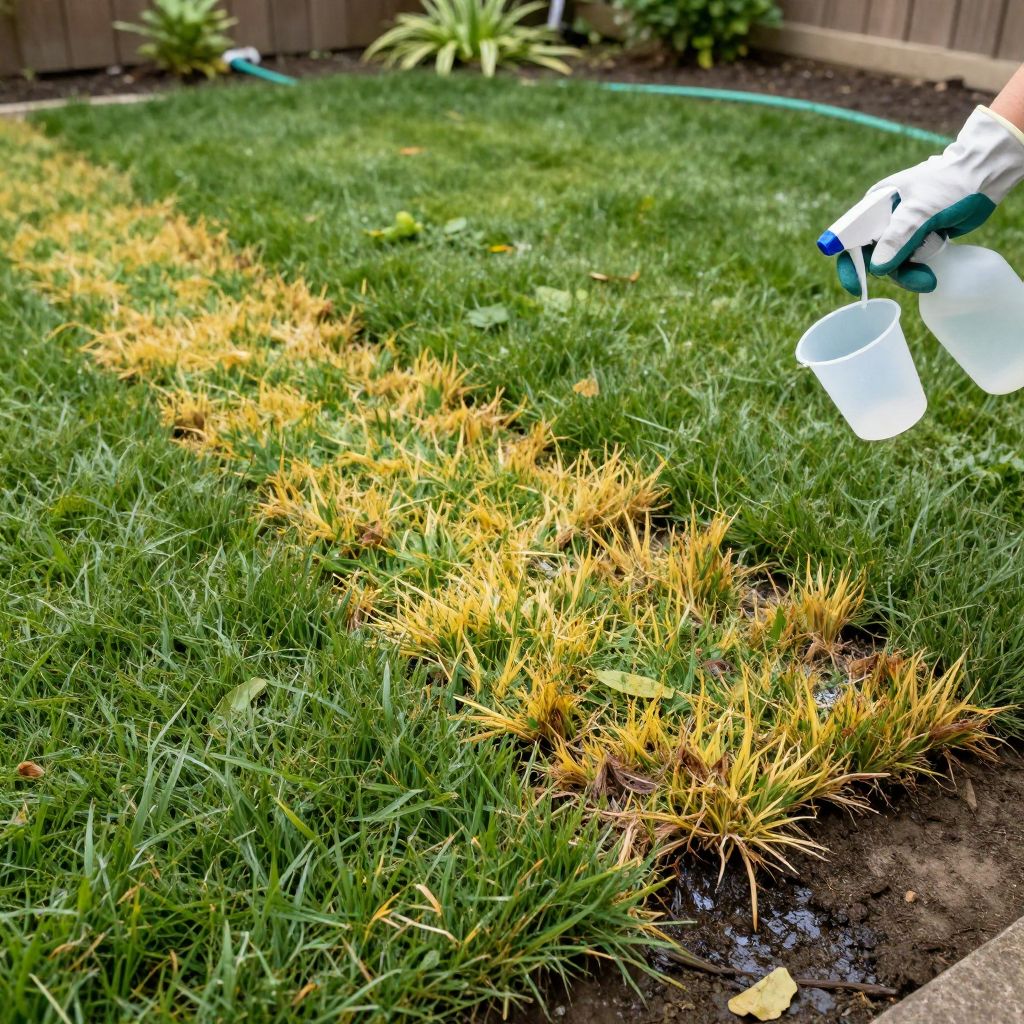
Does bleach kill grass? Yes—bleach can damage or kill grass, but it is a harsh, nonselective chemical that can also harm soil, nearby plants, and beneficial organisms. If you spilled bleach on a lawn or are thinking of using it for weed control, the safest approach is to act quickly and use it only as a last resort.
For most home gardeners, bleach is not a good lawn treatment. The better fix depends on whether you are dealing with a spill, a patch of weeds, or a problem area you want to replant.
Does bleach kill grass?
Yes. Bleach can burn grass blades on contact and may kill the crown and roots if enough is applied. Even diluted bleach can leave dead patches, especially on young or stressed turf. It also changes the soil environment, so recovery may take time and sometimes reseeding or sod repair.
What bleach does to grass and soil
Household bleach usually contains sodium hypochlorite, which is designed to disinfect surfaces, not care for living plants. When it touches turf, it strips away leaf tissue and can dry out or chemically injure the plant.
Visible damage you may see
- Grass blades turning pale, then brown or tan
- Patchy, uneven scorch marks
- Wilting or collapse in a small area
- Dead spots that spread if the application was heavy
The impact depends on concentration, how much was used, how long it sat on the grass, and whether the lawn was already stressed by heat, drought, or disease. Thin, newly seeded, or drought-stressed turf is usually more vulnerable.
Why bleach is risky in the soil
Bleach does not just affect the top growth. It can disrupt the soil surface and harm the microorganisms that help break down organic matter and support healthy roots. In heavier applications, it may also injure nearby ornamentals, shrubs, or tree roots.
If you are hoping bleach will solve a weed problem, it often creates a bigger one. It may kill the weed tops, but it can also leave a dead patch in the lawn and still fail to prevent regrowth from roots or seeds.
What to do if bleach spills on grass
If bleach spills on your lawn, quick action gives you the best chance of limiting damage. The goal is to dilute it and move it away from the root zone before it burns the turf.
- Rinse the area immediately with plenty of plain water.
- Use a hose to flush the spill site for several minutes, not just a light sprinkle.
- Keep people and pets off the area until it is fully rinsed.
- If the spill was large, water the surrounding soil as well to dilute residue.
- Watch the patch over the next 1–2 weeks for browning or thinning.
Do not try to “neutralize” bleach with another household chemical unless you are following a product label or professional guidance. Mixing chemicals can create dangerous fumes or reactions.
How to tell if the grass will recover
Light exposure may only scorch the blades, while the roots survive. In that case, the grass can regrow from the crown. If the patch turns fully brown and does not green up after a couple of weeks of normal watering and mild weather, the damage likely reached the growing point or roots.
- Likely recovery: small, superficial spill; some green remains at the base
- Possible re-sprouting: blades burned, but crowns still alive
- Likely permanent damage: large spill, repeated exposure, or dead roots
Can bleach be used to kill weeds in grass?
Technically yes, but it is usually a poor choice. Bleach is nonselective, so it can kill grass just as easily as weeds. It is also not a reliable long-term weed control method because it does not solve the underlying cause of weed pressure, such as thin turf, compacted soil, or poor mowing habits.
If you spray bleach on a weed in the lawn, expect collateral damage. Even careful spot treatment can drift, splash, or run into the surrounding turf.
Better options for weed control in lawns
- Hand-pull small weeds when the soil is moist
- Use a targeted lawn herbicide labeled for your grass type and weed species
- Improve mowing height so turf shades out weeds
- Overseed thin areas to reduce open space
- Address drainage or compaction problems that favor weeds
If you want to remove a weed patch and reseed the area, a safer approach is usually to dig out the weed, improve the soil, and re-establish turf rather than pouring bleach on the spot.
How to repair bleach-damaged grass
Once the area has been thoroughly watered in and the bleach residue is diluted, give the lawn a little time before deciding on repairs. Some turf types rebound, especially if the damage was light and the weather is favorable.
Repair steps for small patches
- Wait 7–14 days to see whether green shoots return.
- Gently rake away dead blades if they are dry and loose.
- Loosen the top layer of soil lightly if it has crusted.
- Topdress with a thin layer of compost if the soil is poor.
- Reseed with a grass type suited to your lawn, or patch with sod.
Keep the repaired area evenly moist during germination, but avoid soaking it. The surface should stay damp, not muddy. If you are patching with sod, press it firmly into contact with the soil so the roots can knit in.
When to reseed versus replace
Reseed if the damage is small and the surrounding lawn is healthy. Replace with sod if the patch is large, irregular, or in a high-traffic area where seed would be slow to establish. In either case, match the repair material to your existing grass as closely as possible.
How to prevent bleach damage in the future
The easiest way to avoid bleach damage is to keep it away from lawn care tasks entirely. Store it separately from garden tools and never use it as a general-purpose outdoor cleaner near turf, beds, or containers.
Safer habits around the lawn
- Mix cleaning products only where spills can be contained
- Carry bleach in a sealed container, not an open bucket
- Rinse tools away from the lawn and landscape beds
- Keep bleach out of reach of children and pets
- Use labeled garden products for weeds, moss, or disease issues
If you are cleaning patio furniture, hardscape, or outdoor bins, move them to a paved area first. A small splash on concrete is easier to manage than a spill in the lawn.
Common mistakes to avoid
Bleach problems often get worse because of well-intended but risky fixes. A careful response can save the grass and prevent soil injury.
- Do not apply bleach as a weed killer across the lawn.
- Do not assume a diluted mix is harmless.
- Do not leave a spill to dry on the grass.
- Do not mix bleach with ammonia, vinegar, or other cleaners.
- Do not reseed immediately if the soil is still contaminated or the area is still wet with residue.
If you are unsure whether the turf is alive, tug gently on a few blades. If they pull free with no resistance and the base is brown and dry, that section may need repair. If the base is still firm and green, the lawn may recover.
How lawn conditions affect recovery
Grass recovers best when it is already growing well. Healthy turf with good soil structure and proper moisture can sometimes outgrow minor chemical injury, while stressed lawns struggle to bounce back.
Factors that help recovery
- Moderate temperatures rather than extreme heat
- Even soil moisture without waterlogging
- Good drainage and loose surface soil
- Active growth from the grass species you have
- Low foot traffic on the damaged area
Compacted soil, poor drainage, and drought stress slow recovery. If your lawn has repeated bare spots, it may need broader care such as aeration, topdressing, overseeding, or adjusting irrigation practices.
Bottom line: should you use bleach on grass?
Bleach can kill grass, but it is too harsh and unpredictable to be a good lawn-care tool. If you spilled it, rinse the area right away and watch for recovery. If you are trying to remove weeds, choose a safer, targeted method that protects the rest of your lawn.
For more practical lawn care guidance, you may also want to read about how to repair bare spots in a lawn and the best way to kill weeds in grass.