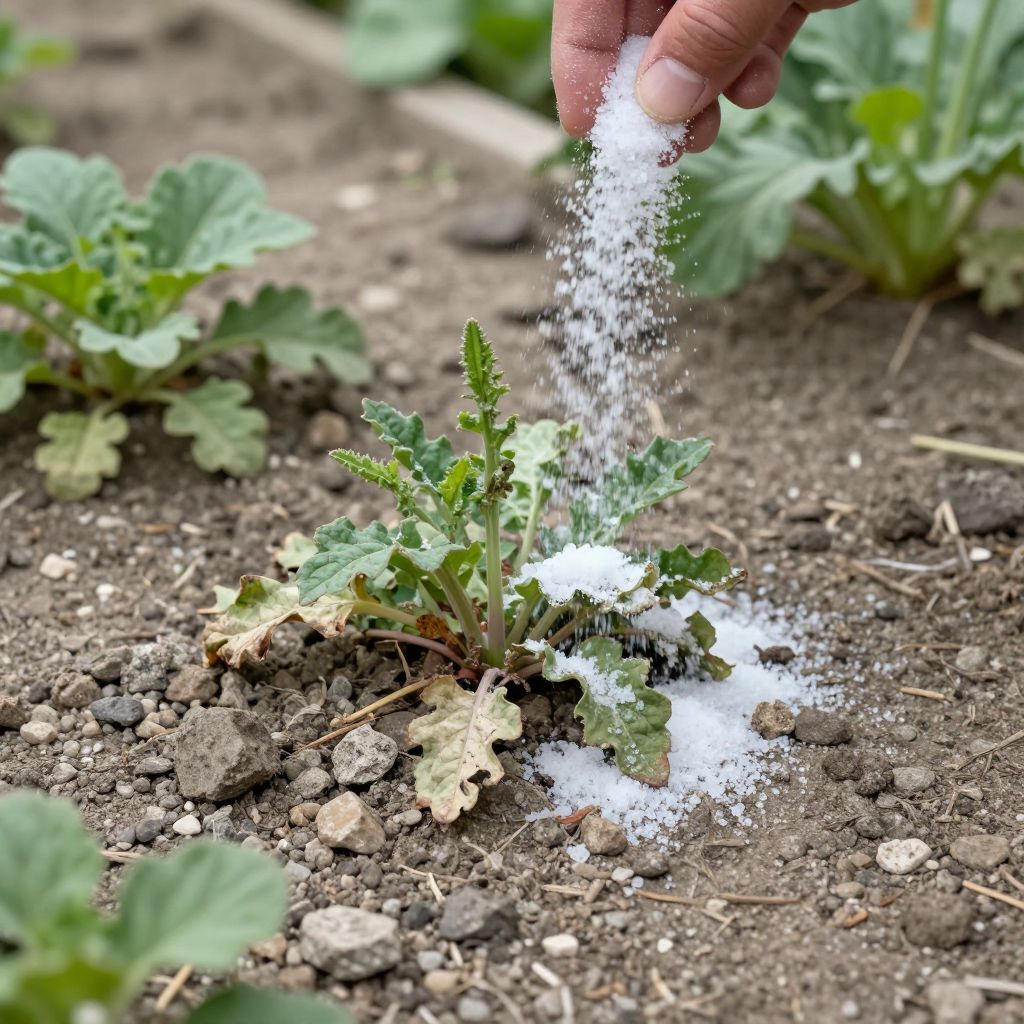
Does salt kill weeds? Yes, it can, but it does so by damaging plant cells and pulling moisture out of the soil. That makes it effective on small, unwanted plants, but it also makes salt a blunt tool that can harm nearby ornamentals, lawn grasses, and even the soil long after the weed is gone.
If you are trying to clear cracks, gravel paths, or a spot where nothing should grow, salt may seem like a quick fix. The key is knowing where it works, where it causes problems, and when a safer weed control method is the better choice.
Does salt kill weeds?
Yes. Salt can kill weeds by dehydrating their tissues and disrupting water uptake through the roots. It works best on small, actively growing weeds in isolated spots, but it is non-selective and can also sterilize soil or injure nearby plants, so it should be used very cautiously, if at all.
How salt affects weeds and soil
Salt creates a harsh environment that plants struggle to survive. When sodium levels rise, roots cannot absorb water normally, and the plant begins to dry out even if the soil looks moist.
This is why salt may appear to “burn” weeds down quickly. However, the same effect can linger in the soil and make it difficult for new plants to grow later.
What salt does to plant tissue
- Draws water out of cells, causing wilting and browning
- Disrupts nutrient uptake through the roots
- Can damage growing points, especially in young weeds
- May kill the top growth faster than the root system
Why salt is risky in the garden
- It does not distinguish between weeds and desirable plants
- It can linger in soil and reduce future planting success
- Rain can move salt into beds, lawns, and tree root zones
- Repeated use can make soil structure and plant health worse over time
Where salt can work, and where it should not
Salt is most commonly used in places where plant growth is unwanted for the long term, such as cracks in pavement, gravel seams, or neglected edges where you do not plan to plant again. Even there, it should be used sparingly.
Avoid salt in vegetable beds, flower borders, lawns, around shrubs, and near trees. Roots can extend far beyond the visible weed patch, and salt injury often shows up later as yellowing, stunting, or dieback.
Good candidates for salt treatment
- Small weeds in sidewalk cracks
- Weeds in gravel driveways or stone paths
- Areas where permanent planting is not planned
Places to avoid using salt
- Vegetable gardens and herb beds
- Flower beds and perennial borders
- Lawns and turf edges
- Near trees, shrubs, and foundation plantings
- Anywhere runoff could reach drains, streams, or rain gardens
How to use salt on weeds more safely
If you decide to use salt, treat it as a spot treatment, not a broad weed-control strategy. The goal is to target the weed while limiting soil damage and runoff.
- Pull or cut back tall weeds first so the salt reaches the crown and root zone more directly.
- Apply only to the weed or the smallest possible area, not the whole surface.
- Keep salt away from desirable plants, including roots that may spread underground.
- Use it only in dry weather if possible, so it stays where you place it.
- Do not overapply. More salt does not mean better control; it usually means more soil injury.
For many home gardeners, a small amount of table salt or rock salt is enough to cause damage, but exact results vary with soil type, rainfall, and the weed species. Sandy soils tend to be affected more quickly and more deeply than heavier clay soils.
Important caution
Salt is not a selective herbicide. It can kill or weaken any plant it contacts, and it may remain in the soil long enough to prevent replanting. If you want to grow anything in that area later, use a different weed-control method.
Will salt kill weeds permanently?
Not always. Salt may kill the visible growth and even the plant itself, but some perennial weeds can regrow from surviving roots, rhizomes, or seeds left in the soil. Annual weeds may disappear for a season and return from the seed bank later.
That means salt can give temporary control, but it is not a long-term solution for most garden weed problems. If weeds keep returning, the real issue is usually ongoing seed spread, bare soil, poor mulch coverage, or a site that is easy for weeds to colonize.
Weeds salt may not fully solve
- Dandelions with deep taproots
- Bindweed and other spreading perennials
- Nutgrass or nutsedge in moist soil
- Weeds that resprout from root fragments
Better alternatives to salt for weed control
In most gardens, safer methods work better and protect your soil. The best choice depends on where the weeds are growing and whether you want to plant there later.
1. Hand-pulling and digging
For small infestations, hand-pulling after rain or watering is often the most effective option. Moist soil loosens roots and reduces breakage.
- Use a hand fork or weeding knife for taproots
- Remove the entire root when possible
- Repeat regularly before weeds set seed
2. Mulching
Mulch is one of the best long-term weed preventers in beds and around shrubs. A 2 to 4 inch layer of organic mulch helps block light and reduces germination.
- Keep mulch a few inches away from stems and trunks
- Refresh it as it breaks down
- Use cardboard under mulch for especially weedy areas
3. Boiling water or flame weeding
These methods are useful for cracks, paths, and driveways where you want quick top growth control. They still require caution, but they avoid leaving salt behind in the soil.
4. Smothering
For a patch you want to clear before replanting later, cover it with cardboard, landscape fabric, or a tarp to block light and exhaust weeds over time.
Common mistakes when using salt on weeds
Most salt problems come from treating it like a harmless home remedy. The biggest mistake is using it near plants you care about or applying it repeatedly to the same ground.
- Applying too much and causing broader soil damage
- Using it in beds where you want future planting
- Expecting it to kill roots instantly on perennial weeds
- Letting rain spread it into nearby soil
- Using it as a routine weed program instead of a spot treatment
If you have already salted an area and want to replant, you may need to wait and flush the soil with rainfall or irrigation over time. In some cases, a soil test or simple replanting trial is the only way to know whether the area has recovered enough for new plants.
How to tell if salt has damaged nearby plants
Salt injury can look like drought stress, nutrient deficiency, or heat damage. Watch for symptoms that appear after treatment or after heavy runoff from a salted area.
- Leaf edges turning brown or crispy
- Yellowing between veins
- Stunted new growth
- Wilting even when soil is moist
- Patchy decline near paths, driveways, or treated cracks
If you suspect salt injury, water the area deeply if drainage allows and stop adding any salty materials. In severe cases, the best fix is to remove affected soil only if the area is small and the contamination is localized.
Best practices for long-term weed prevention
Weeds are easier to prevent than to kill after they are established. A healthy, covered, well-maintained planting area reduces the need for harsh treatments like salt.
- Keep soil covered with mulch or living groundcover
- Fill bare spots quickly with desirable plants
- Remove weeds before they flower and seed
- Improve drainage where standing water encourages weed growth
- Edge beds and paths to stop creeping weeds from invading
In lawns, proper mowing height, thick turf, and correct watering usually do more to suppress weeds than any spot treatment. In vegetable and flower beds, regular cultivation and mulch are usually safer and more effective than salt.
When salt is not worth the risk
Skip salt if the area is close to anything you want to keep alive. That includes roses, shrubs, trees, perennials, bulbs, and even lawn edges that may be affected by runoff.
It is also a poor choice if you plan to replant soon, if the soil already drains poorly, or if the weeds are widespread rather than isolated. In those cases, use a method that controls weeds without compromising the soil.
Conclusion: use salt sparingly, or not at all
So, does salt kill weeds? Yes, but it is a harsh, non-selective method that can create bigger problems than the weeds themselves. For cracks and other permanent non-planting areas, it may work as a last-resort spot treatment. For beds, lawns, and any place you want to grow later, choose safer weed control instead.
If you want more practical garden guidance, read about mulching for weed control and how to remove deep-rooted weeds for longer-lasting, soil-friendly solutions.