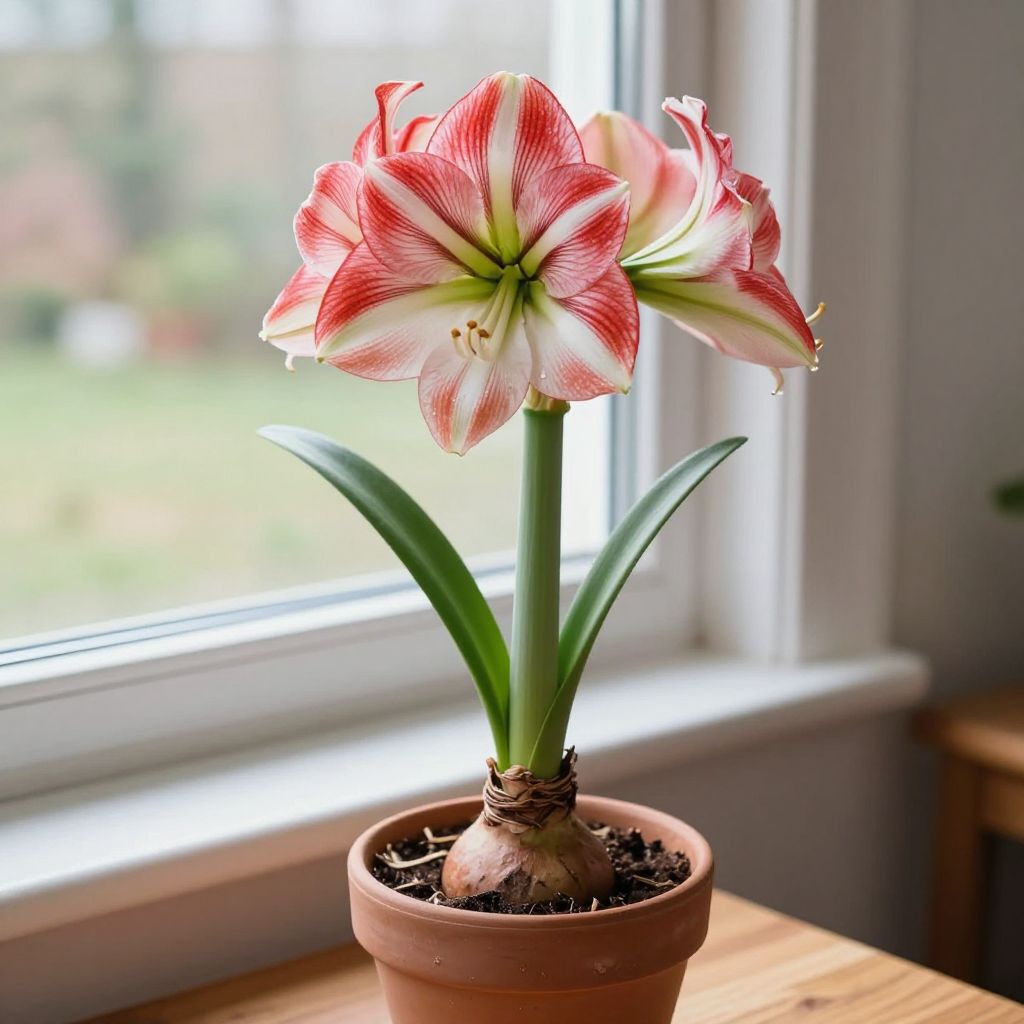
When do amaryllis bloom? If you’re growing Hippeastrum indoors, the answer is usually 6 to 10 weeks after planting a healthy bulb, often in winter or early spring. Outdoor amaryllis may bloom later, depending on your climate, light, and whether the bulb gets a proper rest period.
The exact timing depends on bulb size, temperature, potting mix, and whether the plant is being forced to bloom or is following its natural cycle. With the right care, you can learn to predict flowering and even encourage repeat blooms year after year.
When do amaryllis bloom?
Amaryllis typically bloom 6 to 10 weeks after planting a large, healthy bulb, though timing varies with temperature and growing conditions. Most indoor bulbs are forced to flower in late fall, winter, or early spring, while outdoor plants bloom in their natural season after a warm growing period and a dry rest.
Understanding the amaryllis bloom cycle
Amaryllis bulbs do not bloom on a fixed calendar date. They bloom when the bulb has stored enough energy and receives the right combination of warmth, moisture, and light.
A strong bulb often sends up a flower stalk before or alongside leaves. After blooming, the plant uses its foliage to rebuild energy for the next flowering cycle.
Typical bloom timing indoors
- After planting: about 6 to 10 weeks to flower.
- In cool rooms: blooming may take longer.
- In warm, bright rooms: buds often develop faster.
- Pre-chilled or pre-planned bulbs: may bloom on a schedule, but still vary by a week or two.
Typical bloom timing outdoors
In warm climates where amaryllis can grow in the ground, flowering is usually seasonal and may happen in spring, summer, or occasionally after a dry spell and return of rain. Outdoor bloom time depends on the local climate, the bulb’s age, and how much sun the plant receives.
What affects amaryllis bloom time?
Several practical factors influence when amaryllis bloom. If your bulb is late, the reason is often one of these conditions rather than a serious problem.
1. Bulb size and stored energy
Larger bulbs usually bloom more reliably because they hold more energy. Small or weak bulbs may produce leaves first, bloom later, or skip flowering for a season.
2. Temperature
Warm conditions speed growth, while cooler temperatures slow it down. For indoor forcing, moderate room temperatures are usually best. Very hot rooms can shorten bloom life, and cold drafts can delay flowering.
3. Light
Bright light helps the plant grow strong stems and leaves. A sunny window is ideal indoors, while outdoor plants need enough sun to recharge the bulb after flowering.
4. Watering
Too much water can rot the bulb, while too little can stall growth. Amaryllis prefers evenly moist soil after growth begins, but the bulb should never sit in soggy mix.
5. Dormancy or rest period
For repeat blooming, many amaryllis bulbs need a rest period after the foliage finishes growing. Without that resting phase, the bulb may keep producing leaves but fail to flower well.
How to encourage amaryllis to bloom on time
If you want dependable blooms, start with a firm bulb and the right pot. A good setup at planting time makes the biggest difference later.
- Choose a healthy bulb. Look for a large, firm bulb with no soft spots, mold, or shriveling.
- Use a snug pot. A pot only slightly wider than the bulb helps prevent excess wet soil.
- Plant with the top exposed. Leave the top third of the bulb above the soil line to reduce rot risk.
- Water lightly at first. Keep the mix barely moist until roots and growth begin.
- Move to bright light. Once growth starts, give the plant strong indirect light or gentle direct sun.
- Rotate the pot. Turn it every few days so the flower stalk grows straight.
Best soil and drainage
Use a loose, well-draining potting mix. A mix designed for houseplants or bulbs works well, especially if it contains ingredients that improve drainage such as perlite or coarse bark.
Drainage matters more than rich soil. Amaryllis bulbs are prone to rot if they sit in heavy, wet media.
Light and temperature for faster blooming
Place potted amaryllis in a bright location with temperatures that are comfortable for people, not overly hot. If the room is too dim, the stalk may stretch and bloom less strongly.
A bright window is usually enough indoors. Outdoors, choose a site with morning sun or bright filtered light if your climate is hot.
Why your amaryllis is not blooming yet
If your amaryllis is producing leaves but no flower stalk, it usually needs better growing conditions or more stored energy. This is common after flowering, especially if the bulb was not fed or rested properly.
Common reasons for delayed bloom
- The bulb is too small or tired.
- It has not had enough light during the growing season.
- The plant was watered too heavily and the roots struggled.
- The bulb did not get a proper rest period after blooming.
- The pot is too large and stays wet too long.
What to do if the bulb is only making leaves
- Move it to brighter light.
- Keep the soil evenly moist, not soggy.
- Feed lightly during active leaf growth with a balanced fertilizer if appropriate for your setup.
- Let the foliage grow for several months so the bulb can recharge.
- Allow a rest period later if you want another bloom cycle.
If the bulb looks firm and healthy, patience often solves the problem. A bulb that blooms one year may need a full season of recovery before it flowers again.
How to get amaryllis to rebloom
Getting amaryllis to bloom again is possible, but it takes a full cycle of leaf growth followed by rest. The leaves are not decorative extras; they are the bulb’s energy factory.
After flowering
Once the flowers fade, cut off the spent flower stalk, but keep the leaves. The stalk can be removed near the base when it begins to yellow or after the last bloom fades.
During leaf growth
Keep the plant in bright light and water when the top layer of mix begins to dry. If you grow it indoors, give it as much light as possible without scorching the leaves.
Continue this care for several months so the bulb can store energy for the next bloom.
Resting the bulb
To encourage reblooming, many gardeners reduce watering after the leaves yellow and die back naturally. The bulb then rests in a cool, dry place for several weeks, depending on the plant and your climate.
After rest, resume watering and warmth to restart growth. A healthy bulb may send up a new flower stalk before leaves appear again.
Indoor vs. outdoor amaryllis bloom timing
Indoor and outdoor amaryllis behave differently, so timing expectations should be different too.
Indoor amaryllis
Indoor bulbs are often planted specifically to bloom in a chosen season. You can usually count on flowers within a predictable window if the bulb is large and conditions are stable.
Indoor growing is especially useful if you want winter color, because you can control warmth and light better than outdoors.
Outdoor amaryllis
Outdoors, bloom time depends on weather and local climate. In frost-free regions, amaryllis may naturalize and bloom at roughly the same time each year, but the exact timing can shift with rainfall, shade, and seasonal temperatures.
In cooler climates, bulbs are often grown in pots and brought indoors before frost. In that case, bloom timing is more like indoor forcing and depends on when you start the bulb.
Pruning, cleanup, and maintenance after bloom
Good post-bloom care helps determine when the next flowers will appear. The goal is to protect the bulb while it rebuilds strength.
- Remove spent flowers to keep the plant tidy and prevent seed production.
- Cut the flower stalk after blooming finishes, but leave the leaves in place.
- Do not braid or tie leaves tightly; they need to capture light freely.
- Repot only when necessary, such as when the bulb becomes crowded or the mix breaks down.
Repotting is usually best after flowering or before a new growth cycle, depending on your plant’s condition.
Common pests and diseases that can delay blooming
Healthy bulbs bloom more reliably than stressed ones. If your amaryllis is weak, inspect it for pests or rot before assuming it is simply late.
Pests to watch for
- Aphids: may cluster on new growth and flower stalks.
- Spider mites: can appear in dry indoor air and cause stippling on leaves.
- Mealybugs: may hide near the bulb or leaf bases.
Diseases and rot
Soft, mushy bulbs or foul-smelling soil often indicate rot. This is usually caused by poor drainage, overwatering, or a damaged bulb.
If rot is advanced, the bulb may not recover. Preventing the problem is much easier than treating it.
Quick troubleshooting guide
If you are waiting for blooms, use this simple checklist to narrow down the cause.
- No flower stalk after planting: the bulb may be too small, too cool, or too dry.
- Tall, floppy growth: the plant likely needs brighter light.
- Leaves only, no flowers next season: the bulb may need more recovery time and feeding.
- Bulb rotting: reduce watering and improve drainage immediately.
- Flowers fade quickly: high heat and direct sun can shorten bloom life indoors.
Final thoughts
So, when do amaryllis bloom? Most indoor bulbs flower about 6 to 10 weeks after planting, while outdoor plants bloom according to climate, light, and seasonal rest. If you give the bulb a snug pot, bright light, careful watering, and time to recharge after flowering, you can greatly improve bloom timing.
For more seasonal bulb care, you may also want to read about bulb care basics and how to grow flowering houseplants indoors.