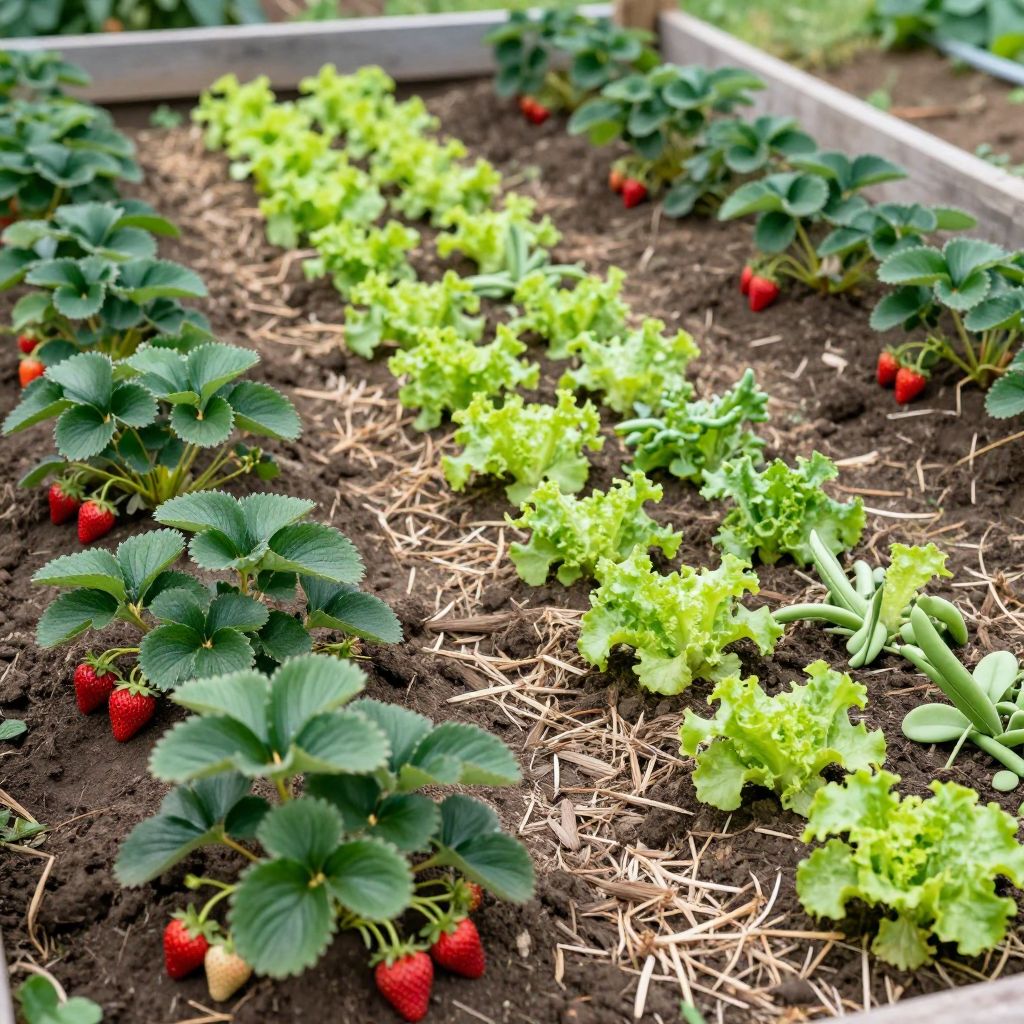
What can you plant with strawberries? The best companions are low-growing plants that share similar light, soil, and water needs without crowding the shallow roots. Good choices can help reduce weeds, attract pollinators, and make the patch more productive, while poor choices can increase disease, shade, or competition.
If you want a healthy strawberry bed, think in layers: strawberries in the main row or mound, then compatible companions around the edges or in nearby containers. The goal is to keep air moving, sunlight reaching the leaves, and moisture steady but never soggy.
What can you plant with strawberries?
Good strawberry companions include chives, garlic, onions, thyme, lettuce, spinach, bush beans, marigolds, and borage. These plants usually stay compact, don’t compete heavily with strawberry crowns, and can support pollinators or help confuse pests. Avoid aggressive spreaders, tall shade-makers, and plants that need very different soil or watering conditions.
Best companion plants for strawberries
Herbs that fit well around strawberries
Compact herbs are some of the easiest companions because they stay relatively low and can be tucked along bed edges or between plants with room to spare.
- Chives and other alliums can fit neatly near strawberries and may help reduce pest pressure.
- Garlic and onions work well at the margins of a bed where they won’t crowd the crowns.
- Thyme stays low and tolerates similar sunny, well-drained conditions.
- Oregano can work in containers or edges, but keep it contained because it can spread.
Keep herbs from shading strawberry leaves. Strawberries need full sun for best flowering and fruiting, so place taller herbs only where they won’t block light.
Leafy greens that can share space
Fast-growing greens can make efficient use of open soil early in the season before strawberries fully fill in.
- Lettuce grows quickly and can be harvested before strawberries sprawl too much.
- Spinach can work in cooler weather and benefits from the partial shade strawberries may provide later in the season.
- Arugula is another short-lived option if you harvest it young.
These crops are best used as temporary companions. Once strawberry runners and foliage spread, the greens may need to be thinned or removed.
Flowers that help pollinators and beneficial insects
Strawberries produce better when pollinators are active, so flowering companions can be useful if they do not crowd the bed.
- Marigolds are easy to slip into bed edges or nearby containers.
- Borage attracts pollinators, but it can grow large, so give it space and prune if needed.
- Nasturtiums can act as a living mulch at the edge of a bed, though they may spread.
Choose flowers that are manageable in size. Large, sprawling plants can quickly overwhelm strawberry rows and reduce airflow.
Vegetables that can work nearby
Some vegetables make good neighbors if you keep them from competing too heavily.
- Bush beans are often a better choice than tall pole beans because they stay compact.
- Radishes can be used as a quick filler crop between young strawberry plants.
- Beets may work in wider beds if you leave enough room for both crops.
Use these only when you have enough bed width. Strawberries do not like being crowded, especially in humid climates where dense planting can increase fungal problems.
Plants to avoid growing with strawberries
Some plants are poor companions because they compete too strongly, shade strawberries, or carry similar disease pressure. Avoid large, aggressive, or moisture-hungry plants in the same bed whenever possible.
- Mint spreads aggressively and can take over a strawberry patch.
- Fennel is generally a poor neighbor for many garden crops.
- Brassicas such as cabbage, broccoli, and kale can be too bulky for tight strawberry beds.
- Potatoes are not a good match because they can increase disease concerns in shared ground.
- Raspberries and blackberries are usually too vigorous and can create shade and competition.
Also avoid anything that will create deep shade. Strawberries need strong sunlight to flower and ripen well, and shaded plants often produce fewer berries.
How to design a strawberry companion planting bed
Give strawberries the main space
Strawberries should be the primary crop in the bed. Companion plants should fill edges, gaps, or nearby containers rather than sitting directly on top of the strawberry crowns.
- Plant strawberries in rows, mounds, or a dedicated patch with enough room for airflow.
- Leave open space around each crown so leaves and runners can expand.
- Add low companions at the border or in temporary gaps.
- Keep taller plants on the north side of the bed in the Northern Hemisphere, if possible, so they do not shade strawberries.
If you garden in a hot climate, a little afternoon shade can be helpful, but it should come from a light source or temporary cover, not from crowding plants.
Use containers when space is tight
Containers can make companion planting easier because you can separate aggressive plants from strawberries while still keeping them nearby.
- Grow strawberries in pots, hanging baskets, or planters.
- Place herbs like thyme or chives in separate pots next to them.
- Use a larger trough or window box for lettuce or spinach as a short-term companion.
Container strawberries need excellent drainage. Use a potting mix designed for containers, not heavy garden soil, and make sure water can move through freely.
Soil, sunlight, and spacing for healthy strawberries
Companion planting works best when the strawberry basics are right. Strawberries prefer full sun, fertile soil, and good drainage. If the growing conditions are off, even the best companion plants will not make up for it.
Soil and compost
Strawberries grow best in loose, well-drained soil enriched with compost. A moderate amount of organic matter helps retain moisture without making the bed waterlogged.
- Work in compost before planting if your soil is poor or sandy.
- Avoid fresh manure near strawberries, which can be too strong and may encourage excess leafy growth.
- Do not bury the crown; keep it level with the soil surface.
Watering and mulch
Strawberries need even moisture, especially while flowering and fruiting. Companion plants should not make the bed harder to water or cause the surface to stay wet for long periods.
- Water at the base to keep foliage drier.
- Use straw, pine needles, or another light mulch to suppress weeds and keep fruit clean.
- Check soil moisture regularly during warm, dry weather rather than following a fixed schedule.
Mulch is especially helpful because it reduces soil splash, which can spread disease onto leaves and fruit.
Seasonal planting tips for strawberry companions
The best companion plants depend on the season and your local climate. In cool weather, leafy greens and quick-root crops are often the easiest fit. In warmer weather, herbs and pollinator flowers may be better choices.
Spring
Spring is a good time to tuck in lettuce, spinach, radishes, and chives around newly planted strawberries or established beds that still have room.
Summer
As strawberries fill out, choose low-maintenance companions that will not need frequent digging or replanting. Herbs and flowers at the edges are often the safest option.
Fall
In milder climates, you may be able to add cool-season greens again. In colder areas, focus on cleaning up the bed, removing diseased foliage, and preparing strawberries for winter.
Common mistakes when planting with strawberries
Most problems come from overcrowding or choosing the wrong companion plants. Strawberries are shallow-rooted and do not compete well with aggressive neighbors.
- Planting too densely: Crowding reduces airflow and raises disease risk.
- Choosing tall plants: Shade lowers berry production.
- Letting runners take over: Unmanaged runners can tangle with companions and weaken the mother plants.
- Overwatering: Wet soil encourages root problems and fruit rot.
- Ignoring pests: Slugs, aphids, and birds can damage fruit quickly if you do not monitor the bed.
Pests and disease issues to watch for
Companion planting can help, but it does not replace good strawberry care. Watch for common problems such as gray mold, leaf spot, slugs, and aphids.
- Remove old or damaged leaves to improve airflow.
- Keep fruit off wet soil with mulch.
- Inspect the underside of leaves for aphids.
- Use netting if birds are stealing ripe berries.
- Clean up fallen fruit promptly to reduce rot and pests.
If a companion plant becomes diseased or overgrown, remove it before it affects the strawberry bed. Healthy spacing is often the simplest prevention.
Propagating and renewing the bed
Strawberries naturally send out runners, which can fill a bed over time. That is useful, but too many runners can crowd out companion plants and reduce fruit size.
- Choose a few strong runners to root if you want more plants.
- Trim extra runners to keep the bed open.
- Replace older, weak strawberry plants when production drops.
Refreshing the bed every few years helps maintain vigor. This also gives you a chance to rethink companion planting and adjust spacing based on what worked best.
Simple companion planting plan for beginners
If you want an easy starting point, try a low-risk combination that keeps strawberries in the center and uses companions only at the edges.
- Plant strawberries in a sunny, well-drained bed.
- Add chives or thyme along one border.
- Fill a small gap with lettuce or spinach in cool weather.
- Place marigolds nearby or in a separate pot.
- Mulch lightly and monitor spacing as the season progresses.
This approach keeps the bed productive without making it crowded. You can always add more companions later if the strawberries still have room.
Conclusion
So, what can you plant with strawberries? Start with low-growing, manageable companions like chives, thyme, lettuce, spinach, marigolds, and bush beans, and keep aggressive or shading plants out of the bed. Focus on sunlight, airflow, and steady moisture, and your strawberries will have a much better chance to thrive.
If you want to plan a fuller strawberry setup, you may also find it helpful to read about growing strawberries indoors for container and small-space ideas.