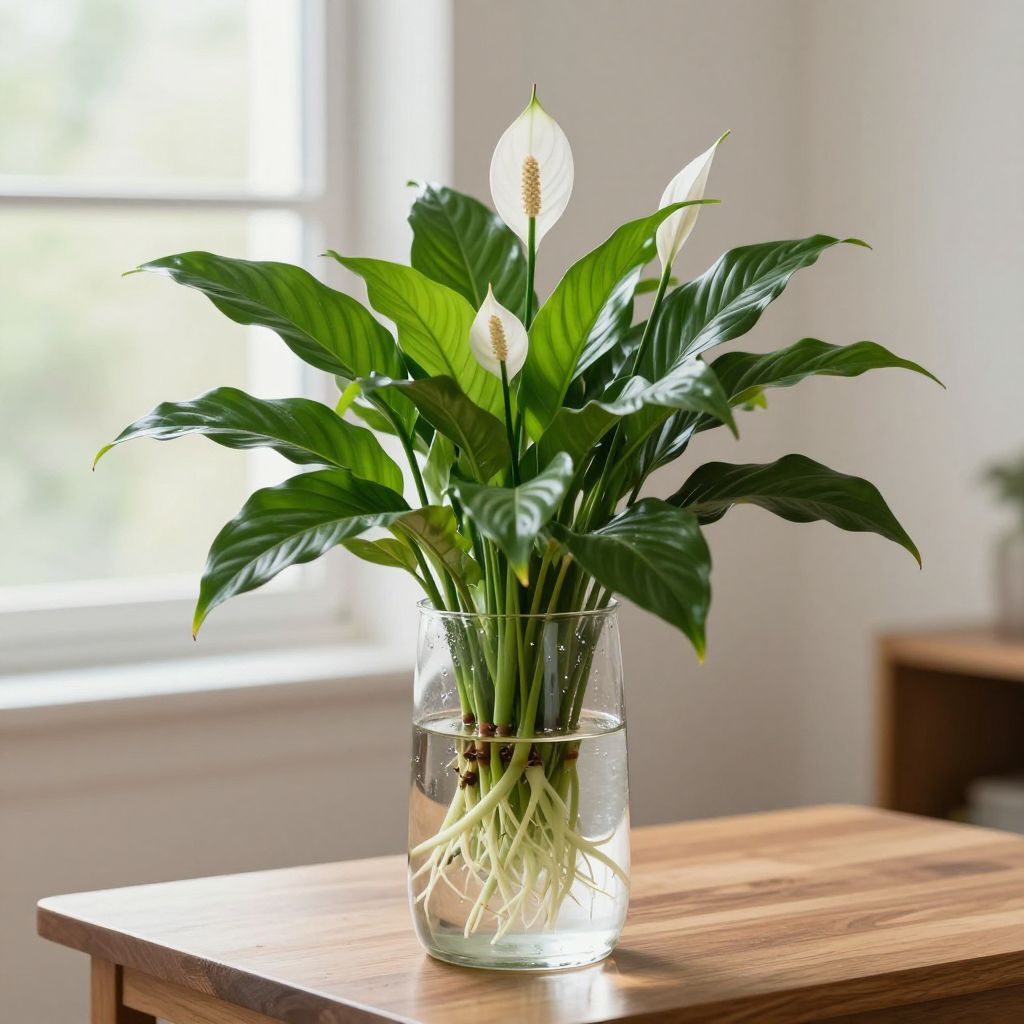
Can peace lily grow in water? Yes, peace lily can grow in water for a long time if you give it the right setup and keep the water clean. It’s a practical way to display Spathiphyllum indoors, especially for cuttings or small plants, but it needs more attention than soil-grown plants.
The key is not to treat it like a fully aquatic plant. Peace lily does best in a stable container, with roots supported and only the lower roots submerged. If you manage oxygen, cleanliness, and light well, water culture can work beautifully.
Can peace lily grow in water?
Yes, peace lily can grow in water, and many gardeners keep it that way indoors. It adapts best when only the roots are in water, the crown stays above the surface, and the water is changed regularly. This method works for display and maintenance, but it usually grows more slowly than in potting mix.
How peace lily grows in water
Peace lily is naturally a tropical understory plant, so it prefers consistently moist conditions, filtered light, and warm temperatures. Those traits make it adaptable to water culture, as long as the roots still receive oxygen.
In water, the plant relies on you to provide three things soil normally handles:
- Support for the stems and roots
- Oxygen around the root system
- Minerals through diluted nutrients, if needed
If the roots sit in stale water too long, they can turn brown and mushy. That is the main reason water-grown peace lilies fail.
Best way to grow peace lily in water
The easiest method is to start with a healthy plant or division, remove the potting mix carefully, and place the roots in a clean container of water. A glass vase, ceramic jar, or decorative vessel can work well if it is stable and easy to clean.
Step-by-step setup
- Choose a healthy peace lily with firm leaves and white or pale roots.
- Remove it from the pot and gently wash soil from the roots.
- Trim away any rotten, black, or slimy roots with clean scissors.
- Place the plant in a container that supports the crown above the waterline.
- Add room-temperature water so the lower roots are submerged, but the stem base is not.
- Set it in bright, indirect light and monitor the water level closely.
Do not submerge the crown. If the base of the plant sits underwater, rot can start quickly.
Choosing the right container
A narrow-necked vase can help hold the plant upright, but any container can work if it is stable. Clear glass lets you watch root health, while opaque containers reduce algae growth.
If you use a clear container, place it where it gets light but not direct sun. Direct sun warms the water and encourages algae.
Water quality and maintenance
Clean water matters more in water culture than in a regular pot. Stale water loses oxygen and can become a breeding ground for bacteria and algae.
How often to change the water
There is no universal schedule, but a good rule is to refresh the water when it looks cloudy, smells off, or begins to develop slime. Many indoor gardeners change it every 1 to 2 weeks, adjusting for temperature, container size, and how quickly the water becomes dirty.
When you change the water:
- Rinse the container thoroughly
- Wash off any slime from the roots
- Remove dead roots or yellowing foliage
- Refill with clean, room-temperature water
What kind of water to use
Peace lily usually tolerates tap water, but very hard water or heavily chlorinated water can sometimes leave mineral buildup or stress sensitive roots. If your tap water is poor quality, let it sit out before use or try filtered water.
Use water that is close to room temperature. Cold water can shock the roots, especially in winter.
Light, temperature, and placement
Peace lily in water still needs the same basic indoor conditions it prefers in soil: bright, indirect light and warm, stable temperatures. It will tolerate lower light, but growth slows and flowering becomes less likely.
Ideal indoor conditions
- Light: bright, indirect light is best
- Temperature: warm room temperatures with no cold drafts
- Humidity: average indoor humidity is usually fine, though higher humidity helps
Avoid placing the container in direct sun, near a heater, or beside an air-conditioning vent. Sudden temperature swings can stress the roots and leaves.
Do peace lilies flower in water?
They can flower in water, but blooming is less reliable than in soil. A peace lily grown in water often focuses on root maintenance and leaf growth first, especially if the light is low or nutrients are limited.
If you want flowers, give the plant:
- Bright, indirect light
- Clean water with occasional nutrients
- Enough root space in the container
- Stable warmth and humidity
Even with good care, some water-grown plants may produce fewer blooms than potted ones. That is normal.
Feeding a peace lily in water
Water alone can keep a peace lily alive for a while, but it does not provide all the nutrients the plant needs long term. If the leaves start to pale or growth slows, a very dilute houseplant fertilizer may help.
Use caution: overfeeding in water is easy to do and can burn roots. If you fertilize, use a weak solution and only occasionally, following the product label and reducing the strength if the plant seems sensitive.
Signs you may be overfeeding include:
- Brown leaf tips
- Cloudy or slimy water
- Root damage
- Sudden yellowing after feeding
If in doubt, skip fertilizer and focus on clean water and good light first.
Common problems when growing peace lily in water
Yellow leaves
Yellowing can mean old leaves are dying naturally, but it can also point to poor water quality, too much light, root stress, or nutrient imbalance. Remove older yellow leaves and check the roots for rot.
Brown tips
Brown tips are common on peace lilies and may be caused by mineral buildup, dry indoor air, or inconsistent care. In water culture, they often improve when you switch to cleaner water and avoid fertilizer excess.
Root rot
Soft, brown, smelly roots mean rot. Cut away damaged roots, clean the container, and reset the plant in fresh water. If most roots are gone, the plant may need to be divided or restarted from healthy sections.
Algae growth
Green slime on the container or roots usually means too much light reaching the water. Move the plant out of direct sun, use an opaque container, and clean the vessel more often.
Wilting
If the leaves droop even though the roots are in water, the plant may be stressed by heat, root damage, or a sudden change from soil to water. Check for rot and keep conditions steady while it recovers.
Can you move a peace lily from soil to water?
Yes, but transition carefully. A plant that has grown in soil needs time to adapt to water roots, and some older roots may not survive the change. Start with a healthy plant and expect a short adjustment period.
To improve success:
- Remove all soil from the roots
- Trim damaged roots before placing the plant in water
- Change the water more often during the first few weeks
- Keep the plant in gentle light while it adjusts
If the plant declines badly after the move, you may need to take a healthy division and restart it rather than forcing the whole plant to adapt.
Can you propagate peace lily in water?
Yes, division is the most reliable way to propagate peace lily, and small divisions can be rooted or maintained in water. This is especially useful if a mature plant has outgrown its container and has multiple crowns.
When dividing, make sure each section has roots and at least one strong growing point. A division without enough roots may struggle in water and may be better started in moist potting mix first.
When soil is a better choice
Water culture is attractive and simple-looking, but it is not always the best long-term option. Soil is often better if you want faster growth, more dependable flowering, or less frequent maintenance.
Choose soil instead of water if:
- You want a lower-maintenance plant
- You prefer more consistent blooming
- You have trouble keeping water clean
- The plant has a weak or damaged root system
A well-draining indoor potting mix with a container that has drainage holes usually gives peace lilies the most forgiving growing environment.
Practical care tips for success
- Use a stable container that keeps the crown above water
- Change the water regularly and rinse the container
- Keep the plant in bright, indirect light
- Watch for root rot and remove damaged roots promptly
- Feed lightly, if at all, and only when the plant shows it needs it
- Keep the plant warm and away from drafts
The easiest mistake to avoid is overdoing it. Too much sun, too much fertilizer, or too much water around the crown can quickly undo an otherwise healthy plant.
Conclusion
So, can peace lily grow in water? Yes, and it can do well there if you keep the roots clean, the crown dry, and the water fresh. It is a good indoor growing method for a decorative display or a low-soil setup, but it needs regular attention.
If you want to try it, start with one healthy plant, use a clean container, and check the roots every week or two. For more indoor plant care ideas, you may also want to read about peace lily care basics and how to spot and fix root rot in houseplants.