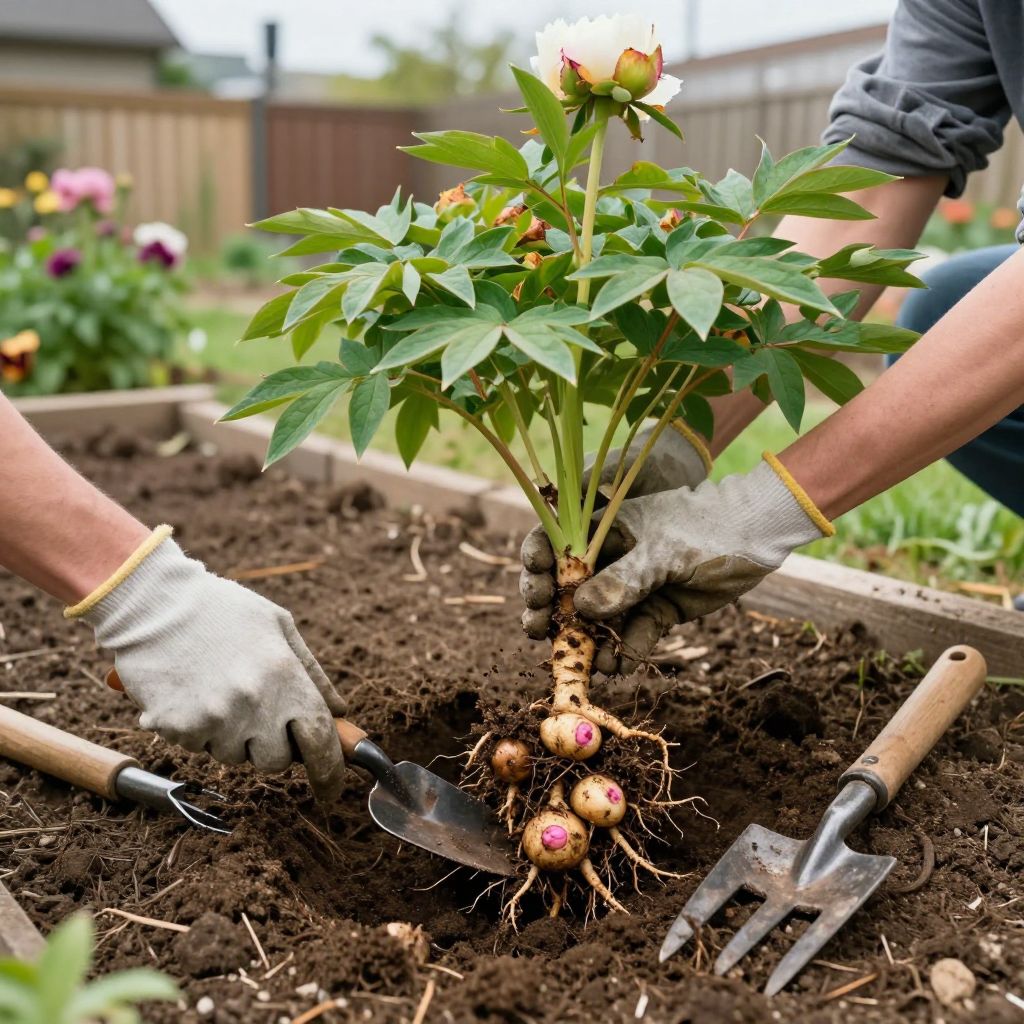
Wondering when to transplant peonies without setting them back for years? Timing matters more with peonies than with many perennials, because they dislike being moved and often pause flowering after transplanting.
The best time is usually in early fall, after the plants have gone dormant and before the ground freezes. In cooler climates, that often means late September to October; in warmer areas, it may be later. Spring transplanting can work, but fall gives peonies the best chance to re-establish roots before next season.
When to transplant peonies?
Transplant peonies in early fall, ideally when the foliage has died back and the plant is dormant but the soil is still workable. This timing reduces stress, helps roots regrow before winter, and gives you the best chance of blooms the following year. Spring transplanting is possible, but it is less reliable.
Why fall is the best time
Peonies are long-lived perennials with thick storage roots and sensitive growth buds called eyes. When you move them in fall, the plant is no longer pushing top growth, so it can focus on root recovery.
Cooler temperatures and autumn moisture also help newly moved peonies settle in with less heat stress. That matters because heat, dry soil, and active spring growth can all slow recovery.
What happens if you move them at the wrong time?
- Late spring or summer: more wilting, slower rooting, and greater risk of losing blooms the next season.
- Too late in fall: roots may not have enough time to establish before hard freeze.
- During active growth: the plant may survive, but it often sulks for a season or two.
Can you transplant peonies in spring?
Yes, but only if you must. Spring transplanting is best done very early, before the shoots get tall and before buds open. The plant will likely survive, but it may skip flowering or produce fewer blooms that year.
If you must move a peony in spring, dig carefully, keep as much root mass intact as possible, and replant it immediately. Water it in well and expect a slower recovery than with fall transplanting.
How to know your peony is ready to move
Not every peony needs to be transplanted often. In fact, peonies usually prefer to stay put for many years. Move them only when necessary, such as when they are crowded, planted too deeply, in poor drainage, or in the wrong amount of sun.
Good reasons to transplant
- The plant is not blooming well because it is too deep.
- It has outgrown its space and needs division or relocation.
- The site has become too shady.
- Water pools around the roots after rain.
- You are redesigning a bed or need to move a mature plant during construction.
How to transplant peonies step by step
Peonies resent rough handling, so the goal is to disturb the roots as little as possible. A careful move and proper planting depth matter more than fancy amendments or frequent watering.
- Choose the right day. Pick a cool, cloudy day if possible, and avoid transplanting during hot, windy weather.
- Prepare the new site first. Dig the hole before lifting the plant so roots spend less time exposed.
- Dig wide, not just deep. Start several inches away from the crown and lift a broad root ball to preserve thick roots and eyes.
- Inspect the roots. Remove only damaged, rotten, or broken sections. Healthy peony roots should feel firm.
- Set the crown at the right depth. Place the eyes about 1 to 2 inches below the soil surface. Planting too deep is a common reason peonies fail to bloom.
- Backfill gently. Use the native soil you removed, breaking up clods and firming lightly to remove air pockets.
- Water thoroughly. Soak the soil to settle it around the roots.
- Mulch lightly. Add a thin layer of mulch, but keep it away from the crown to prevent rot and burying the eyes too deeply.
Best soil, sun, and drainage after transplanting
Peonies do best in full sun in most climates, though a little afternoon shade can help in very hot regions. They need rich, well-drained soil that does not stay soggy after rain.
If your soil is heavy clay, improve drainage before planting by choosing a raised bed, mounding the planting area slightly, or selecting a better-drained location. Compost can help soil structure, but do not bury the crown in a deep pocket of rich amendment that holds too much moisture.
Ideal site conditions
- Light: at least 6 hours of sun daily for strong flowering.
- Drainage: water should not stand around the roots.
- Airflow: space plants so foliage dries quickly after rain.
- Soil: fertile, loose, and not overly compacted.
Aftercare for a newly transplanted peony
Transplanted peonies need steady, not excessive, care. The biggest mistake is overwatering or fertilizing too aggressively while the plant is trying to re-root.
Watering
Water deeply after planting, then keep the soil evenly moist for the first several weeks if rainfall is lacking. After that, water only when the top few inches of soil begin to dry. Peonies dislike soggy soil more than they dislike brief dry periods.
Mulching
Use a light mulch layer such as shredded bark or composted leaf mold, but keep it a few inches away from the crown. Heavy mulch piled over the eyes can reduce flowering or encourage rot.
Fertilizing
Newly transplanted peonies usually do not need strong feeding right away. If your soil is poor, a light top-dressing of compost in spring is often enough. Avoid pushing soft, leafy growth late in the season, especially after a fall transplant.
Will a transplanted peony bloom next year?
Sometimes, but not always. Peonies often take a season to recover from being moved, especially if they were divided, planted too deep, or transplanted outside the ideal fall window.
If the plant grows healthy foliage but no flowers, check the planting depth first. Eyes that are buried too deeply are one of the most common reasons peonies fail to bloom after transplanting.
Common mistakes to avoid
- Planting too deep: keep the eyes only 1 to 2 inches below the surface.
- Moving at the wrong season: avoid hot summer transplanting whenever possible.
- Over-amending the hole: too much rich, loose material can create settling and poor support.
- Overwatering: wet soil can rot roots, especially in poorly drained sites.
- Dividing too aggressively: each division should have several eyes and healthy roots.
- Expecting instant blooms: peonies often need time to recover after a move.
How to divide peonies while transplanting
If your peony is large and you want to make more plants, you can divide it during transplanting. Fall is still the best time for this job.
Use a clean, sharp spade or knife and make divisions with at least 3 to 5 eyes each when possible. Smaller divisions can grow, but they usually take longer to bloom. Replant divisions immediately so the roots do not dry out.
Pests and diseases to watch for after transplanting
Healthy peonies are fairly tough, but stressed plants can be more vulnerable. Good spacing, drainage, and cleanup are the best prevention.
Watch for these issues
- Botrytis blight: gray mold on shoots or buds, often encouraged by wet, crowded conditions.
- Powdery mildew: white coating on foliage later in the season, usually worse in dry, stagnant air.
- Root rot: caused by persistently wet soil or poor drainage.
- Ants on buds: usually harmless and not a pest problem by themselves.
Remove dead foliage in fall and keep the area tidy to reduce disease carryover. If a plant repeatedly struggles in the same spot, the site may be too shady or too wet rather than the plant itself being weak.
Practical timing guide by season
- Late summer to early fall: best overall window in most climates.
- Mid to late fall: acceptable if the ground is still workable and not frozen.
- Early spring: possible only before strong top growth begins.
- Summer: avoid unless absolutely necessary.
In warmer climates, fall may arrive later, so wait until temperatures cool and the plant is dormant. In colder regions, move peonies early enough that roots can settle before the ground freezes solid.
Conclusion
If you are deciding when to transplant peonies, aim for early fall whenever possible. Give the plant a sunny, well-drained site, set the eyes shallowly, water it in, and avoid overhandling the roots. With the right timing and planting depth, your peony has the best chance to settle in and bloom again.
If you want more help with perennial care and bed planning, you may also find related guidance on perennial planting basics and fall garden care useful.