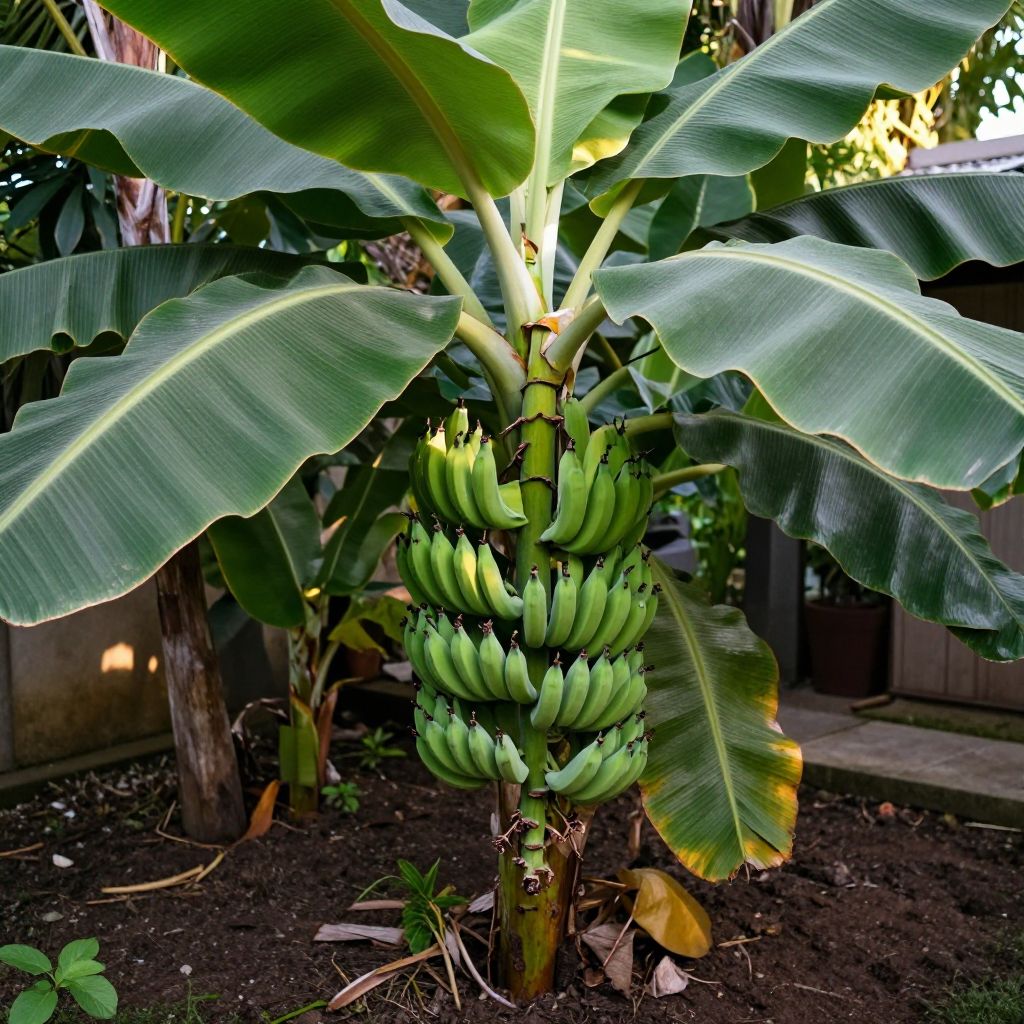
What do bananas grow on? If you picture a palm tree, you’re not alone—but bananas do not grow on trees. They grow on a large herbaceous plant with a soft, fleshy stem called a pseudostem, formed by tightly wrapped leaf bases.
That difference matters in the garden, because bananas need warmth, moisture, rich soil, and protection from wind to grow well. Whether you want fruit or just a bold tropical look, understanding how banana plants grow helps you choose the right spot and care routine.
What do bananas grow on?
Bananas grow on banana plants, which are giant herbs in the genus Musa, not woody trees. The “trunk” is a pseudostem made from layered leaf sheaths, and the fruit forms on a flower stalk that emerges from the center of the plant. After fruiting, that stem dies back and new shoots take over.
How banana plants grow in the garden
Banana plants grow from an underground stem called a corm. From that corm, the plant sends up new shoots, often called pups or suckers, which can become replacement stems.
In the right climate, a banana mat can look like a small grove. Each stem usually fruits once, then declines, while younger shoots continue the cycle.
The basic growth cycle
- A healthy corm sends up a new shoot.
- The pseudostem grows quickly in warm weather.
- A flower stalk emerges from the center.
- Fruit develops in hanging hands and fingers.
- The fruiting stem dies after harvest, and a pup replaces it.
Best growing conditions for bananas
Bananas are tropical or subtropical plants, so they grow best with steady warmth, plenty of moisture, and rich, well-drained soil. They dislike cold snaps, dry wind, and waterlogged ground.
If you live outside a frost-free climate, you can still grow bananas in containers or treat them as seasonal ornamentals, but fruiting may be limited unless your growing season is long and warm.
Sunlight
Bananas prefer full sun for strong growth and better fruiting, though very hot climates may benefit from light afternoon shade. In lower light, they may survive but grow slowly and produce smaller fruit or none at all.
Soil
Use fertile soil that drains well yet holds moisture. A good banana bed is rich in organic matter, with compost worked into the top layer before planting.
- Soil should be loose enough for roots to spread easily.
- Avoid heavy, compacted clay unless you improve drainage first.
- Mulch helps keep roots cool and moist.
Water
Bananas need consistent moisture, especially during active growth. Dry soil can slow growth, stress the plant, and reduce fruit quality.
At the same time, they do not like standing water. If your site stays soggy after rain, raise the planting area or improve drainage before planting.
Temperature and wind
Warm temperatures support fast growth, while cold slows or damages the plant. Strong wind can shred leaves and snap tall pseudostems, so choose a sheltered location if possible.
In windy gardens, a fence, hedge, or building can provide useful protection without blocking too much sun.
How to plant bananas successfully
You can grow bananas from nursery plants, divisions, or pups taken from an established clump. Starting with a healthy, disease-free plant is usually easier than growing from seed, and it gives you a much faster start.
Planting in the ground
- Choose a sunny, sheltered site with rich, well-drained soil.
- Dig a wide planting hole, not just a deep one.
- Mix compost into the backfill soil.
- Set the plant at the same depth it was growing before.
- Water deeply after planting.
- Mulch around the base, keeping mulch a few inches away from the stem.
Do not bury the pseudostem deeply. Banana plants root from the corm, and planting too deep can encourage rot.
Growing bananas in containers
Container growing works well for dwarf types or for gardeners in cooler climates. Use a large pot with drainage holes and a rich, moisture-retentive potting mix.
- Choose a container that is wide and heavy enough to stay stable.
- Use a high-quality potting mix, not garden soil alone.
- Water more often than in-ground plants, since pots dry out faster.
- Move containers to a protected place if cold weather threatens.
Care and maintenance through the season
Bananas grow fast when conditions are right, so regular care makes a big difference. The main jobs are watering, feeding, mulching, and managing the number of stems in each clump.
Feeding
Bananas are heavy feeders because they grow quickly and produce large leaves and fruit. Compost, well-rotted manure, and balanced organic matter are useful ways to keep soil fertile.
Rather than guessing at exact fertilizer amounts, base feeding on your soil quality, plant size, and whether the plant is actively growing. If leaves are pale, growth is slow, or fruiting is weak, poor nutrition may be part of the problem.
Mulching
Mulch helps conserve moisture, suppress weeds, and feed the soil as it breaks down. Apply a thick organic mulch around the root zone, but keep it off the pseudostem itself.
This is especially helpful in hot weather, when banana roots can dry quickly near the surface.
Pruning and thinning pups
Banana plants often send up several pups. Leaving too many can crowd the clump and reduce fruit quality, so select a few strong stems and remove extras as needed.
- Keep the main fruiting stem and one or two healthy followers.
- Remove weak, damaged, or crowded pups.
- Use a clean spade or sharp knife to cut unwanted shoots at the base.
Thinning helps direct energy into the best stems and keeps the planting easier to manage.
Common banana growing problems and fixes
Most banana problems come from stress: too little water, poor drainage, cold damage, wind, or low fertility. Catching these early can save the plant and improve future growth.
Yellowing leaves
Older leaves naturally age and yellow over time, but widespread yellowing can signal water stress, nutrient deficiency, or root problems. Check soil moisture first.
- If soil is dry, water deeply and more consistently.
- If soil is soggy, improve drainage and reduce watering.
- If new growth is pale, the plant may need richer soil or compost.
Split or torn leaves
Some tearing is normal in windy conditions. Banana leaves are large and naturally split as they age, but severe shredding often means the site is too exposed.
Windbreaks and sheltered planting spots help preserve leaf area, which supports stronger growth.
Cold damage
Cool weather can slow bananas dramatically, and frost can blacken leaves or kill the top growth. In marginal climates, protect plants with mulch, wrapping, or indoor overwintering if the container allows it.
If the top dies back but the corm survives, new shoots may still emerge when warm weather returns.
Root rot
Bananas are vulnerable to rot in poorly drained soil. Signs include wilting despite wet soil, soft stems, and declining vigor.
The best fix is prevention: plant in well-drained soil, avoid overwatering, and never let containers sit in saucers of water for long periods.
Pests and diseases to watch for
Bananas can face pests and diseases, especially in warm, humid gardens or crowded plantings. Good spacing, clean tools, and removing dead plant material all help reduce trouble.
Common pests
- Aphids may cluster on new growth and spread plant stress.
- Spider mites can appear in hot, dry conditions and cause stippling.
- Mealybugs may hide in leaf axils or on stems.
Rinse pests off with water when possible, and inspect new growth regularly. If you move plants indoors, check them carefully before bringing them inside.
Common disease concerns
Some banana diseases are serious and spread easily through infected planting material. That is why starting with healthy stock matters so much.
Choose disease-free plants from a reputable source, avoid sharing unknown suckers, and sanitize tools when dividing clumps.
How to propagate bananas
The easiest way to propagate bananas is by separating healthy pups from an established clump. This gives you a clone of the parent plant and is the standard method for home gardeners.
Choosing a good pup
Select a pup that is sturdy, has its own roots, and is large enough to survive on its own. Very tiny shoots are usually too weak to transplant successfully.
Division steps
- Wait until the pup is well established.
- Expose the base carefully so you can see where it connects.
- Cut it away cleanly with a sharp spade or knife.
- Lift the pup with some roots attached.
- Replant immediately in prepared soil or a pot.
- Water well and keep it sheltered while it settles in.
After division, keep the new plant evenly moist and out of harsh sun for a short recovery period if needed.
Harvesting bananas
Banana fruit is harvested when the fingers are full-sized and the angles on the fruit begin to soften, but timing varies by variety and climate. In many gardens, fruit does not ripen fully on the plant the way store-bought bananas do.
If you are growing bananas for fruit, watch the bunch closely as it develops. Support the stalk if the bunch becomes heavy, especially in windy areas.
After harvest
Once a stem has fruited, it will usually decline. Cut it down after harvest and let a healthy pup take over as the next main stem.
This natural cycle is normal and helps keep the clump productive.
Bananas as landscape plants
Even if you never harvest fruit, banana plants make a dramatic foliage feature. Their broad leaves create a tropical look that works well near patios, pools, fences, and warm entryways.
Just remember that their size, water needs, and cold sensitivity make them better suited to protected spots than to dry, exposed corners of the yard.
- Use them as a focal point in a tropical-style border.
- Pair them with other moisture-loving plants.
- Allow enough room for the clump to spread.
Conclusion: grow bananas with the right plant, not a tree
So, what do bananas grow on? They grow on a large banana plant with a pseudostem, not a woody tree, and they do best in warm, rich, well-drained soil with steady moisture and plenty of sun. If you want to grow bananas successfully, start with a healthy plant, protect it from wind and cold, and keep the clump well fed and thinned.
For more practical gardening help, you may also want to read about container gardening basics and how to improve garden soil with compost.