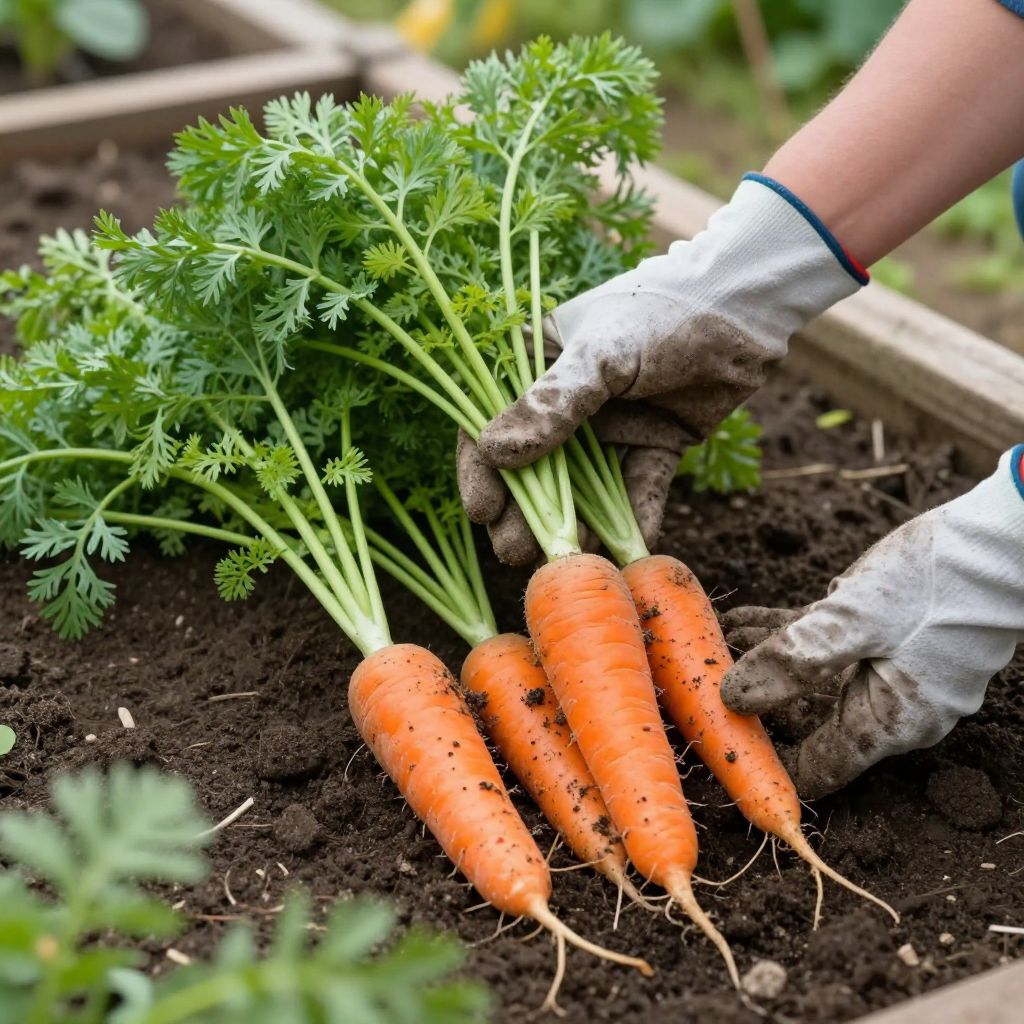
Wondering when are carrots ready to harvest? The good news is that carrots give you several clues before you lift them, and you do not need to guess. Size, color, shoulder diameter, and days to maturity all help you judge the right moment.
Harvesting at the right time matters because carrots can be sweet and crisp when picked at peak size, but they can also become woody, split, or overly tough if left too long. With a little checking, you can pull them at the best stage for your soil, climate, and variety.
When are carrots ready to harvest?
Carrots are ready to harvest when the visible shoulders at the soil surface are about 1/2 to 1 inch wide, the roots have reached the expected size for the variety, and the foliage looks mature. Most carrots are ready roughly 50 to 80 days after sowing, but the best test is to gently check one or two roots rather than rely on the calendar alone.
How to tell carrots are mature
Carrots grow underground, so you have to read the signs above the soil and then verify with a careful test pull. Different varieties mature at different sizes, so always compare what you see with the seed packet description.
Key signs to look for
- Shoulders visible at the soil line: The top of the root may start to push up slightly as it fills out.
- Top diameter: If the shoulder is about pencil-thick for baby carrots or 1/2 to 1 inch for full-size types, the root is often close.
- Days to maturity: Use the seed packet as a guide, but expect weather and soil to shift the timing.
- Leaf growth slows: Mature carrots often stop producing lush new top growth and focus on root development.
- Color is rich and even: Orange, purple, yellow, or white types should show their mature color clearly near the shoulder.
Do not wait for the foliage to die back completely. Unlike some root crops, carrots are usually harvested while the tops are still green and healthy.
What size should you aim for?
That depends on the variety you planted. Short or round carrots may be ready when they are only a few inches long, while long storage types may need much more time and depth to fully size up.
- Baby carrots: Often harvested small, around 1/2 to 1 inch thick and 3 to 5 inches long, depending on variety.
- Main crop carrots: Commonly harvested at 1/2 to 1 inch thick, with roots often 6 to 8 inches or more.
- Long storage carrots: May need extra time to reach full flavor and size, especially in cool weather.
Best way to check without damaging the crop
The safest method is to loosen the soil beside one carrot and gently pull a sample root. This tells you the actual size, shape, and texture without committing the whole row too early.
- Choose a plant near the edge of the row so you do not disturb the whole bed.
- Use your fingers or a hand fork to loosen the soil around the root.
- Grip the foliage close to the crown and pull steadily upward.
- Wash or brush off the soil and inspect the size, color, and shape.
- If it is too small, re-cover the hole and let the rest keep growing.
If the root is forked, cracked, or misshapen, that is a clue about growing conditions, not necessarily harvest readiness. Poor soil structure, stones, fresh manure, or uneven watering can all affect shape.
How growing conditions affect harvest timing
Carrots do not mature at exactly the same pace everywhere. Soil, temperature, moisture, and spacing all influence how quickly roots size up and how good they taste.
Soil quality
Loose, deep, stone-free soil helps carrots grow straight and reach harvest size on schedule. Heavy clay or compacted soil slows root expansion and can cause stunting, forking, or rough skins.
If your soil is dense, improve it before the next planting with compost worked in deeply, but avoid fresh manure. Fresh manure can encourage forked roots and odd growth.
Watering
Even moisture is important. If carrots dry out and then get a heavy watering, roots may split or become woody. If the soil stays too wet, growth can slow and disease pressure increases.
For best results, keep the bed evenly moist while roots are sizing up, especially during warm spells or dry winds.
Temperature and season
Cool weather usually improves carrot flavor. In many climates, carrots taste sweeter after light frost, but they should still be harvested before the ground freezes solid unless you are using mulch or a mild winter climate to overwinter them.
Hot weather can make carrots develop a stronger, sometimes bitter flavor, especially if they are left too long in summer heat.
Harvesting carrots at the right stage
You can harvest carrots in stages. Some gardeners pull a few small roots early for fresh eating, then leave the rest to bulk up. This is a good way to enjoy the crop over a longer period.
For tender baby carrots
Harvest when the roots are small, smooth, and sweet. These are ideal if you want tender texture and do not need large storage roots.
For full-size carrots
Wait until the shoulders match the expected size for the variety and the roots feel firm. Full-size carrots usually have the best balance of sweetness and crunch.
For storage carrots
Let them develop fully, but do not leave them so long that they become tough or split. Harvest before prolonged wet weather or hard freezes if you plan to store them.
How to harvest carrots cleanly
Carrots are easy to damage if the soil is dry and hard. A little preparation makes pulling much easier and protects the roots from snapping.
- Water the bed lightly the day before if the soil is very dry.
- Loosen the soil with a garden fork or trowel a few inches away from the roots.
- Grasp the tops near the crown, not just the leaves.
- Pull straight up with steady pressure.
- Brush off loose soil and trim the tops if you are storing them.
If the tops break off, use a small hand fork or trowel to lift the root from beneath. Never yank hard on dry, compacted soil, or you may snap the carrot in half.
What happens if you harvest too early or too late?
Too early
Very small carrots can be sweet, but they may not have developed enough size for good yield. If you pull them too soon, you simply get less crop from the bed.
Too late
Overmature carrots can become fibrous, woody, or split. They may also lose sweetness, especially in hot weather or after uneven watering.
That said, carrots are forgiving. If you miss the perfect window by a little, many will still be usable, especially for cooking.
Common problems that affect harvest readiness
Forked or twisted roots
Forking usually means the soil had stones, clods, or other obstructions. It can also happen if the bed was amended with fresh manure or not thinned properly.
Small tops, small roots
Weak foliage often means the plant is stressed by crowding, poor soil, or insufficient light. Carrots need full sun for best root development.
Cracked roots
Cracking often follows irregular watering, especially after a dry spell. Keep moisture steady as the roots mature.
Pest damage
Carrot rust fly larvae and other soil pests can damage roots before harvest. If foliage yellows unexpectedly or roots show tunnels, check the crop sooner and remove damaged carrots promptly.
Should you leave carrots in the ground?
In many gardens, yes, for a short time. Mature carrots can stay in the ground for a while if the soil drains well and the weather is cool. Some gardeners even use a thick mulch to keep roots harvestable longer into fall or winter.
However, do not leave them indefinitely. Wet soil, repeated freezing and thawing, or pest pressure can reduce quality. If you are unsure, harvest a few and judge the rest by taste and firmness.
Quick harvest checklist
- Check the seed packet for expected days to maturity.
- Look for shoulders that match the variety’s mature width.
- Pull one test carrot from the edge of the row.
- Judge flavor, size, and texture before harvesting the whole bed.
- Harvest before the roots become woody, split, or overgrown.
Conclusion
The simplest answer to when are carrots ready to harvest is this: harvest them when the shoulders are the right size for the variety, the roots taste sweet and firm, and the crop has reached maturity according to your growing conditions. Pull one test carrot first, then harvest the rest at peak quality.
If you want to keep improving your root crops, it helps to read more about soil preparation and growing carrots in the home garden so your next harvest is even straighter, sweeter, and easier to lift.