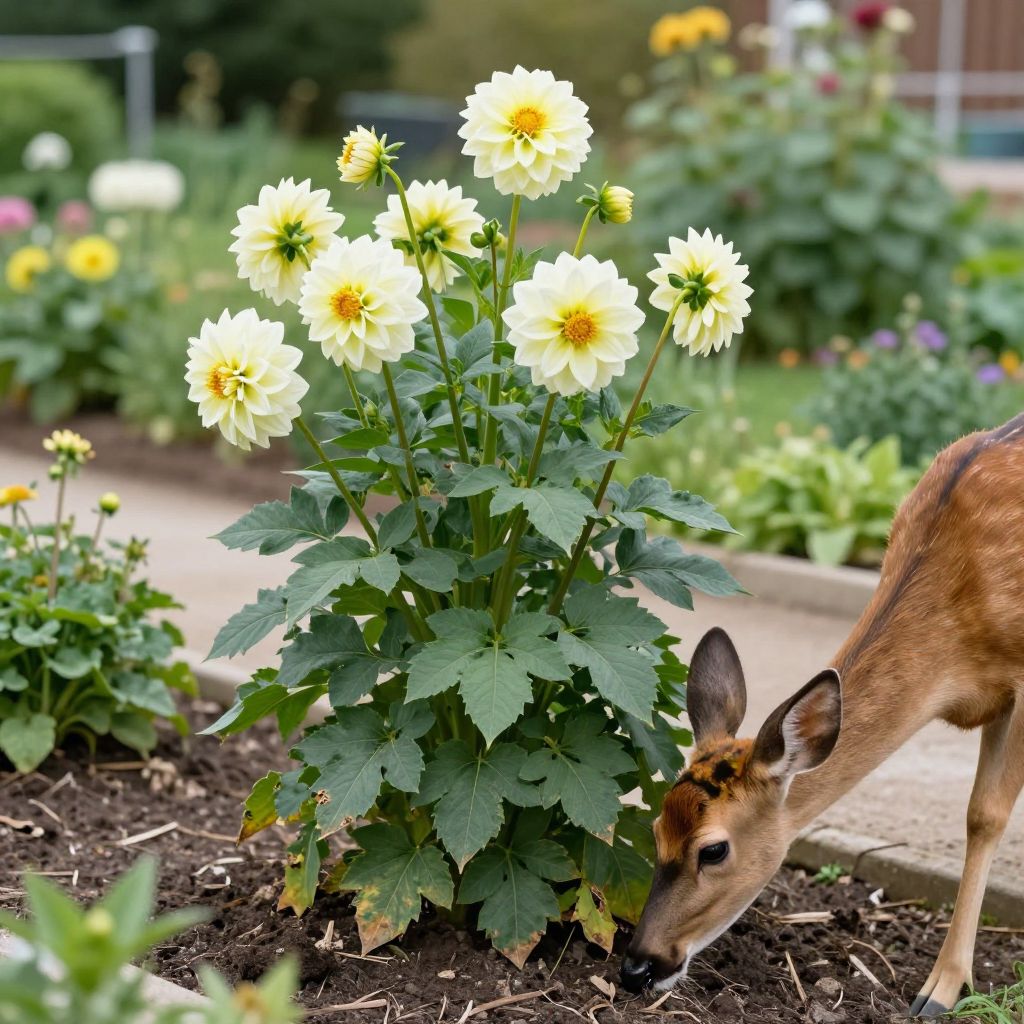
Are dahlias deer resistant? If deer are browsing your garden, this is an important question. Dahlias are beautiful, but they are not reliably deer-proof, and hungry deer may nibble the foliage, buds, and flowers when other food is scarce.
You can still grow dahlias successfully with the right protection and care. The key is to treat them as deer-attractive plants that need safeguarding, especially in areas with heavy deer pressure.
Are Dahlias Deer Resistant?
Dahlias are not considered deer resistant. Deer may pass them by in some gardens, but they will often eat dahlias if they are hungry enough or if the plants are easy to reach. Young shoots, tender leaves, buds, and blooms can all be damaged, especially in spring and early summer.
Why Deer Sometimes Eat Dahlias
Deer do not follow a strict menu. They browse based on availability, season, hunger, and local pressure, so a plant that is ignored in one yard may be heavily damaged in another.
What makes dahlias vulnerable
- Soft, succulent growth that is easy to chew
- Low-growing stems and flowers that are within reach
- Fresh spring growth that is especially tender
- Flower beds near woods, hedges, or deer travel routes
Deer damage often looks like cleanly stripped stems, missing buds, or plants suddenly cut back overnight. If deer are common in your area, assume dahlias may be on the menu.
How to Protect Dahlias from Deer
The most reliable way to protect dahlias is to combine several methods. No single deterrent works all the time, but a layered approach can make your garden much less appealing.
1. Use physical barriers first
Fencing is the most dependable solution. A tall barrier is usually more effective than sprays alone, especially when deer pressure is high.
- 8-foot fencing is often the most effective for keeping deer out.
- Smaller garden enclosures can work if they fully surround the dahlias.
- Individual plant cages or netting may help in small beds, but deer can still reach over or through gaps.
2. Try deer repellents
Repellents can reduce browsing, but they work best when applied before deer start feeding and reapplied after heavy rain or new growth.
- Use products labeled for deer control and follow the label directions carefully.
- Rotate repellent types if deer become used to one scent or taste.
- Focus on the most vulnerable parts of the plant, including new shoots and buds.
3. Reduce easy access
Deer are more likely to browse plants they can reach comfortably. Simple garden design choices can help.
- Plant dahlias closer to the house, patio, or high-traffic areas.
- Avoid placing them at the edge of woods or open field borders.
- Use raised beds or enclosed borders where practical.
4. Mix in less appealing plants
Deer often prefer tender, lush plants over strongly scented or coarse-textured ones. Surrounding dahlias with less palatable plants may help, though it is not a guarantee.
If you want a mixed border, choose companions that are known locally to be less attractive to deer and place the dahlias in the most protected spot.
Best Growing Conditions for Healthy Dahlias
Healthy dahlias recover better from minor browsing and produce stronger blooms. Give them the right conditions so they grow quickly and can replace damaged foliage.
Sunlight
Dahlias generally bloom best in full sun, which means at least 6 hours of direct light daily in most climates. In very hot regions, afternoon shade can help reduce stress.
Soil and drainage
Dahlias prefer loose, fertile soil that drains well. Heavy, waterlogged soil can rot tubers and weaken plants, making them more vulnerable to pests and stress.
- Work in compost to improve soil structure.
- Avoid planting in low spots where water collects.
- If soil is clay-heavy, consider raised beds or mounded planting areas.
Watering
Water deeply when the soil begins to dry, especially during active growth and blooming. The goal is steady moisture, not soggy soil.
- Water at the base to keep foliage drier.
- Mulch lightly to help retain moisture and reduce weeds.
- Adjust frequency based on rainfall, heat, and soil type.
Planting Dahlias with Deer Pressure in Mind
If deer are a known problem, plan protection before planting rather than after damage appears. Young dahlias are most vulnerable when they are just starting to grow.
Before you plant
- Choose a sunny, well-drained site that is easy to protect.
- Improve the soil with compost if needed.
- Set up fencing, cages, or repellent strategy in advance.
- Plant where you can check growth often and respond quickly to damage.
After planting
Watch for fresh shoots, because deer often target tender new growth first. If browsing starts early, increase protection immediately rather than waiting for the plant to recover on its own.
Pruning, Staking, and Maintenance
Good maintenance helps dahlias stay upright and healthy, which matters when you are trying to protect them from wildlife and weather.
Staking tall varieties
Many dahlias need support, especially larger cultivars with heavy blooms. Use stakes, cages, or a support system early so stems do not break later.
- Install supports at planting time or soon after.
- Tie stems loosely so they can move without snapping.
- Check ties regularly as plants grow.
Deadheading and cleanup
Remove spent flowers to encourage more blooms. If deer have nipped the plant, trim damaged stems back to healthy tissue when possible.
Keep the area free of weeds and fallen debris so you can spot fresh browsing quickly.
Common Deer-Related Problems and How to Fix Them
When deer browse dahlias, the damage can range from minor leaf loss to complete stem removal. Quick action improves the chances of recovery.
Problem: Leaves are ragged or missing
This usually means deer have fed on the plant. If the growing tip is intact, the dahlia may still recover and branch out.
Fix: Increase protection, water consistently, and avoid additional stress from drought or poor drainage.
Problem: Buds disappear before opening
Deer often eat buds because they are tender and easy to reach.
Fix: Use repellents more frequently during bud formation and consider physical barriers around the bed.
Problem: Whole stems are clipped or stripped
Severe browsing can set plants back significantly, especially early in the season.
Fix: Cut damaged stems back cleanly, protect the plant from repeat browsing, and feed only if the soil is poor and the plant is actively growing.
Other Pests and Diseases That Can Be Confused with Deer Damage
Not every damaged dahlia has been eaten by deer. It helps to rule out other causes before you change your whole garden plan.
- Slugs and snails leave irregular holes, often in damp conditions.
- Earwigs may chew petals and tender growth.
- Cutworms can sever young stems near the soil line.
- Powdery mildew causes a white coating on leaves, not chewing damage.
- Rot from poor drainage can make plants collapse or yellow.
If the damage appears overnight and the plant has cleanly torn or clipped edges, deer are a likely culprit.
Can You Grow Dahlias Successfully in Deer Country?
Yes, you can, but you should not rely on dahlias being deer resistant. Instead, plan for protection from the start and be ready to adjust based on how much pressure your garden gets.
The best results usually come from combining healthy growing conditions with physical protection and consistent deterrence. If one method fails, another can still protect your plants.
Quick Care Tips for Stronger Dahlias
- Plant in full sun with well-drained soil.
- Add compost to improve fertility and soil texture.
- Water deeply, but do not keep the soil soggy.
- Stake tall plants early.
- Remove spent blooms to keep plants flowering.
- Protect new growth from deer before damage starts.
Conclusion
So, are dahlias deer resistant? Not really. They are better described as deer-prone ornamentals that need protection in areas where deer browse. If you want healthy blooms, start with good soil, full sun, and a deer plan that includes fencing, repellents, or both.
If you are dealing with heavy browsing pressure, it can also help to learn what attracts deer to your yard and how to reduce it. For more practical guidance, see what to feed deer.