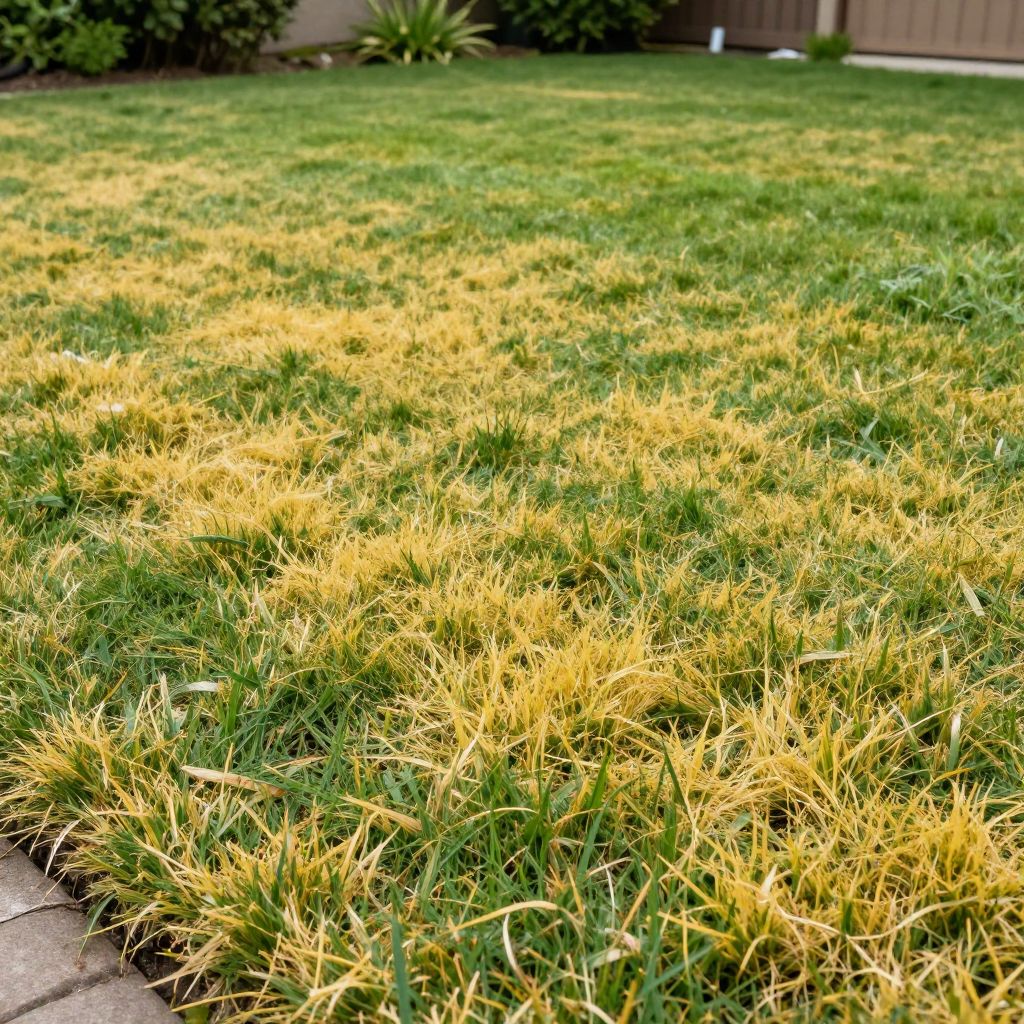
Why is my grass turning yellow? Yellowing turf is usually a sign that something in the growing conditions is off, such as watering, soil compaction, nutrient imbalance, pests, disease, or mowing stress. The good news is that most causes can be identified with a close look at the pattern of discoloration and the site conditions.
If you diagnose the problem early, you can often restore color and vigor without replacing the lawn. Start by checking how the yellowing appears, then match it to the most likely cause and make one change at a time so you can see what helps.
Why is my grass turning yellow?
Grass turns yellow when it cannot make enough healthy green growth, usually because roots are stressed, nutrients are unavailable, or the blades are being damaged. The most common reasons are improper watering, poor drainage, low nitrogen, compacted soil, mowing too short, pet urine, pests, or lawn disease.
How to read the pattern of yellowing
The way the yellowing looks can tell you a lot about the cause. Before you treat anything, walk the lawn and note whether the problem is patchy, uniform, near hard surfaces, or limited to one area.
Common patterns and what they suggest
- Whole lawn pale or yellow-green: often low nitrogen, poor root function, or general stress.
- Yellow patches in circles or rings: may point to fungal disease, insect activity, or pet urine.
- Yellowing near sidewalks, driveways, or foundations: heat, reflected sunlight, drought, or soil compaction.
- Yellowing in low spots: usually poor drainage or waterlogged soil.
- Striping after mowing: mower blade issues, uneven cutting, or scalping.
If only one section of the lawn is affected, compare it with a healthy area nearby. Differences in sun exposure, irrigation coverage, foot traffic, and soil conditions often explain the problem.
Watering problems: too much or too little
Water stress is one of the most common reasons grass turns yellow. Both drought and overwatering can cause roots to struggle, and stressed roots cannot support rich green growth.
Signs of underwatering
- Blades look dull, curled, or bluish-green before turning yellow
- Footprints remain visible after walking across the lawn
- Soil feels dry several inches down
- Yellowing is worse in sunny or windy spots
Signs of overwatering
- Soil stays soggy or squishy
- Yellowing starts in low areas
- Moss, algae, or mushrooms appear
- Roots are shallow or brown instead of firm and white
Fix: Water deeply and less often, then let the soil surface dry slightly before watering again. The goal is to encourage deeper roots, not keep the surface constantly wet. If your lawn sits in heavy clay or a low area, improve drainage rather than adding more water.
How to check soil moisture
- Push a screwdriver, trowel, or soil probe into the ground.
- If it goes in easily and the soil is muddy, the area may be too wet.
- If it is hard to insert and the soil is powdery, the lawn may be too dry.
- Check several spots, because lawns often dry unevenly.
Nutrient deficiency and poor soil fertility
Yellow grass often needs nitrogen, but not always more fertilizer right away. A soil test is the best way to know whether the lawn lacks nitrogen, has a pH issue, or is missing other nutrients that affect color and growth.
What nitrogen deficiency looks like
When grass lacks nitrogen, it usually turns a uniform light green or yellow-green, starting in older leaves first. Growth may also slow, and the lawn may thin out over time.
Other soil issues that can cause yellowing
- Soil pH out of range: nutrients may be present but unavailable to the roots.
- Poor organic matter: sandy soils can leach nutrients quickly.
- Compacted soil: roots cannot absorb nutrients well if air and water movement are limited.
Fix: Use a soil test to guide fertilizer and amendment choices. If the lawn is generally healthy but pale, a balanced lawn fertilizer or slow-release nitrogen source may help, but apply only according to local recommendations and product directions. Adding compost as a thin topdressing can also improve soil structure over time.
Compacted soil and poor root growth
Compaction is common in lawns with heavy foot traffic, clay soil, or repeated mowing when the ground is wet. When soil is compacted, roots get less oxygen and water movement slows, which can cause yellowing even if you are watering and feeding correctly.
Clues that compaction is part of the problem
- Water puddles or runs off instead of soaking in
- Grass is thin along paths, play areas, or parked vehicles
- Soil feels hard and dense
- The lawn improves briefly after rain, then yellows again
Fix: Core aeration is one of the best remedies for compacted lawns. It removes small plugs of soil so air, water, and nutrients can reach the root zone. In severe cases, you may also need to reduce traffic, topdress with compost, and overseed thin areas.
Mowing mistakes that yellow grass
Mowing stress is easy to overlook, but cutting too short can quickly yellow a lawn. Grass needs enough leaf surface to photosynthesize, and scalping removes too much at once.
Common mowing problems
- Cutting too low: weakens roots and exposes soil to heat and drought
- Dull blades: tear the leaf tips, leaving a yellow or tan cast
- Removing too much at once: stresses the plant
- Mowing when wet: causes uneven cutting and can spread disease
Fix: Keep mower blades sharp and follow the one-third rule: never remove more than one-third of the grass blade in a single mowing. If the lawn is already stressed, raise the mowing height a little to help it recover.
Pests that can make grass yellow
Some insect problems damage roots or stems, causing patches of yellow grass that do not respond to watering. The lawn may feel loose, thin, or easy to pull up if root-feeding pests are active.
Common lawn pests to consider
- Grubs: feed on roots and can cause irregular yellow patches
- Chinch bugs: often damage sunny, dry areas and can create expanding yellow-brown patches
- Billbugs or other larvae: may weaken turf and leave it patchy
To check for pests, tug gently on the yellowed turf. If it lifts easily like a loose carpet, inspect the root zone and soil beneath it. You can also cut a small flap of turf and look for larvae or damaged roots.
Fix: Identify the pest before treating. Some damage is seasonal and limited, while other infestations need targeted control. Healthy watering and mowing help the lawn tolerate minor feeding, but serious infestations may require professional help or a labeled treatment appropriate for your grass type and local regulations.
Diseases that cause yellow patches
Fungal lawn diseases often show up as spots, rings, or irregular patches rather than a uniform fade. Warm, humid weather, nighttime moisture, and poor airflow can all make disease more likely.
Signs disease may be involved
- Yellow, tan, or brown patches with distinct edges
- Fine webbing, smoke-like growth, or spotted blades
- Problem worsens after rainy or humid weather
- Grass looks matted or slimy in the morning
Fix: Reduce leaf wetness by watering early in the day rather than at night, and avoid frequent shallow watering. Improve airflow where possible, remove excess thatch if it is thick, and mow with a sharp blade. If disease is severe or recurring, confirm the diagnosis before using any fungicide, since the wrong treatment wastes time and money.
Pet urine, salt, and chemical burn
Yellow or brown spots with a greener ring around them often point to concentrated nitrogen from pet urine. Similar damage can happen from spilled fertilizer, de-icing salt, or certain lawn chemicals used too heavily.
What to look for
- Small, sharply defined spots
- Dark green border around a yellow or dead center
- Damage near walkways, driveways, or where pets relieve themselves
Fix: Water the area thoroughly soon after exposure if possible, and flush salt-affected spots with plenty of clean water when drainage allows. For pet urine, train pets to use a designated area or rinse high-use spots regularly. Severely burned turf may need reseeding or patch repair.
Sun, shade, and seasonal stress
Grass growing in too much shade often turns thin and yellow because it cannot photosynthesize well enough to stay dense and green. On the other hand, full-sun grass can yellow during heat waves, drought, or sudden weather changes.
Seasonal causes to keep in mind
- Spring: soil is cool and roots may be slow to absorb nutrients
- Summer: heat, drought, and mowing stress are common
- Fall: recovery is often strongest if conditions are mild
- Winter or early spring: some grasses naturally go dormant or pale
If your lawn is in deep shade, consider whether the grass type is suited to that location. In some cases, pruning nearby trees for more light, reducing irrigation, or switching to a shade-tolerant groundcover may be better than trying to force a turfgrass to thrive.
What to do first when your grass turns yellow
When you are not sure why the lawn is yellow, use a simple troubleshooting order. This helps you avoid overcorrecting and making the problem worse.
- Check the pattern: whole lawn, spots, edges, low areas, or traffic zones.
- Inspect soil moisture: look for drought or saturation.
- Review mowing habits: height, blade sharpness, and frequency.
- Look for pests or disease: tug on turf and inspect blades and roots.
- Test the soil: especially if the lawn is pale overall.
- Correct one issue at a time: then wait to see the response.
Helpful fixes that improve most lawns
- Aerate compacted areas
- Topdress lightly with compost where soil is poor
- Water deeply and less often
- Mow higher and keep blades sharp
- Overseed thin areas with the right grass for your climate
When yellow grass can recover and when to replace it
Grass often recovers if the cause is stress, mowing, or a temporary nutrient issue. Recovery is slower if roots are badly damaged, the site is poorly suited to turf, or the lawn has repeated disease and pest problems.
If a section stays yellow despite correct watering, mowing, and soil care, dig up a small sample and inspect the roots and soil. Healthy roots should look firm and light-colored, not slimy, blackened, or sparse.
For a lawn with repeated trouble, it may be worth improving the site first rather than repeatedly patching it. Better drainage, more light, less compaction, or choosing a more suitable grass type can save time and frustration.
If you want to keep improving your lawn, the next helpful topics are soil testing, mowing height, and fixing compacted ground. You may also want to read more about how to aerate a lawn and how to tell if your lawn needs fertilizer.