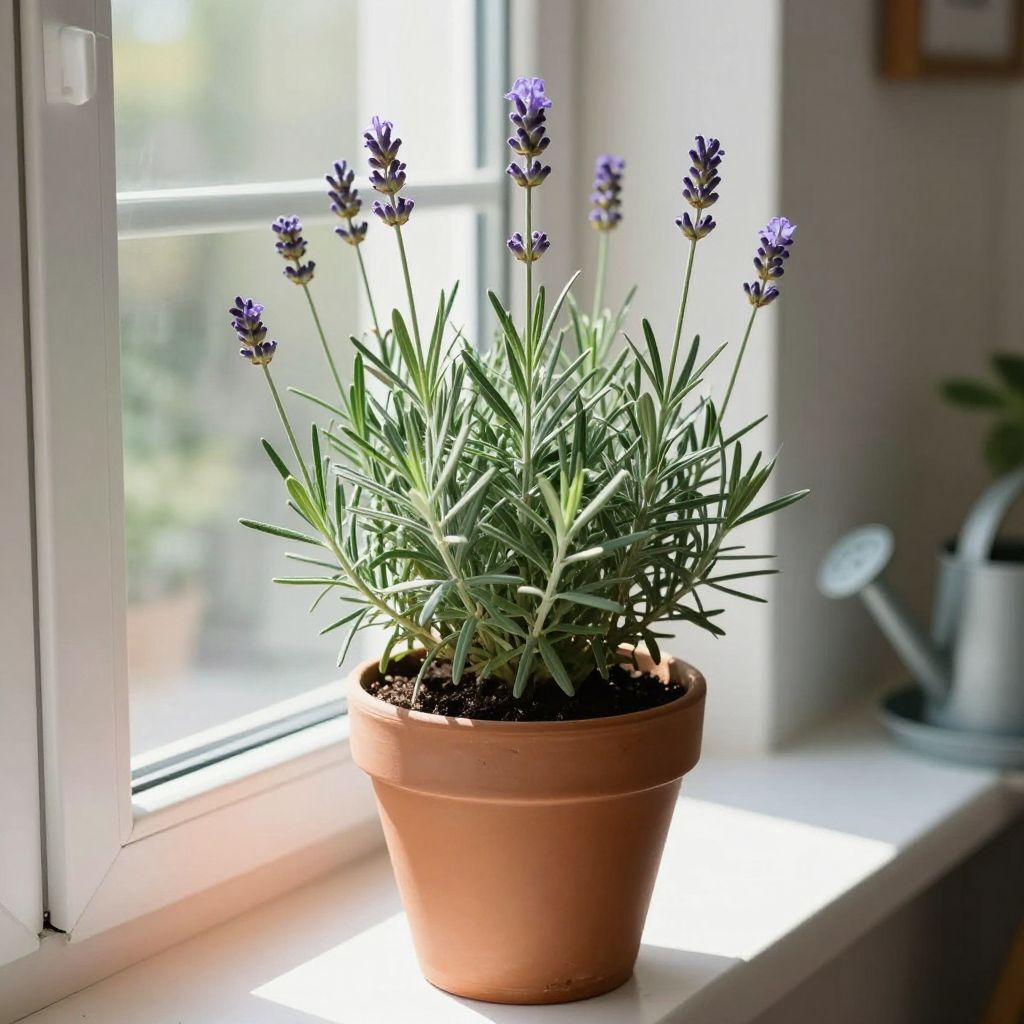
Can you grow lavender indoors? Yes, but it’s one of the trickier herbs to keep happy inside. Lavender needs very bright light, sharp drainage, and dry air around the roots, so success depends on matching those conditions as closely as possible.
If you can give it a sunny window, a gritty potting mix, and careful watering, indoor lavender can survive and even bloom. The key is to treat it more like a small Mediterranean shrub than a typical houseplant.
Can you grow lavender indoors?
Yes, you can grow lavender indoors, especially compact types of Lavandula, but it will only thrive if it gets strong light, excellent drainage, and cooler, drier conditions than most indoor plants. Indoors, lavender often struggles from low light and overwatering, so the goal is to prevent root rot and legginess.
What lavender needs indoors
Light is the biggest factor
Lavender needs as much direct sun as you can provide indoors. A south-facing window is usually best, with at least 6 hours of direct light daily.
If natural light is weak, a grow light can make the difference between a compact plant and a stretched, weak one. Keep the light close enough to be useful, but not so close that it overheats the foliage.
Temperature and airflow matter
Lavender prefers moderate temperatures and good air movement. It does not like stuffy rooms, hot radiators, or humid corners.
Cooler indoor conditions are usually better than warm ones, especially in winter. If your home is very warm and dim, lavender will usually decline over time.
Drainage is non-negotiable
A pot with drainage holes is essential. Lavender roots rot quickly in soggy soil, especially indoors where evaporation is slower than outside.
Choose a container that is only slightly larger than the root ball. An oversized pot holds too much moisture and makes overwatering more likely.
How to plant lavender for indoor growing
Choose the right pot and mix
Use a fast-draining potting mix rather than standard all-purpose soil alone. Lavender does best in a lean, airy medium that dries fairly quickly between waterings.
A good indoor mix often includes potting soil blended with coarse sand, perlite, or fine gravel to improve drainage. The exact blend matters less than the result: the soil should never stay wet for long.
- Pot: Must have drainage holes
- Mix: Light, gritty, and fast-draining
- Container size: Just slightly larger than the root ball
- Placement: Brightest window available
Repotting a nursery plant
If you’re bringing home a lavender plant from a garden center, repot it soon after purchase if the soil seems dense or the pot lacks drainage. Handle the roots gently and avoid burying the crown too deeply.
The crown, where stems meet roots, should sit at or just above the soil line. Burying it too deeply increases the risk of rot.
Watering indoor lavender correctly
Water less often than you think
Lavender is drought-tolerant once established, and indoor plants usually fail from too much water rather than too little. Let the top layer of soil dry before watering again.
Instead of following a fixed schedule, check the pot with your finger. If the top 1 to 2 inches feel dry and the pot feels lighter, it may be time to water.
Signs of overwatering and underwatering
- Overwatering: Yellowing leaves, limp growth, mushy stems, or a musty smell from the soil
- Underwatering: Dry, crispy leaves, drooping stems, and very dry soil pulling away from the pot
If you’re unsure, err on the dry side. Lavender usually recovers better from slight dryness than from wet roots.
Best indoor care tips for healthy lavender
Rotate the pot
Turn the container every week or two so the plant grows evenly toward the light. This helps prevent lopsided growth and keeps the plant fuller.
Prune lightly to keep it compact
Pruning helps indoor lavender stay bushy instead of woody and sparse. Trim lightly after flowering or when stems start to get leggy.
Remove spent flower stems and cut back soft green growth, but avoid cutting into old woody stems with no leaves. Lavender may not resprout well from bare wood.
Feed sparingly
Lavender does not need heavy fertilizing. Too much nitrogen can produce soft, weak growth and fewer flowers.
If your potting mix is fresh and the plant looks healthy, you may not need much feeding at all. If you do fertilize, use a mild, balanced approach and follow the product label carefully rather than overdoing it.
Can lavender bloom indoors?
Sometimes, yes. Indoor lavender can bloom if it gets enough direct sun, a cool enough environment, and a proper rest period. However, flowering indoors is less reliable than outdoors.
If your plant grows well but does not bloom, the most common causes are insufficient light, too much fertilizer, or warm, humid indoor conditions. Focus first on strong light and compact growth.
Common problems when growing lavender indoors
Leggy growth
Leggy, stretched stems usually mean the plant needs more light. Move it to a brighter window or add a grow light.
Once lavender becomes very stretched, it can be hard to restore a compact shape. Prevention is much easier than correction.
Root rot
Root rot is the most serious indoor problem for lavender. It happens when soil stays wet too long or the pot drains poorly.
To prevent it, use a fast-draining mix, water only when needed, and never let the pot sit in collected water.
Powdery mildew and other fungal issues
Indoor lavender can develop fungal problems if air circulation is poor or humidity is high. Powdery mildew may appear as a pale, dusty coating on leaves.
Improve airflow, reduce crowding, and avoid wetting the foliage. If the problem is severe, remove affected growth and reassess the plant’s growing conditions.
Pests
Indoor lavender may occasionally attract aphids, spider mites, or whiteflies, especially if the plant is stressed.
- Check leaf undersides regularly
- Rinse small infestations off with water
- Isolate affected plants from other houseplants
- Remove badly infested stems if needed
How to propagate lavender indoors
Stem cuttings are the easiest method
Propagation from cuttings is often more reliable than growing lavender from seed indoors. Soft, healthy stem cuttings root best when taken from non-flowering growth.
- Take a healthy cutting from a non-woody stem.
- Remove the lower leaves.
- Place the cutting in a small pot of moist, well-draining mix.
- Keep it bright and lightly moist, not wet.
- Wait for new growth before treating it like an established plant.
Be patient. Lavender can root slowly, and too much moisture during propagation can cause the cutting to rot.
Harvesting lavender indoors
When to cut flowers or stems
Harvest lavender when flower buds are open but not fully spent. That is usually when fragrance is strongest for drying or indoor display.
Use clean scissors or pruners and cut stems above leafy growth. Avoid removing too much at once, especially from a young plant.
Using the harvest
Indoor-grown lavender can be used for small bouquets, dried bundles, or fragrant stems placed in a vase. Dry the stems in a cool, dark, airy place for the best color retention.
Is indoor lavender worth it?
Yes, if you have a very bright spot and you enjoy attentive plant care. Lavender is not the easiest houseplant, but it can be rewarding when you respect its need for sun, dryness, and airflow.
If your home is dim or humid, you may have better results growing lavender outdoors in a container during the warm season and bringing it inside only temporarily if needed.
Quick checklist for success
- Use a pot with drainage holes
- Choose a gritty, fast-draining mix
- Give the plant full sun indoors if possible
- Water only after the soil starts drying
- Keep the plant cooler and less humid
- Prune lightly to maintain shape
- Watch closely for root rot and pests
If you want to keep building your indoor garden skills, you may also enjoy reading about growing strawberries indoors for another useful comparison in container growing.