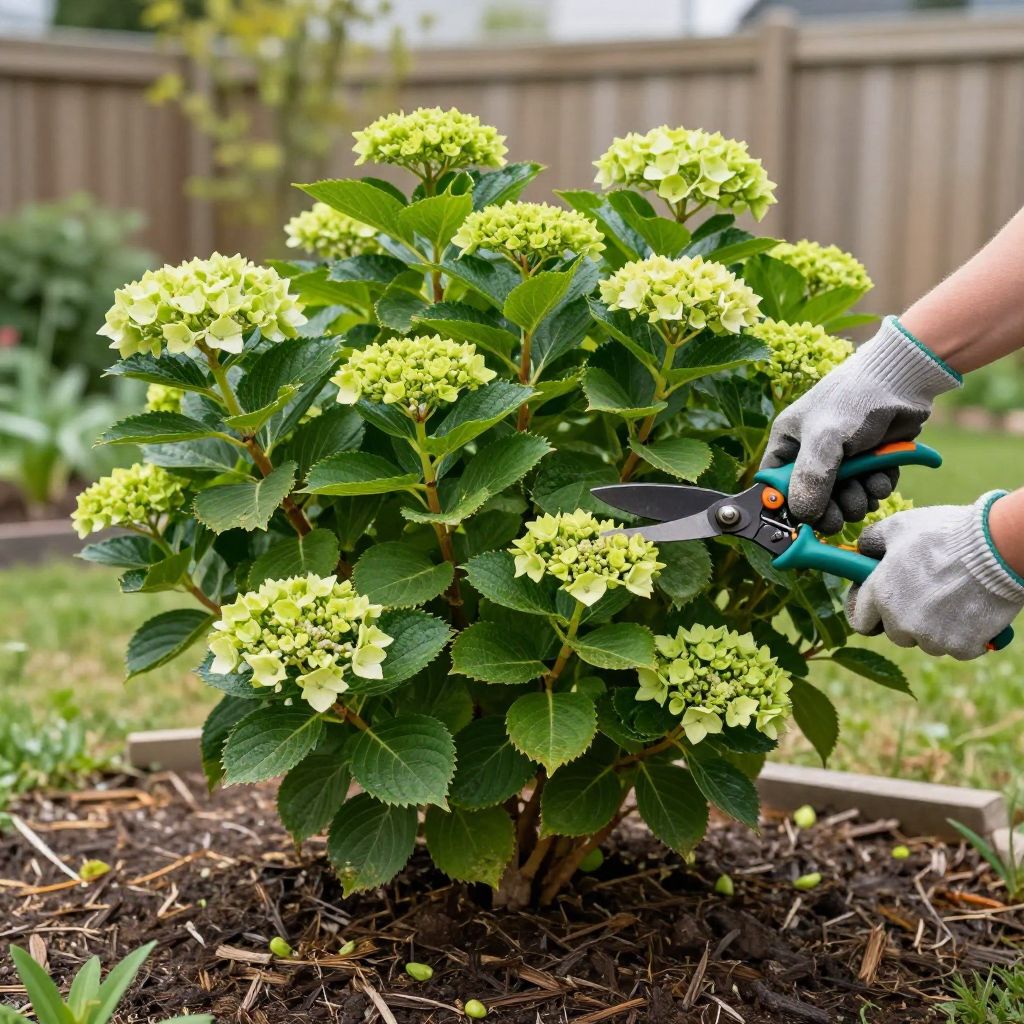
Wondering when to prune hydrangea without cutting off next season’s flowers? The right timing depends on the type of hydrangea you grow, because some bloom on old wood and others on new wood. Prune at the wrong time, and you may remove the buds that would have flowered.
The good news is that once you know which hydrangea you have, pruning becomes much simpler. With a few basic rules, you can shape the plant, remove dead wood, and encourage healthier blooms without sacrificing the display.
When to prune hydrangea?
The best time to prune hydrangea depends on whether it blooms on old wood or new wood. Old-wood bloomers are pruned right after flowering, while new-wood bloomers are usually cut back in late winter or early spring before growth starts. If you are unsure, make only light cleanup cuts until you identify the plant.
Know your hydrangea type before you cut
This is the most important step. Hydrangeas do not all follow the same pruning calendar, and the wrong timing can reduce flowering for a full season.
Hydrangeas that bloom on old wood
These set flower buds on stems that grew the previous year. Prune them soon after flowering, not in winter.
- Bigleaf hydrangea (Hydrangea macrophylla)
- Mophead and lacecap types of bigleaf hydrangea
- Oakleaf hydrangea (Hydrangea quercifolia)
- Mountain hydrangea (Hydrangea serrata)
Hydrangeas that bloom on new wood
These form flower buds on the current season’s growth. You can prune them in late winter or early spring because they will still bloom later that year.
- Panicle hydrangea (Hydrangea paniculata)
- Smooth hydrangea (Hydrangea arborescens)
When you are not sure which one you have
If the plant label is gone, wait and watch the bloom habit for a season if possible. Until then, avoid hard pruning. Remove only dead stems, weak growth, and spent flowers if needed.
Best pruning timing by season
Late winter to early spring
This is the main pruning window for hydrangeas that bloom on new wood. It is also a good time to remove winter damage, crossing stems, and old, weak canes from many hydrangeas.
Wait until the worst cold has passed in your area. In very cold climates, pruning a little later can help you avoid exposing tender buds too early.
Right after flowering
For old-wood bloomers, prune soon after the flowers fade. This gives the plant time to grow new stems and set buds for next year before autumn arrives.
If you prune these hydrangeas in late fall, winter, or early spring, you may remove next year’s flower buds.
Summer touch-ups
Light summer pruning is fine for shaping or deadheading. You can remove spent blooms, damaged stems, or a few overgrown shoots, but keep cuts minimal on old-wood types.
How to prune hydrangea correctly
Use clean, sharp hand pruners or loppers. Make cuts just above a healthy bud or side branch, and avoid tearing the stem.
- Start with dead, damaged, or diseased wood. Cut these stems back to healthy tissue or remove them at the base.
- Remove weak or crossing stems. This improves airflow and helps the shrub keep a good shape.
- Thin crowded growth. On mature plants, take out a few of the oldest stems at ground level if the shrub is dense.
- Shorten only as needed. For old-wood bloomers, avoid heavy heading cuts unless you are removing a specific problem stem.
- Deadhead spent flowers if desired. Cut just below the flower head to the next pair of healthy leaves or buds.
How much should you cut back?
That depends on the type and the plant’s condition. A healthy panicle or smooth hydrangea can usually handle a stronger cutback than a bigleaf or oakleaf hydrangea. For most gardeners, a light, selective prune is safer than a hard shear.
If a hydrangea has become very large or leggy, spread major renovation over two seasons rather than removing too much at once.
Pruning tips for better blooms
- Do not shear hydrangeas into a tight ball. This can remove flower buds and create weak, crowded growth.
- Skip pruning in late fall on old-wood bloomers. Winter injury and bud loss are common after fall cuts.
- Deadhead carefully. On many types, you can remove faded flowers without cutting into next year’s buds.
- Watch for winter dieback. In cold regions, wait until spring to see what survived before making final cuts.
- Sanitize tools. Clean pruners if you are cutting diseased wood to avoid spreading problems.
What happens if you prune at the wrong time?
The most common result is fewer flowers. On old-wood hydrangeas, pruning too late in the season can remove the buds already formed for next year.
Another issue is stimulating tender new growth too early, which may be damaged by a late frost. In colder climates, that can mean fewer blooms and a weaker plant overall.
How to recover from a bad pruning year
If you cut too much, do not keep pruning to “fix” it. Let the plant regrow, keep it watered during dry spells, and avoid heavy fertilizer that encourages soft growth. Many hydrangeas will bounce back with a season of good care.
Special pruning notes for common hydrangea problems
Leggy growth
Leggy hydrangeas often need better light and selective thinning, not just a hard haircut. Remove a few older stems at the base and improve growing conditions if the shrub is stretched and sparse.
Few or no blooms
If the plant is healthy but not flowering, pruning timing may be the issue. It can also be caused by too much shade, late frost, winter damage, or overfertilizing with high-nitrogen products.
Winter damage
Wait until new growth begins before deciding what to remove. Stems that look dead in winter may still have live buds lower down. Scratch the bark lightly or check for green tissue before cutting back hard.
Growing conditions that support healthy pruning results
Pruning works best when the plant is already growing well. Hydrangeas generally do best in moist, well-drained soil with steady organic matter and morning sun or bright filtered light, depending on the type and climate.
- Soil: Rich, evenly moist, and well drained
- Water: Deep watering during dry periods, especially for newly planted shrubs
- Mulch: A 2- to 3-inch layer helps conserve moisture and moderate soil temperature
- Light: Morning sun with afternoon shade is often ideal in hotter regions
Healthy plants recover from pruning more quickly and are less likely to decline after a cutback.
Simple pruning checklist for hydrangea
- Identify the hydrangea type before pruning.
- Choose the right season for that type.
- Remove dead, damaged, and diseased stems first.
- Thin crowded growth for better air circulation.
- Avoid heavy pruning on old-wood bloomers.
- Deadhead lightly if you want a tidier plant.
- Stop and reassess if you are unsure.
Conclusion
When to prune hydrangea comes down to one rule: prune old-wood bloomers after flowering and new-wood bloomers in late winter or early spring. If you are unsure, keep pruning light until you identify the plant. With the right timing, you can protect next year’s blooms and keep the shrub healthy and well shaped.
For more practical garden care, you may also want to read about how to care for hydrangeas in different seasons and choosing the right pruning tools for shrubs.