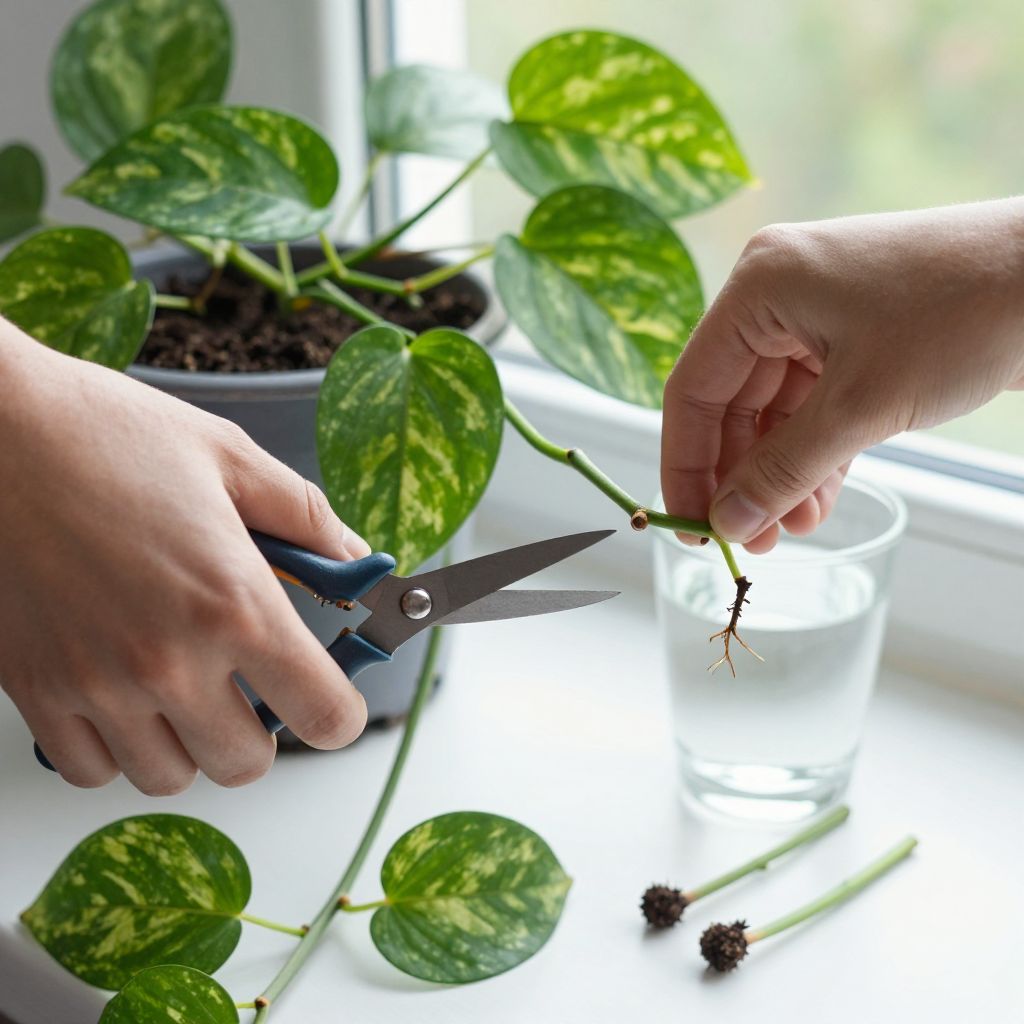
Wondering where to cut pothos to propagate? The good news is that pothos is one of the easiest houseplants to multiply, as long as you cut in the right place. The key is to include at least one node on each cutting, because that’s where new roots form.
You can propagate pothos in water or soil, and healthy stems usually root quickly when taken from a vigorous vine. A clean cut just below a node, plus the right light and moisture, gives you the best chance of success.
Where to cut pothos to propagate?
Cut pothos just below a node, which is the small bump or joint on the vine where leaves and aerial roots emerge. Each cutting should have at least 1 node, and ideally 1–3 leaves. Avoid cutting through the node itself, because roots form from that point and the cutting is less likely to root well.
How to identify the node on a pothos vine
Before you make any cut, find the node. On pothos, the node looks like a slightly swollen section of stem where a leaf attaches. You may also see a tiny brown aerial root nub.
What to look for
- Leaf attachment point on the vine
- A small bump or ring on the stem
- Short aerial root growth, sometimes brown or pale
- Spacing between leaves, which helps you locate multiple nodes along the vine
If you’re unsure, trace the stem from one leaf to the next. The node sits at the base of each leaf petiole, not on the leaf itself.
Best places on the plant to take cuttings
The best cuttings come from healthy, actively growing vines with several leaves. Choose stems that look full and green, not thin, yellowing, or damaged. Long trailing vines are ideal because they give you multiple cutting points.
Good cutting locations
- Near the end of a healthy vine with several nodes
- Sections with evenly spaced leaves and no pest damage
- Stems that are long enough to divide into several cuttings
Cuttings to avoid
- Stems with yellow leaves or blackened spots
- Very woody, weak, or shriveled sections
- Vines recently stressed by underwatering, overwatering, or cold drafts
If your pothos is sparse, you can still propagate it, but take only a few cuttings at first so the parent plant keeps enough foliage to recover.
How to cut pothos for propagation step by step
Use clean, sharp scissors or pruning snips. A clean cut reduces stem damage and lowers the risk of rot or disease entering the cutting.
- Choose a healthy vine with visible nodes.
- Locate a node and measure about 1/4 inch below it.
- Make a clean cut below the node.
- Trim the vine into sections, each with at least one node.
- Remove the lowest leaf if it would sit in water or soil.
- Place the cutting in water or a moist rooting mix right away.
Important: Do not bury or submerge the leaves. Only the stem and node should go into water or soil.
How many nodes should a pothos cutting have?
A single node can root, but a cutting with 2 to 3 nodes often gives you a stronger start. More nodes can mean more rooting points and a fuller young plant, though longer cuttings may need a little more support and moisture control.
Simple rule for beginners
- 1 node = possible, but minimal
- 2 nodes = very practical for beginners
- 3 nodes = good balance of strength and ease
If you want a fuller pot later, take several short cuttings rather than one very long vine.
Water propagation vs. soil propagation
Pothos roots easily in either water or soil. Water propagation is easier to watch and monitor, while soil propagation can reduce transplant shock because the cutting roots directly into its final medium.
Water propagation
Place the node in a jar of clean water and keep the leaves above the surface. Change the water when it looks cloudy or every few days. Bright, indirect light helps roots develop without overheating the jar.
Soil propagation
Insert the node into a lightly moist, well-draining potting mix. A mix that holds some moisture but doesn’t stay soggy works best. Keep the medium evenly moist, not wet, until new growth shows the cutting has rooted.
Which method is best?
- Water if you want easy monitoring and a simple starter method
- Soil if you want a more seamless transition to pot culture
Both methods work well, so choose the one you can manage consistently.
Growing conditions that help pothos cuttings root
Rooting is fastest when the cutting has warmth, gentle light, and steady moisture. Pothos prefers bright, indirect light indoors, but it can tolerate lower light while rooting more slowly.
Ideal conditions
- Light: bright, indirect light
- Temperature: comfortably warm indoor conditions
- Moisture: evenly moist, never soggy
- Airflow: gentle circulation, not a cold draft
In cooler homes or during winter, rooting may take longer. In very hot sun, cuttings can wilt or scorch, so keep them out of direct afternoon light.
How long pothos cuttings take to root
Many pothos cuttings begin forming roots within a couple of weeks, but timing varies with temperature, light, and cutting health. Some root faster, while others need several weeks before they’re ready to pot up.
Look for roots that are several inches long and have a few side branches before moving a water-rooted cutting into soil. If you move it too early, the cutting may struggle to adapt.
Common mistakes when propagating pothos
Most propagation problems come from cutting in the wrong place or giving the cutting too much moisture. A little attention at the start prevents many failures later.
Mistakes to avoid
- Cutting without a node — leaves alone cannot root into a new plant
- Submerging leaves — this encourages rot
- Using dull or dirty tools — this can crush stems and spread disease
- Leaving cuttings in stagnant water — refresh the water regularly
- Overwatering soil cuttings — soggy mix can rot the node
If a cutting turns mushy or black at the base, discard it and start again with a healthy stem section.
Troubleshooting pothos propagation problems
Cutting is wilting
Wilting often means the cutting is losing moisture faster than it can absorb it. Move it to brighter indirect light, check that the node is submerged or lightly buried, and make sure the air isn’t too dry or hot.
No roots after several weeks
If there’s no visible progress, the cutting may be too cool, too dark, or lacking a node. Recheck the stem and try a fresher cutting from a healthier vine.
Stem is rotting
Rot usually comes from too much water, poor drainage, or a damaged cut end. Trim back to firm tissue with a clean blade and restart in fresh water or a better-draining medium.
Leaves are yellowing
A yellow leaf or two can happen as the cutting adjusts, but widespread yellowing may signal too much water, poor light, or a weak cutting. Remove damaged leaves and correct the growing conditions.
When to pot up rooted pothos cuttings
Once roots are several inches long and look sturdy, you can move water-rooted cuttings into a pot with drainage holes. Use a light, well-draining houseplant mix so the new roots can breathe.
Aftercare for newly potted cuttings
- Water the potting mix lightly after planting
- Keep the soil slightly moist for the first couple of weeks
- Place the plant in bright, indirect light
- Watch for new leaf growth as a sign the plant has settled in
If you propagated directly in soil, avoid tugging on the stem to check for roots. Instead, look for new growth and steady leaf health.
How to make a fuller pothos plant after propagation
Propagation is also a pruning opportunity. If your pothos looks leggy, taking cuttings from long vines can help you reshape the parent plant and create a fuller pot later.
Practical tips for a bushier look
- Take multiple cuttings from different vines
- Replant rooted cuttings back into the same pot
- Trim long bare stems to encourage branching from the base
- Rotate the plant so all sides get even light
For indoor pothos, better light usually means tighter spacing between leaves and stronger growth. Too little light often leads to long, sparse vines.
Quick checklist before you cut
- Healthy vine with visible nodes
- Clean, sharp scissors or pruners
- At least one node per cutting
- Leaves kept above water or soil
- Bright, indirect light for rooting
- Patience while roots develop
Once you know where to cut pothos to propagate, the process becomes simple: choose a healthy vine, cut just below a node, and give the cutting steady moisture and indirect light. Start with a few cuttings today, and you’ll likely have new pothos plants to pot up before long.
For more houseplant care help, you may also want to read about houseplant pruning basics and choosing the right indoor potting mix.