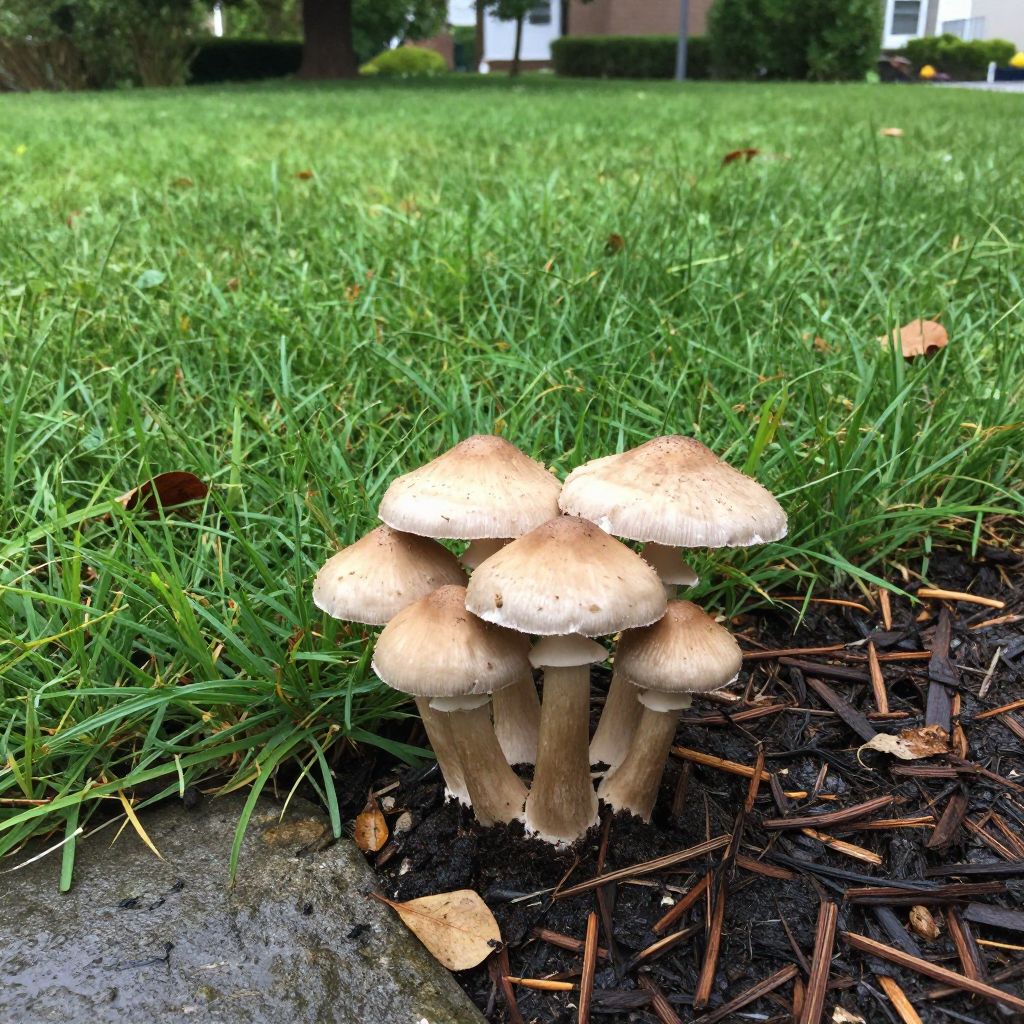
Why do mushrooms grow in my yard? In most cases, they appear because the soil is moist, rich in organic matter, and shaded enough for fungal spores to germinate. Mushrooms are usually a sign that fungi are breaking down buried wood, roots, mulch, or other decaying material—not that your lawn is sick.
That said, a sudden flush of mushrooms can also point to drainage issues, overwatering, compacted soil, or hidden decaying debris. The good news is that most yard mushrooms are manageable, and many are harmless if you handle the underlying conditions correctly.
Why do mushrooms grow in my yard?
Mushrooms grow in your yard when fungal networks in the soil find the right combination of moisture, shade, and food from decaying organic matter. They often appear after rain, irrigation, or humid weather. The visible mushroom is only the fruiting body; the fungus itself is usually already established underground.
Common reasons mushrooms appear in lawns and beds
1. Decaying wood or buried roots
One of the most common causes is hidden organic debris. Old tree roots, stumps, buried lumber, construction scraps, or wood chips mixed into soil can feed fungi for years.
If mushrooms keep returning in the same spot, especially near a tree or recently cleared area, there may be a buried source of decay underground.
2. Excess moisture
Fungi thrive when the soil stays damp for long periods. Frequent watering, poor drainage, heavy clay soil, or a low spot in the yard can all encourage mushrooms.
Moisture is the main trigger for most mushroom flushes. After a wet spell, it is normal to see them pop up quickly, sometimes overnight.
3. Shade and low air movement
Shady yards and dense plantings dry out more slowly than open, sunny areas. Limited airflow also helps soil stay damp, which favors fungal growth.
This is especially common under mature trees, along north-facing fences, and in mulched landscape beds.
4. Thatch, mulch, and organic matter
Lawns with thick thatch or beds with deep mulch give fungi plenty to feed on. A thin layer of mulch is useful, but piles that are too deep can stay wet and encourage mushrooms.
Compost-rich soil is not a problem by itself. In fact, healthy soil biology often includes fungi. The issue is usually excess moisture plus decaying material in the wrong place.
5. Compacted soil and poor drainage
Compacted ground prevents water from moving through the soil properly. Instead of draining away, moisture lingers near the surface, creating ideal conditions for mushrooms.
Compaction is common in high-traffic lawns, near driveways, or where heavy equipment has passed through.
Are yard mushrooms harmful?
Most mushrooms in lawns and garden beds are not damaging to grass or ornamentals. They are usually a symptom of a moist, organic environment rather than a direct plant disease. However, some species are toxic, so you should never eat unidentified mushrooms and keep children and pets away from them.
For the lawn itself, mushrooms are often temporary. The more important question is what is happening in the soil beneath them.
What to do when mushrooms show up
Remove the visible mushrooms safely
You can pick mushrooms by hand, wear gloves, and place them in a bag for disposal. This improves appearance and reduces the chance of pets or children handling them.
Do not rely on simply mowing them down. That may spread spores and does not address the cause.
Check the area for buried debris
Look for signs of old stumps, roots, buried wood, or construction fill. If mushrooms keep appearing in one spot, the fungus may be feeding on something underground.
If you recently removed a tree, expect mushrooms to appear for a while as the roots decompose. That can continue for months or even longer depending on the size of the root system.
Adjust watering habits
Water only when the lawn or planting bed actually needs it. Aim for deep, infrequent watering rather than frequent light sprinkling, and avoid watering in the evening if your soil stays wet overnight.
Let the top layer of soil dry a bit between waterings when appropriate for the plants in that area. Turfgrass and landscape plants each have different moisture needs, so adapt to the season and your local weather.
Improve drainage
If water pools after rain, mushrooms will likely keep returning. You may need to aerate compacted lawn areas, regrade low spots, or amend planting beds with materials that improve structure over time.
In persistent problem areas, a drainage fix is more effective than repeated mushroom removal.
Thin mulch if it is too deep
Keep mulch to a moderate layer, usually about 2 to 3 inches in landscape beds, and pull it back slightly from plant stems and trunks. Very thick mulch can stay wet and support fungal growth.
If the mulch has turned into a soggy mat, fluff it up or replace it with fresh material after the area dries.
How to prevent mushrooms from coming back
- Reduce excess moisture. Water only as needed and avoid keeping the soil constantly damp.
- Improve drainage. Fix low spots, relieve compaction, and redirect runoff where possible.
- Remove buried organic debris. Eliminate old stumps, roots, or wood scraps if you can safely access them.
- Manage mulch properly. Use a moderate layer and avoid piling it thickly.
- Increase light and airflow where practical. Prune overgrown shrubs or tree limbs only as appropriate for the plant and season.
- Expect seasonal flushes. Warm, wet periods often trigger mushrooms even in well-kept yards.
When mushrooms are a sign of a bigger problem
Repeated mushrooms in the same location
If mushrooms keep returning in one exact area, there is often a consistent food source underground or a drainage problem that has not been corrected.
Declining plants nearby
Watch for yellowing, wilting, root decline, or dieback in nearby plants. Mushrooms alone do not usually harm healthy plants, but they can appear where roots or woody material are already breaking down.
Soft, spongy, or foul-smelling soil
These are signs the site may be staying too wet. In that case, focus on drainage and watering practices rather than on the mushrooms themselves.
How to tell mushrooms from other fungi in the yard
Not every fungal growth is a mushroom. You may also see slime molds, puffballs, or bracket fungi on wood. While the forms differ, the basic message is similar: the area is damp and rich in organic matter.
If you are unsure what you are seeing, avoid touching or eating it. Identification matters most when pets, children, or edible garden areas are involved.
What not to do
- Do not apply random fungicides to the lawn without identifying the issue first.
- Do not overwater in an attempt to “wash away” mushrooms.
- Do not assume all mushrooms are dangerous to your plants.
- Do not compost unidentified mushrooms if they may have spread from a toxic species in a place accessible to pets or children.
- Do not disturb large buried roots or stumps without checking for utility lines and other hazards.
Seasonal patterns you may notice
Mushrooms often appear after periods of rain, during humid weather, or when temperatures are mild and soil remains moist. In many yards, they are most noticeable in spring and fall, though they can appear any time conditions are right.
If your yard is shaded and mulched, or if it receives regular irrigation, you may see mushrooms more often than in drier, sunnier areas.
Bottom line
If you are asking why do mushrooms grow in my yard, the short answer is usually moisture plus decaying organic matter. Start by removing the mushrooms, then look for the real cause: buried wood, poor drainage, compacted soil, or overwatering.
For more practical yard care tips, you may also find it helpful to read about lawn care basics and improving soil drainage.