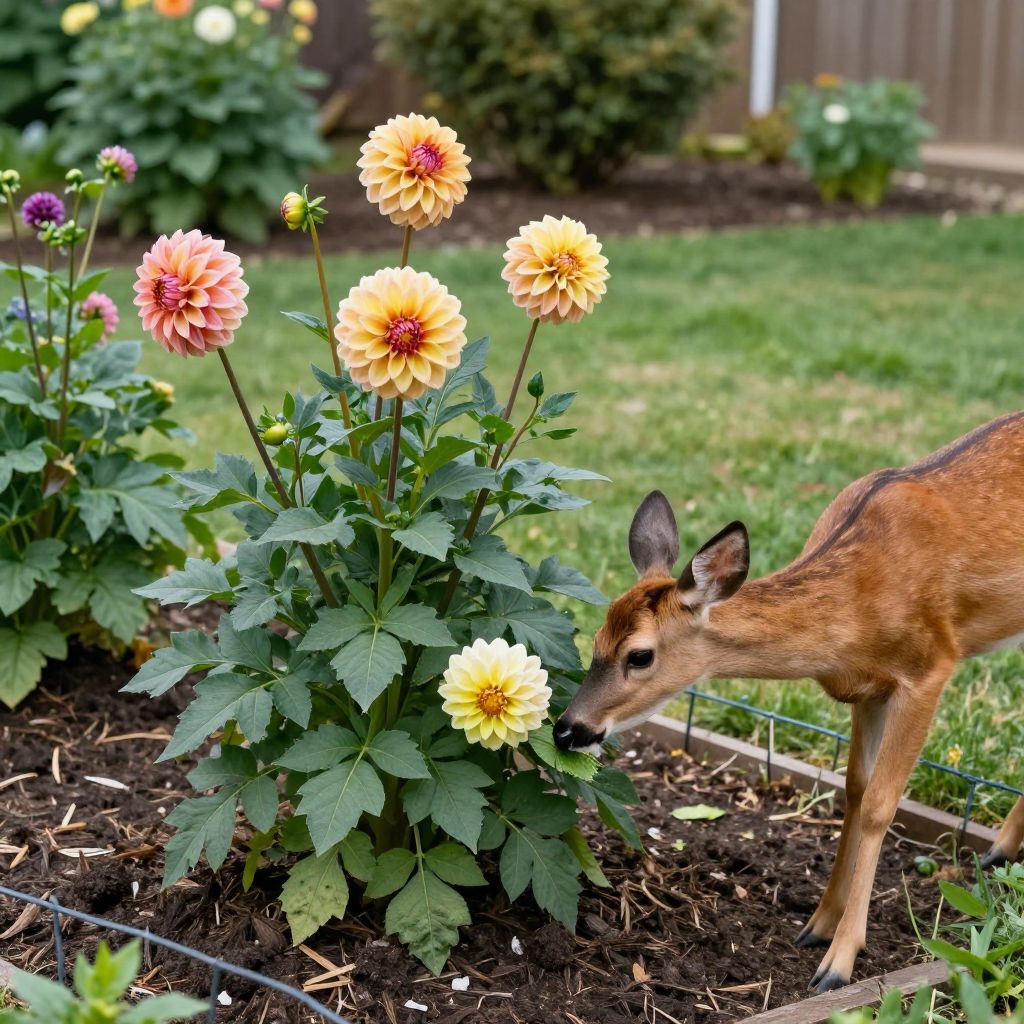
Are dahlias deer resistant? If deer browse your garden, this is an important question before you plant these showy summer bloomers. Dahlias are not considered deer resistant, and in many gardens they are treated as a deer favorite when other food is scarce.
That does not mean you cannot grow them. With smart placement, barriers, and a few maintenance habits, you can still enjoy dahlias and reduce the chances of losing buds, stems, or whole plants to browsing.
Are dahlias deer resistant?
No—dahlias are generally not deer resistant. Deer may nibble the foliage, snap tender stems, and eat flower buds, especially in spring and early summer when plants are lush and other food is limited. In heavily browsed areas, deer can damage dahlias repeatedly enough to ruin flowering.
Why deer eat dahlias
Deer usually prefer tender, high-moisture plants, and dahlias fit that description well. Their soft leaves, juicy stems, and buds are easy to browse, especially in gardens near woods, fields, or neighborhood greenbelts.
What makes dahlias attractive to deer
- Soft new growth that is easy to chew
- Flower buds that are often more palatable than mature foliage
- Open garden beds that are easy for deer to reach
- Seasonal pressure when natural forage is scarce
Deer feeding habits vary by location, season, and population pressure. In one yard, dahlias may be ignored; in another, they may be one of the first plants browsed. Because of that variability, it is safer to plan as if deer will find them.
How to protect dahlias from deer
The most reliable protection is physical exclusion. Repellents can help, but they work best as part of a layered approach rather than as a stand-alone solution.
1. Use fencing if deer pressure is high
A tall, sturdy fence is the most dependable defense. For many home gardens, a fence around the planting area is more effective than treating individual plants.
- Height matters: deer can jump surprisingly well, so low decorative fencing is usually not enough.
- Keep openings small: deer can squeeze through gaps in weak or uneven fencing.
- Protect the whole bed: fencing a perimeter works better than trying to wrap each dahlia.
If a full fence is not possible, temporary netting or wire cages may help protect young plants, but they need to be installed securely and checked often.
2. Try repellents, but reapply as needed
Deer repellents can reduce browsing pressure, especially when used early before deer become accustomed to the plants. They are most useful in moderate-pressure gardens or as backup protection around fenced areas.
- Apply repellents before deer start feeding heavily.
- Reapply after rain or according to the label directions.
- Rotate products if deer seem to ignore one type.
Important: repellents work best when deer have other food choices. If your garden is a major food source, repellents alone may not be enough.
3. Place dahlias strategically
Where you plant dahlias can influence how much damage they receive. Deer are more likely to browse plants in exposed, easy-to-reach areas than those tucked into protected spaces.
- Plant near the house, patio, or active outdoor areas when possible.
- Avoid placing them at the edge of woods or along deer trails.
- Use taller shrubs or structural plantings as partial visual barriers.
While companion planting is often suggested, no plant combination reliably makes dahlias deer proof. Use companions as part of a broader strategy, not as your only defense.
4. Keep plants healthy and less tempting
Well-grown dahlias recover better from minor browsing and are less likely to be stressed. Healthy plants still may be eaten, but they can bounce back more quickly if damage is light.
- Provide full sun where possible.
- Use well-drained soil enriched with compost.
- Water deeply when the soil is dry, especially during heat.
- Stake tall varieties so stems are less likely to break if browsed.
Growing dahlias successfully when deer are a problem
Good growing conditions will not make dahlias deer resistant, but they do help you get the most from the plants you protect. Dahlias perform best in rich, loose soil that drains well and receives plenty of sunlight.
Sunlight and site selection
Dahlias generally bloom best in full sun, though very hot climates may benefit from a little afternoon shade. Choose a site with strong light and good air movement, but avoid places where deer regularly travel at dawn and dusk.
Soil and drainage
Dahlia tubers are prone to rot in soggy soil. Work in compost to improve soil structure, but do not create a bed that stays wet after rain.
- Soil should be loose enough for tubers to establish easily.
- Raised beds can help in heavy clay or poorly drained sites.
- Avoid low spots where water collects.
Watering
Water dahlias consistently, but do not keep the soil saturated. Deep watering is better than frequent shallow sprinkling because it encourages stronger roots and more stable growth.
Check the soil with your finger before watering. If the top layer is dry but the soil below is still moist, wait a bit longer. Overwatering can weaken plants and make them more vulnerable to stress and disease.
Mulching
A light mulch can help conserve moisture and reduce weeds, but keep mulch a little away from the crown so the tuber necks do not stay too wet. Mulch will not stop deer, but it supports healthier growth in protected plantings.
What to do if deer have already damaged your dahlias
If deer have browsed your dahlias, do not rush to remove the plant unless the damage is severe. Dahlias can often regrow from remaining stems and tubers if the crown is still alive.
After-browse recovery steps
- Trim torn stems cleanly above healthy tissue.
- Water the plant if the soil is dry.
- Check for broken stakes or loose ties.
- Apply a repellent before new growth becomes attractive again.
- Protect the plant with fencing or netting if deer return.
If deer have eaten the growing tips, the plant may branch again from lower nodes. That can delay flowering, but it does not always mean the season is lost.
Other pests and problems that can look like deer damage
Not every chewed-looking dahlia problem is caused by deer. Slugs, snails, earwigs, and caterpillars can also damage leaves and buds, usually leaving different clues behind.
How to tell deer damage apart
- Deer: ragged, torn stems and leaves; higher browsing lines; whole shoots missing
- Slugs/snails: irregular holes in leaves, often with slime trails
- Earwigs or caterpillars: chewed petals or leaves, often with visible insects nearby
If you see cleanly snapped stems or repeated browsing at the same height, deer are the more likely culprit. If damage happens overnight and disappears from the top of the plant first, that is another strong deer clue.
Best maintenance habits for deer-prone dahlia gardens
In deer country, the goal is to make your garden less convenient to browse and easier to defend. Small maintenance habits can make a noticeable difference across the season.
- Inspect plants often, especially after rain or windy weather.
- Reposition loose cages or supports before deer discover them.
- Remove spent blooms to keep plants tidy and easier to monitor.
- Watch for new growth after pruning, because tender shoots are especially attractive.
When the first flowers appear, continue protection. Deer may ignore established plants for a while and then start feeding again when buds become abundant.
Should you plant dahlias if deer are common?
Yes, if you are willing to protect them. Dahlias are not a good choice for an unprotected garden with heavy deer pressure, but they can still be a rewarding plant in fenced beds, patio containers, or closely monitored borders.
If you want a lower-risk approach, place a few dahlias in the most protected part of your garden first and see how deer behave in your area. That gives you real local information before you commit to a larger planting.
Conclusion
Are dahlias deer resistant? No, but with fencing, repellents, and smart placement, you can still grow them successfully. Start by protecting one planting area well, then watch how deer respond in your garden so you can adjust your strategy next season.
If you want to understand why deer target some plants more than others, you may also find this guide helpful: what deer eat and how that affects garden browsing.