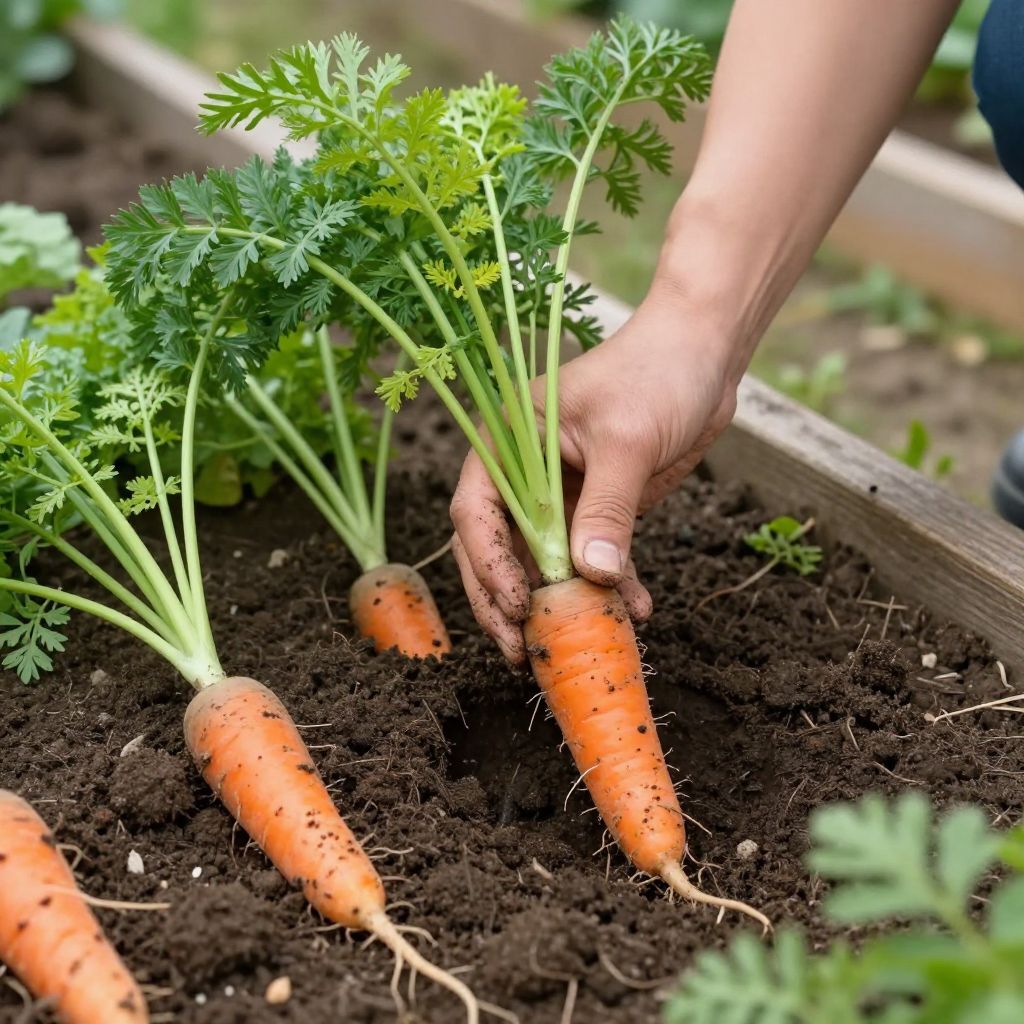
Wondering when are carrots ready to harvest? The answer depends on the variety, growing conditions, and how you like to eat them. Carrots can be pulled young for sweet, tender roots or left longer for fuller size, as long as they haven’t become woody, split, or overly fibrous.
The best way to tell is to combine calendar timing with a quick visual and soil check. A few simple clues will help you harvest at the right moment and avoid carrots that are small, tough, or damaged.
When are carrots ready to harvest?
Carrots are usually ready to harvest when the root shoulders are about 1/2 to 1 inch wide and the tops look full and healthy, often 50 to 80 days after sowing for early types and longer for maincrop varieties. Gently brush away soil near the crown to check size, then pull a test carrot if you’re unsure.
How to tell if carrots are mature
Carrot maturity is easier to judge from the top of the root than from the leaves alone. The foliage can look lush even when the roots are still small, so don’t rely on top growth by itself.
Look at the shoulder
The “shoulder” is the top of the carrot where it meets the soil line. If it has reached the expected width for the variety, the root is usually harvestable.
- Baby carrots: Often ready when shoulders are around pencil-thin to 1/2 inch wide.
- Standard carrots: Often ready when shoulders are about 3/4 to 1 inch wide.
- Large storage carrots: May need more time, depending on the cultivar and weather.
Check the days to maturity
Seed packets usually list a days-to-maturity estimate. Use it as a guide, not a guarantee, because cool weather, dense soil, drought, and crowded planting can slow growth.
If your season has been unusually cool, carrots may take longer than the packet suggests. In warm conditions, they may size up faster, but heat can also make them more bitter or tough if they stay in the ground too long.
Do a test pull
When in doubt, harvest one carrot from the edge of the row. This gives you the most reliable answer without disturbing the whole crop.
A test carrot should be firm, well-colored, and the size you want. If it’s too small, cover the hole back up and give the rest more time.
Best harvest timing by carrot type
Different carrot types mature at different rates, so timing matters. If you know what you planted, you can narrow down the harvest window more accurately.
Early and baby carrots
These are often harvested young for tenderness and sweetness. They are a good choice if you want quick results or if your soil is shallow and roots may not fully size up.
Maincrop carrots
Maincrop carrots are usually left in the ground longer to develop fuller roots. They often store better than very young carrots, especially if harvested before the soil gets too wet or cold.
Winter or storage carrots
These are typically left to size up fully and then lifted before hard freezes in areas where the soil may become difficult to work. In mild climates, some can remain in the ground longer if the soil drains well.
Signs carrots are ready to pull
Use several signs together instead of depending on just one. That gives you a much better read on readiness.
- The shoulder is the expected width for the variety.
- The root color is strong and even.
- The carrot feels firm when gently brushed or tested.
- The foliage is mature, though not necessarily huge.
- The days-to-maturity window is close or has passed.
Important: Carrots do not continue to improve forever in the ground. If they stay too long after maturity, they can become woody, split, or lose flavor.
How to harvest carrots without damaging them
Carrots are easiest to harvest after watering or rain, when the soil is slightly moist but not muddy. Moist soil helps roots slide out more cleanly and reduces breakage.
- Loosen the soil beside the row with a garden fork or trowel if needed.
- Grasp the tops close to the crown.
- Pull steadily while supporting the soil around the root.
- Brush off excess dirt gently.
- Trim the tops if you are storing them, leaving a short stub if desired.
If the tops snap off, use a fork to lift the root from underneath. Avoid yanking hard in dry, compacted soil, because that often breaks the carrot before it comes free.
Best tools for the job
- Hand fork or border fork: Useful for loosening compact soil.
- Trowel: Handy for small plantings and test pulls.
- Gloves: Helpful if the soil is rough or cold.
What affects carrot harvest time?
Several growing conditions change how quickly carrots size up. If your crop seems slower than expected, one of these factors is often the reason.
Soil texture
Loose, stone-free soil helps carrots develop straight, even roots. Heavy clay or compacted soil can slow growth and cause forked or stunted roots, which may appear ready on top but remain misshapen below.
Watering
Even moisture supports steady root development. Long dry spells can make carrots woody or cracked, while uneven watering after drought can cause splitting.
Try to keep the soil evenly moist rather than cycling between very dry and very wet conditions. That matters more than frequent shallow watering.
Sunlight
Carrots grow best in full sun, though they can still produce in light shade. Less sun usually means slower growth and smaller roots, which can delay harvest.
Spacing
Crowded carrots compete for water, nutrients, and room to expand. Thin seedlings early so the remaining roots have space to size up properly.
Common mistakes when deciding harvest time
Most harvest problems come from waiting too long, checking too early, or pulling in poor soil conditions. A few simple habits can prevent all three.
- Relying only on leaf size: Big tops do not always mean big roots.
- Harvesting too early: Small carrots can be delicious, but very immature roots may lack sweetness and size.
- Leaving mature roots too long: Overmature carrots may become woody or split.
- Pulling from dry ground: This increases breakage.
- Ignoring variety differences: Short, round, and long carrots mature at different rates.
How to know if carrots are overripe
Overripe carrots often look dull, feel tough, or develop cracks. They may also taste less sweet and more fibrous, especially after hot weather or uneven watering.
If you see shoulders pushing above the soil and turning green, harvest soon. Light exposure can make the exposed top taste bitter, so mound a little soil over the crown if needed while you wait a few more days.
Can you leave carrots in the ground after they’re ready?
Sometimes, yes. In cool weather and well-drained soil, mature carrots can remain in the ground for a while without much quality loss. This is often useful if you want to harvest gradually.
However, prolonged wet weather, repeated freezing and thawing, or pest pressure can reduce quality. If your soil stays soggy or your area is heading into hard frost, it’s safer to lift them sooner.
When to harvest immediately
- The soil is very wet and likely to rot roots.
- Hard freezes are expected and the ground may become difficult to dig.
- You notice cracking, splitting, or pest damage.
- The carrots have already reached the size you want.
What to do after harvest
After pulling carrots, remove the tops if you are storing them. The foliage draws moisture from the root, so leaving it attached can shorten storage life.
Brush off soil, but do not wash carrots unless you plan to use them soon. For short-term storage, keep them cool and humid. For longer storage, use a method suited to your climate and available space, such as a root cellar, refrigerator, or insulated container.
Quick post-harvest checklist
- Sort out damaged or split roots first.
- Trim greens if storing.
- Keep unwashed roots cool.
- Use smaller carrots sooner, since they dry out faster.
Troubleshooting poor carrot size
If your carrots are not reaching harvest size, the issue is usually cultural rather than a mystery. The good news is that many of these problems can be corrected in the next planting.
- Forked roots: Often caused by rocks, clods, or fresh manure in the soil.
- Small roots: Often from crowding, shade, or poor soil preparation.
- Cracked roots: Often from irregular watering after dry spells.
- Pale or weak flavor: Often from harvesting too early or growing in low light.
For better results next time, prepare a loose seedbed, thin seedlings promptly, and keep moisture steady from germination through harvest.
Final practical answer
If you want the simplest rule for when are carrots ready to harvest, check the shoulder width, compare it with the seed packet’s maturity estimate, and pull one test carrot. If it’s the size and texture you want, harvest the rest soon before they become woody or split.
For more help with root crops and timing, you may also want to read about how to thin seedlings for better harvests and growing vegetables in loose, well-drained soil.