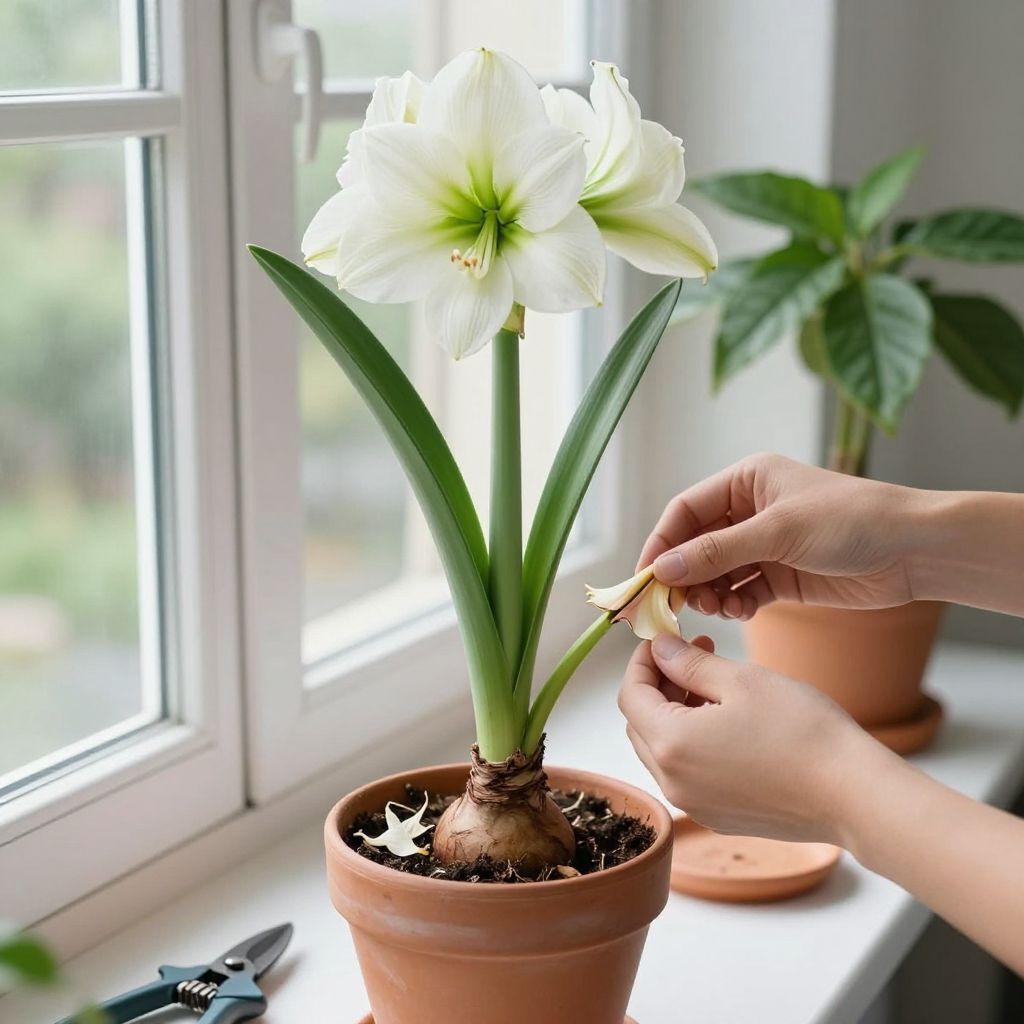
Wondering what to do with amaryllis after it blooms? The answer depends on whether you want to keep the bulb for next year or simply enjoy it as a one-season display. With the right post-bloom care, an amaryllis can store energy, regrow leaves, and often flower again.
The key is not to rush it. After flowering, the bulb needs time to rebuild strength through its foliage, so your job shifts from enjoying blooms to helping the plant recover.
What to do with amaryllis after it blooms?
After amaryllis blooms fade, remove the spent flowers, keep the green leaves growing, and give the bulb bright light, moderate water, and light feeding while it rebuilds energy. Do not cut off the leaves early. Once the foliage yellows naturally, let the bulb rest if you want it to bloom again later.
Step-by-step care after flowering
1. Remove faded flowers, not the leaves
As each bloom fades, snip off the flower head to keep the plant tidy and prevent seed formation. If the flower stalk is still green, you can leave it for now.
If the stalk turns yellow or soft, cut it back to about 1 to 2 inches above the bulb. Keep the leaves intact unless they are yellowing or damaged, because they are the bulb’s energy factory.
2. Keep the plant in bright light
Place the amaryllis in the brightest indoor spot you have, such as a south- or west-facing window with strong indirect light. If you move it outdoors for summer, acclimate it gradually to avoid leaf scorch.
Good light helps the leaves photosynthesize and refill the bulb’s stored energy. Weak light often leads to floppy foliage and poor reblooming.
3. Water carefully, not heavily
Water when the top inch of potting mix feels dry. The goal is evenly moist soil, not soggy soil. Let excess water drain away completely, and never leave the pot sitting in a saucer of water.
Amaryllis bulbs rot easily in wet conditions, especially in containers without drainage. If the potting mix stays wet for days, reduce watering and check the pot’s drainage holes.
4. Feed during the leaf-growing phase
Once the blooms are gone and new leaf growth is active, you can begin light feeding with a balanced houseplant fertilizer or bulb fertilizer. Follow the label directions and avoid overfertilizing.
Feeding is most useful while the leaves are actively growing. Stop fertilizing when you begin the rest period later in the season.
Should you keep amaryllis indoors or move it outside?
Either can work, but the best choice depends on your climate and space. Indoors, amaryllis stays protected and easy to monitor. Outdoors, it may grow stronger in bright summer conditions if your temperatures are warm and frost-free.
Indoor care after bloom
Indoors, keep the bulb in a warm room with bright light and rotate the pot every week or so for even growth. If the leaves get long and lean toward the window, the plant may need more light.
Indoor amaryllis is usually easier to manage if you want to rebloom it. You can control watering, feeding, and the eventual rest period more precisely.
Outdoor summer care
If nighttime temperatures are consistently above about 50°F and there is no frost risk, you can move the pot outdoors for the warm season. Start in bright shade or filtered sun, then increase light gradually.
Choose a sheltered spot protected from hard rain and strong wind. Outdoor pots dry faster, so check soil moisture more often.
How to help an amaryllis rebloom
Reblooming takes patience. The bulb must first grow leaves long enough to recharge itself, then it needs a rest period, and finally a trigger to start flowering again.
- Let the leaves grow for several months after blooming.
- Water and feed during active growth.
- When foliage begins to yellow naturally, reduce watering.
- Allow the bulb to rest in a cool, dry place if needed.
- Resume watering and bright light to restart growth.
The exact timing varies with bulb size, growing conditions, and climate. Some bulbs rebloom reliably, while others need a full season of strong leaf growth before they flower again.
What the rest period looks like
When the leaves die back, stop watering and let the bulb dry down. You can leave it in its pot if the soil drains well, or remove the bulb and store it in a cool, dry place if that suits your setup better.
Do not force a rest while the leaves are still green and healthy. That usually weakens the bulb rather than helping it.
Should you cut back amaryllis leaves?
Usually, no. The leaves should stay on the plant until they yellow and collapse naturally. Cutting them too soon reduces the bulb’s ability to recharge and can prevent future blooms.
If a leaf is damaged, diseased, or badly bent, you can remove it. Otherwise, leave the foliage in place and let it do its job.
Repotting after bloom: when and how
Amaryllis does not need frequent repotting, but it may benefit from fresh potting mix if the soil has broken down or the bulb has outgrown the container. The best time is usually after flowering, while the plant is still in its active leaf-growth phase.
Repotting basics
- Use a pot with drainage holes.
- Choose a container only slightly wider than the bulb.
- Use a well-draining potting mix.
- Keep the top third of the bulb above the soil line.
A pot that is too large can hold excess moisture and increase rot risk. Amaryllis prefers being slightly snug rather than overpotted.
Common mistakes to avoid
- Cutting off leaves too early and starving the bulb of energy.
- Overwatering after bloom, especially in cool indoor conditions.
- Keeping the plant in low light, which weakens leaf growth.
- Forcing a rest period before the foliage has naturally declined.
- Using a pot without drainage holes.
These mistakes are the most common reasons amaryllis fails to rebloom. A healthy bulb needs a long, steady recovery period more than anything else.
Pests and diseases to watch for
Healthy amaryllis is fairly trouble-free, but post-bloom plants can still run into a few problems. Check the leaves and bulb regularly, especially if the plant has been moved outdoors.
Common issues
- Mealybugs: white cottony clusters in leaf joints or near the bulb.
- Spider mites: fine stippling, webbing, and dusty leaves in dry indoor air.
- Bulb rot: soft, smelly tissue from excess moisture.
- Leaf spotting: may indicate stress, poor airflow, or disease.
If you spot pests, isolate the plant and remove them promptly. If the bulb feels soft or mushy, reduce watering immediately and inspect the roots and potting mix.
Can you plant amaryllis in the garden?
In mild climates, amaryllis bulbs may be grown outdoors in the ground or in containers, but their ability to survive year-round depends on local winter temperatures and drainage. In colder areas, they are usually treated as indoor or seasonal container plants.
If you garden outdoors, choose a site with bright light, well-drained soil, and protection from waterlogged conditions. In regions with frost, bring potted bulbs indoors before cold weather arrives.
What if your amaryllis came in a decorative pot?
Many gift amaryllis bulbs are sold in decorative containers that may not drain well. After blooming, move the bulb into a proper pot if needed. This gives you much better control over watering and root health.
If the decorative outer pot has no drainage, use it only as a cachepot and keep the growing pot inside it. Empty any collected water after watering.
Quick post-bloom checklist
- Remove faded flowers.
- Leave healthy leaves in place.
- Keep the plant in bright light.
- Water only when the top inch of mix dries.
- Feed lightly while leaves are growing.
- Watch for pests and rot.
- Allow a natural rest when foliage yellows.
Conclusion
What to do with amaryllis after it blooms comes down to one simple goal: help the bulb rebuild strength. Keep the leaves growing, give the plant good light and careful watering, and you’ll have the best chance of seeing flowers again next season.
If you want to keep learning about bulb care and indoor flowering plants, you may also enjoy reading more about how to care for flowering bulbs indoors and tips for repotting houseplants without stressing roots.