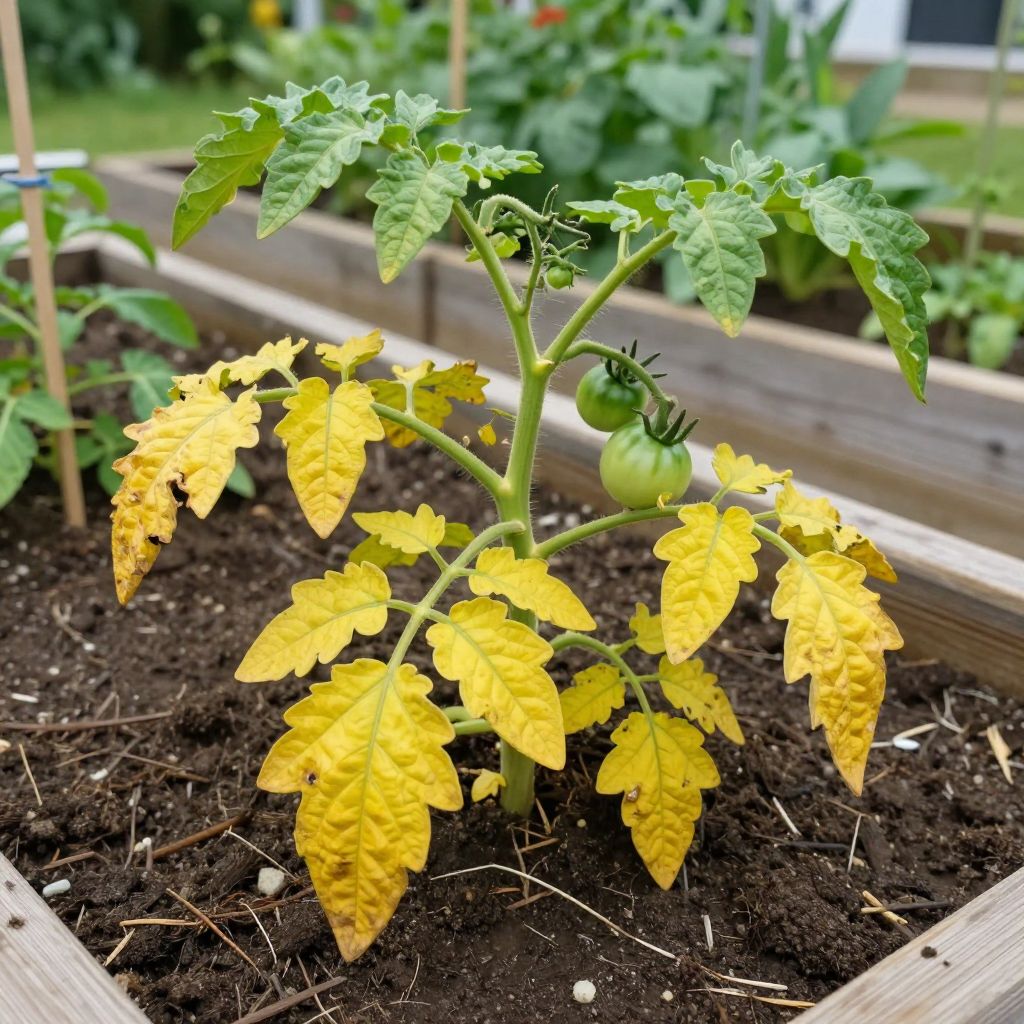
Why is my tomato plant turning yellow? In most cases, yellowing leaves mean the plant is under stress from watering problems, nutrient issues, poor drainage, low light, pests, or disease. The key is to look at where the yellowing starts, which leaves are affected, and whether the plant is wilting, spotting, curling, or stunted.
Tomatoes are resilient, but they react quickly when growing conditions are off. A careful check of the leaves, soil, and stems usually reveals the cause, and many problems can be corrected before the plant declines further.
Why is my tomato plant turning yellow?
Tomato leaves turn yellow when the plant cannot take up water, nutrients, or sunlight efficiently, or when pests and diseases damage the foliage. The most common causes are overwatering, underwatering, nitrogen deficiency, poor drainage, transplant shock, insufficient light, and foliar diseases such as early blight or septoria leaf spot.
Start with the pattern of yellowing
The location and shape of the yellowing often point to the problem. Look closely before you treat anything.
Yellowing on lower leaves first
If the oldest, bottom leaves are yellowing first while the top growth still looks fairly healthy, the issue is often nutrient-related or simply normal aging. Nitrogen deficiency is common, especially in containers or exhausted soil.
Yellowing on new growth first
When the newest leaves are pale yellow or yellow-green, the plant may be struggling with iron, magnesium, or another micronutrient problem, or the roots may be unable to function properly because of wet soil, compacted soil, or root damage.
Yellow leaves with spots or blotches
Yellowing paired with brown spots, concentric rings, or dark lesions often signals disease. If the spots spread upward from the bottom of the plant, check for fungal leaf diseases and remove affected foliage promptly.
Yellowing with wilting
Wilting and yellowing together usually point to watering stress, root problems, or vascular disease. If the soil is soggy, the roots may be suffocating. If the soil is bone dry, the plant may simply be unable to keep up with demand.
Common causes and what to do about them
1. Overwatering or poor drainage
Tomatoes dislike sitting in wet soil. When roots stay waterlogged, they cannot absorb oxygen well, and the leaves often turn yellow before the plant begins to wilt.
- Check the soil 2–3 inches down with your finger.
- If it feels wet or muddy, pause watering until the top layer dries slightly.
- Make sure containers have drainage holes and never sit in standing water.
- In garden beds, improve drainage with compost and avoid planting in low spots that stay soggy.
Important: Yellow leaves caused by overwatering will not turn green again, but new growth can recover once the roots dry out and drainage improves.
2. Underwatering or irregular watering
Tomatoes need consistent moisture, especially once flowering and fruiting begin. If the soil swings from very dry to very wet, the plant can turn yellow and drop leaves.
- Water deeply so moisture reaches the root zone, not just the surface.
- Use mulch to slow evaporation and reduce stress.
- Container tomatoes may need more frequent watering than in-ground plants, especially in hot or windy weather.
Try to keep the soil evenly moist, not saturated. In hot weather, check containers daily because pots dry out much faster than garden beds.
3. Nitrogen deficiency
Nitrogen deficiency often causes older leaves to yellow first, while the veins may remain greener for a while. The whole plant may look pale and grow more slowly.
To fix it, feed with a balanced fertilizer or one formulated for tomatoes, following the label directions. If you use compost, remember that compost improves soil structure but may not supply enough nutrients on its own for heavy-feeding tomatoes.
- Do not overdo fertilizer, especially high-nitrogen products, which can push leafy growth at the expense of flowers and fruit.
- If the plant is in a container, nutrients can leach out faster with frequent watering.
4. Magnesium or iron deficiency
These deficiencies can cause yellowing between the veins while the veins stay greener. Magnesium deficiency usually appears on older leaves first, while iron deficiency shows up on the youngest leaves.
Before adding supplements, check the root environment. Poor drainage, cold soil, or root damage can make nutrients unavailable even if they are present in the soil.
- Use a soil test if yellowing keeps returning.
- Avoid guessing with multiple additives at once.
- Correct watering and pH issues first, because nutrient uptake depends on healthy roots.
5. Not enough sunlight
Tomatoes need full sun to stay vigorous. If nearby trees, fences, or other plants are shading them, the lower leaves may yellow and the plant may stretch weakly toward light.
For outdoor tomatoes, aim for at least 6 to 8 hours of direct sun in most climates. If your plant is indoors or on a shaded balcony, move it to a brighter location if possible.
- Prune only enough to improve airflow and light penetration.
- Avoid removing too many leaves at once, since the plant still needs foliage to produce energy.
6. Transplant shock
Recently transplanted tomatoes often yellow temporarily as they adjust to a new root environment. This is common after planting seedlings into the garden or moving them into larger containers.
Give the plant a few days to a couple of weeks to settle in, provided the yellowing is mild and new growth looks healthy. Keep the soil evenly moist and protect young plants from intense wind or sudden heat.
7. Pests
Insects that feed on sap can weaken tomato plants and cause yellow, curled, or stippled leaves. Common culprits include aphids, whiteflies, spider mites, and sometimes thrips.
Inspect the undersides of leaves and the tender growing tips. If you see tiny insects, sticky residue, webbing, or speckled foliage, act quickly.
- Rinse pests off with a strong spray of water.
- Remove heavily infested leaves if needed.
- Encourage beneficial insects by avoiding broad-spectrum sprays unless absolutely necessary.
8. Fungal or bacterial leaf diseases
Yellow leaves with spots, especially on lower foliage, may indicate early blight, septoria leaf spot, or other leaf diseases. These problems are more likely in humid weather, crowded plantings, or when water splashes soil onto the leaves.
To reduce spread:
- Remove the worst affected leaves and dispose of them, not in the compost pile if disease is active.
- Water at the base of the plant, not overhead.
- Mulch around the plant to reduce soil splash.
- Space plants so air can move through the canopy.
If the plant is losing many leaves quickly, check whether the disease is moving upward. Early action matters because tomatoes can decline fast once leaf disease gets established.
9. Root stress from compacted soil or root damage
Tomato roots need loose, well-aerated soil. Compacted ground, root-bound containers, or physical damage from cultivation can reduce nutrient uptake and lead to yellowing.
If the plant is in a pot, gently slide it out and check whether roots are circling tightly around the root ball. If so, it may need a larger container or a refresh with quality potting mix.
How to troubleshoot a yellow tomato plant step by step
Use this simple checklist to narrow down the cause before making changes.
- Check the soil moisture. Feel 2–3 inches below the surface.
- Look at the leaf pattern. Older leaves, new leaves, spots, or uniform yellowing each suggest different causes.
- Inspect for pests. Check leaf undersides and stems.
- Examine drainage. Make sure water moves through the soil instead of pooling.
- Review sun exposure. Tomatoes need strong direct light for best growth.
- Consider recent changes. Transplanting, heat waves, cold snaps, or heavy rain can all trigger yellowing.
What not to do when tomato leaves turn yellow
It is easy to make the problem worse by reacting too quickly. Avoid these common mistakes.
- Do not fertilize repeatedly without diagnosing the issue first.
- Do not water on a fixed schedule if the weather, soil, or container size has changed.
- Do not remove too many healthy leaves, since the plant needs foliage to support fruit development.
- Do not ignore spots, webbing, or sticky residue, which can signal pests or disease.
- Do not let container tomatoes sit in saucers full of water.
Can yellow tomato leaves turn green again?
Sometimes, but not always. Leaves that have fully yellowed usually do not recover, especially if they are old or damaged. The real goal is to stop the stress and protect the new growth.
If the newest leaves are still green and the plant is producing healthy new foliage, you are likely on the right track. Focus on correcting the root cause rather than chasing the color of already damaged leaves.
How to help tomatoes stay green and healthy
Prevention is much easier than rescue. A few good habits can reduce yellowing throughout the season.
- Plant tomatoes in well-drained soil enriched with compost.
- Water deeply and consistently, adjusting for heat, rain, and container size.
- Mulch to conserve moisture and reduce soil splash.
- Give plants enough space and sunlight.
- Feed according to plant stage and soil needs, not on a rigid calendar.
- Remove diseased lower leaves early and keep tools clean.
If you are growing tomatoes in containers, choose a large pot with drainage holes and use a quality potting mix rather than garden soil. Container plants dry out and lose nutrients faster, so they need closer monitoring than in-ground plants.
When yellowing may be a sign of a bigger problem
If the entire plant is yellowing rapidly, stunted, or collapsing despite proper watering and decent soil, the issue may be more serious. Severe root rot, vascular disease, or advanced leaf disease can overwhelm a plant quickly.
In that case, remove the worst affected foliage, improve growing conditions if possible, and watch for whether new growth improves. If the plant continues to decline, replacing it may be the most practical option for the season.
For more tomato care help, you may also want to read about how to prune tomato plants for better airflow and common tomato diseases and how to spot them early.