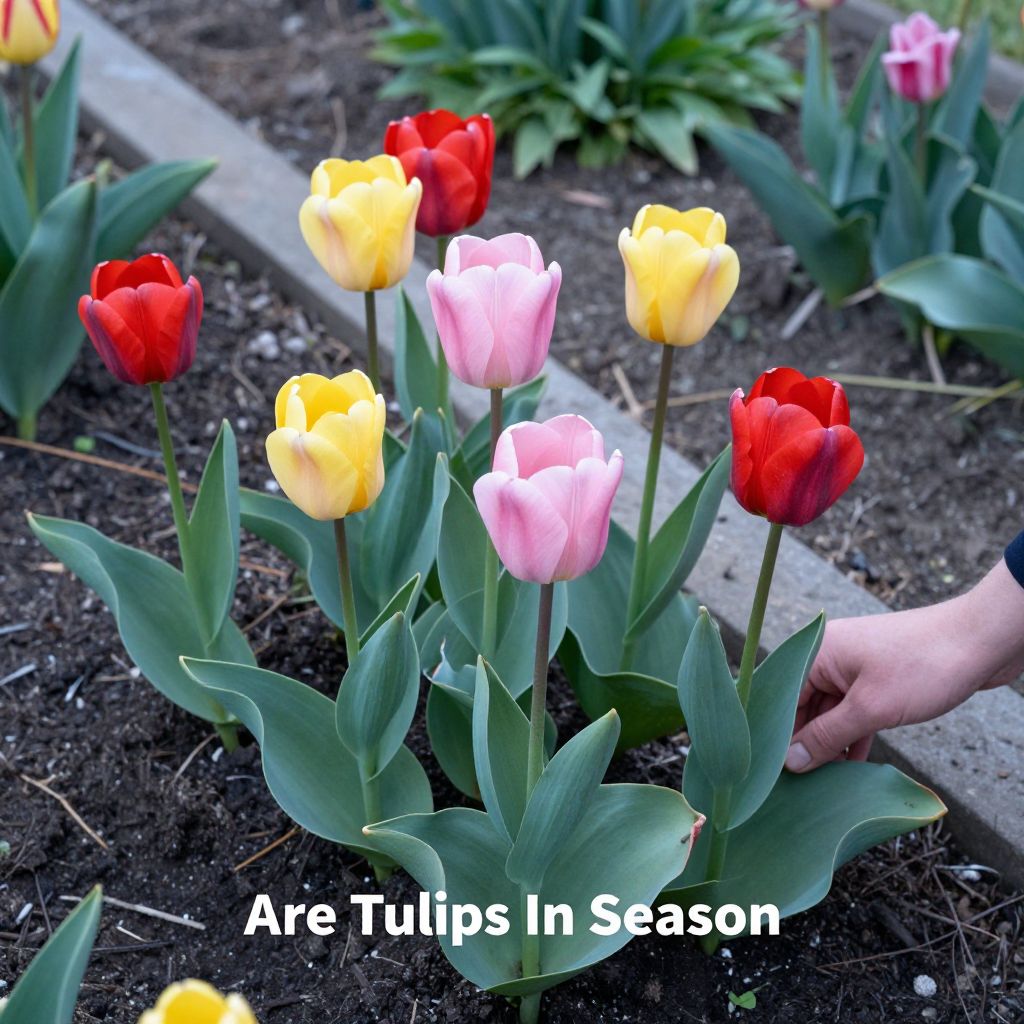
Are tulips in season? Yes—though the answer depends on where you live and whether you mean cut flowers or garden blooms. Tulips are spring bulbs, so their natural season is usually late winter through spring, with timing shifting by climate and variety.
If you want the best flowers, the key is to understand when tulips bloom outdoors, when they’re sold as cut flowers, and how to care for them so they last longer. A little planning goes a long way with these classic spring bulbs.
Are tulips in season?
Tulips are in season in spring, but the exact window varies by region, weather, and cultivar. In gardens, they typically bloom after winter chill and before summer heat arrives. In florists and stores, cut tulips may be available outside that window because they can be grown in greenhouses or imported.
When tulips bloom in the garden
Most tulips bloom in spring, often from early to late spring depending on the type. Early tulips open first, mid-season tulips follow, and late tulips finish the display. In mild climates, bloom may start earlier; in colder areas, it may be delayed by a few weeks.
What affects bloom timing
- Climate: Warm springs bring earlier flowers; cool springs stretch the season.
- Variety: Botanical tulips, Darwin hybrids, Triumph tulips, and late-flowering types bloom at different times.
- Planting depth and bulb quality: Healthy bulbs planted correctly perform better.
- Winter chill: Tulips need a cold period to bloom well.
If you are checking your own garden, look for swelling buds in late winter or early spring. Once the buds color up, bloom is usually close, often within days to a couple of weeks depending on temperature.
How to tell if tulips are still in season where you live
The easiest way to judge tulip season is by local conditions. In cool regions, tulips may still be blooming in mid-spring. In warmer areas, the season can end quickly once temperatures rise above about 70°F, because flowers fade faster in heat.
Use these local clues
- Check neighboring gardens and public plantings.
- Watch for buds on your own bulbs rather than relying only on calendar dates.
- Notice whether daffodils are finishing, since tulips often bloom around the same general spring period.
- Track nighttime temperatures; cool nights help flowers last longer.
For cut tulips, “in season” is less about the weather outside and more about market availability. Florists may sell tulips for much of the year, but the freshest, most natural outdoor bloom season is still spring.
Planting tulips for a strong spring display
To enjoy tulips when they are in season, plant bulbs in fall in most climates. Tulips need time in cool soil to establish roots before winter. If planted too late or in warm soil, they may grow poorly or bloom weakly the following spring.
Simple planting basics
- Choose a sunny site with well-drained soil.
- Plant bulbs pointy end up at a depth about 2 to 3 times the bulb’s height.
- Space bulbs a few inches apart for a fuller display.
- Water once after planting if the soil is dry.
- Leave the bed alone through winter so roots can develop.
Drainage matters more than rich soil. Tulip bulbs rot easily in soggy ground, so raised beds, sandy loam, or amended garden beds often work better than heavy clay.
Best soil conditions
- Loose, well-drained soil
- Moderate fertility
- Neutral to slightly acidic pH is generally suitable
- Compost mixed into poor soil, but not so much that it holds excess moisture
Sunlight, water, and care during tulip season
Tulips bloom best in full sun or light shade, especially in spring before nearby trees leaf out. In very warm climates, a little afternoon shade can help flowers last longer. Too much shade, however, leads to weak stems and fewer blooms.
Watering tulips the right way
Tulips need moisture while they are rooting and actively growing, but they do not like wet soil. Water newly planted bulbs after planting, then rely mostly on rainfall unless the weather is unusually dry.
- Keep soil lightly moist in fall after planting.
- Water in spring only if the top layer of soil dries out during active growth.
- Avoid frequent shallow watering in heavy soils.
- Stop watering once foliage yellows and dies back naturally.
If your tulips are in pots, check them more often. Container soil dries faster than garden soil, but excess water can still cause rot. Make sure pots have drainage holes and never let them sit in standing water.
How to make tulip blooms last longer
Once tulips are in season and blooming, cool conditions help extend the display. Cut flowers last longer indoors when kept away from heat, direct sun, and ripening fruit. Garden blooms also hold better in cool spring weather than in sudden warm spells.
For cut tulips indoors
- Trim stems with a clean knife or pruners.
- Use a clean vase with fresh water.
- Re-cut stems every few days if needed.
- Keep arrangements out of direct sun and away from heaters.
- Change the water regularly.
Tulips keep growing after cutting, so they may bend or stretch in the vase. That is normal. If you want a tidy arrangement, use a tall vase or support them with other spring flowers.
What to do after tulips finish blooming
After the flowers fade, the foliage still has an important job. The leaves feed the bulb so it can store energy for next year’s bloom. Cutting the leaves too early is one of the most common mistakes gardeners make with tulips.
Post-bloom care
- Deadhead spent flowers by removing the faded bloom head.
- Leave the leaves in place until they turn yellow and begin to collapse.
- Keep the area weed-free so bulbs are not competing for moisture and nutrients.
- Water lightly if spring is very dry, but do not overwater.
Do not braid, tie, or cut green tulip leaves early. The bulb needs that foliage to recharge for future growth. If you want a cleaner look, plant tulips among perennials that will hide the fading leaves later in spring.
Common tulip problems during the season
When tulips are in season, most problems show up as weak stems, short bloom time, or poor flowering the following year. The cause is often site conditions rather than disease alone.
Why tulips may not bloom well
- Too much shade: Plants make leaves but few flowers.
- Poor drainage: Bulbs rot or struggle to establish.
- Warm winters: Some tulips need a stronger cold period than others.
- Bulbs planted too shallow: They may be unstable or exposed to temperature swings.
- Foliage removed too early: Bulbs cannot rebuild energy.
Pests and diseases to watch for
- Slugs and snails: Can chew young shoots and petals.
- Voles and squirrels: May dig up bulbs in some areas.
- Botrytis: A fungal disease that can cause blotches, mold, or weak growth in damp conditions.
- Bulb rot: Often linked to wet soil and poor drainage.
To reduce problems, plant in well-drained soil, avoid overcrowding, and remove any badly diseased foliage. If bulbs repeatedly fail in one spot, the site may simply be too wet or too shady for tulips.
Can you force tulips to bloom out of season?
Yes, tulips can be forced indoors for earlier bloom, but they still need a cold period first. This is useful if you want flowers before outdoor tulips are naturally in season. The process takes planning and works best with healthy bulbs and a cool storage space.
Basic forcing overview
- Plant bulbs in pots with well-drained potting mix.
- Keep them cool and dark for the required chilling period.
- Move them gradually into brighter light once shoots appear.
- Keep temperatures cool indoors for longer-lasting flowers.
If you are new to forcing bulbs, start with a small batch. Different tulip types respond differently, and not every bulb will bloom perfectly indoors.
Should you keep tulip bulbs for next year?
Some tulips return reliably, while others decline after one season, especially in warm climates or heavy soils. Many gardeners treat hybrid tulips as seasonal color and replant each fall for the best display. Botanical types and some perennializing varieties often perform better over time.
If you want repeat bloom, give bulbs the best possible conditions: sun, drainage, and undisturbed foliage after flowering. Even then, results may vary by climate and variety.
Practical tulip care checklist for the season
- Plant bulbs in fall in a sunny, well-drained spot.
- Water after planting, then only as needed.
- Enjoy blooms in spring and deadhead spent flowers.
- Leave leaves in place until they yellow naturally.
- Lift or replace bulbs if your soil stays wet or blooms decline badly.
Conclusion
So, are tulips in season? In the garden, yes—tulips are a spring flower, with bloom time shaped by your climate, variety, and weather. If you want the best display, plant bulbs in fall, give them sun and drainage, and let the foliage finish its work after flowering.
For more spring bulb success, you may also want to read about how to plant spring bulbs and how to care for daffodils.