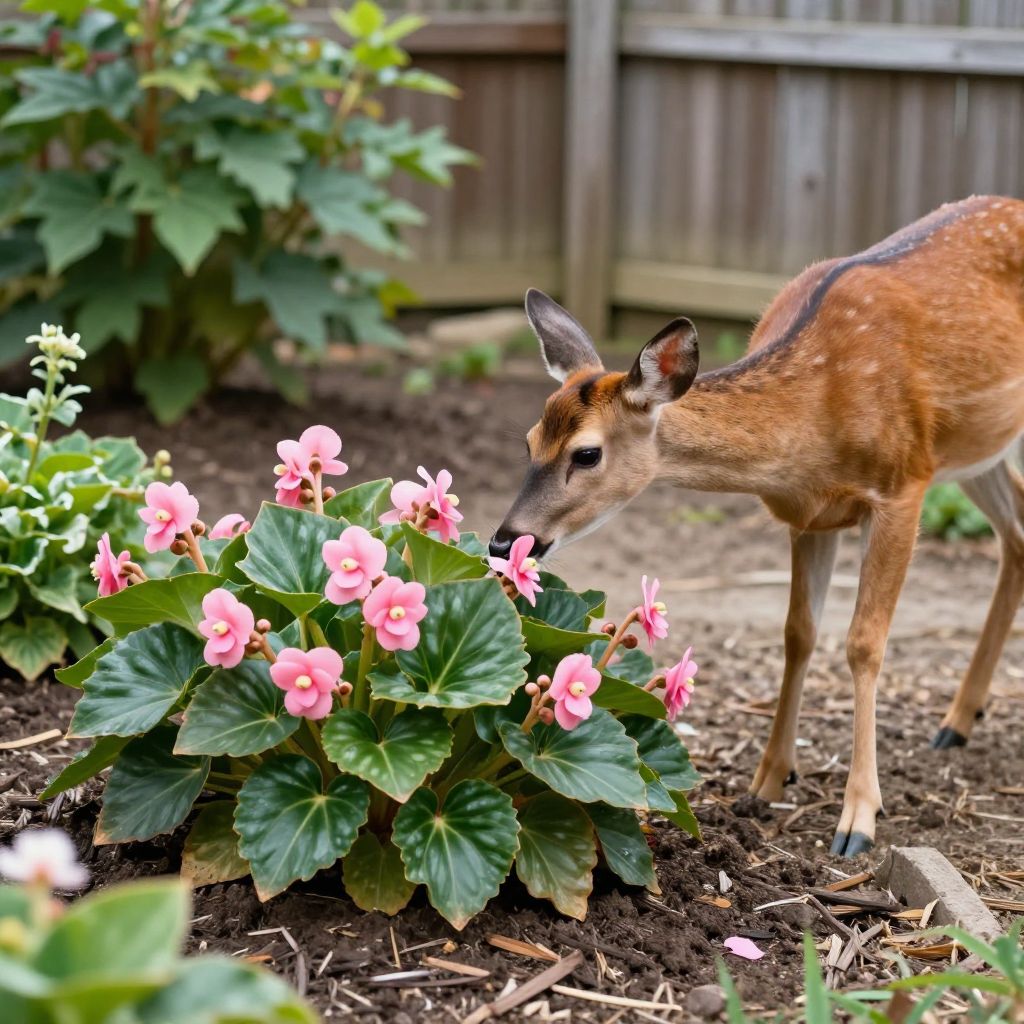
Wondering, “Are begonias deer resistant?” If deer are browsing your garden, begonias can be a tempting question because they’re colorful, easy to grow, and often used in shady borders, containers, and bedding displays. The short answer is that begonias are generally considered deer resistant, but not deer-proof.
When food is scarce, curious deer may still sample them, especially tender new growth or plants in heavily pressured areas. Knowing how begonias grow, where they perform best, and how to protect them will help you enjoy better results outdoors.
Are begonias deer resistant?
Yes, begonias are usually deer resistant because their leaves and stems are not a preferred deer food. However, deer may still nibble them if other plants are scarce, if the begonias are young and tender, or if your garden has heavy deer pressure. Treat them as a lower-risk choice, not a guaranteed deer-proof plant.
Why deer usually leave begonias alone
Deer tend to choose plants that are tender, highly palatable, and easy to digest. Begonias often fall lower on their preference list because many types have somewhat fleshy stems and leaves, and some have textures or compounds deer don’t like as much.
What that means in real gardens
- Low deer pressure: Begonias are often left alone.
- Moderate deer pressure: They may be sampled occasionally, especially at the edges of beds.
- High deer pressure: Even “resistant” plants can be damaged.
If deer regularly browse hostas, impatiens, tulips, and other soft ornamentals in your yard, begonias may still do better than many alternatives, but they should not be your only defense.
Which begonias are most likely to be ignored?
Different begonias can behave a little differently in the landscape, but deer resistance is not absolute for any one type. In general, the more ornamental and textured the plant, the less appealing it may be to deer.
Common garden begonias
- Wax begonias (Begonia x semperflorens-cultorum): Common bedding plants for sun to part shade in many climates.
- Tuberous begonias: Often grown for large, showy flowers in containers and shaded beds.
- Rex begonias: Grown mostly for dramatic foliage, usually as houseplants or shade plants outdoors in warm weather.
- Cane begonias and rhizomatous begonias: Mostly grown for foliage and indoor use, though some can be used outdoors in frost-free climates.
All of these may be less attractive to deer than many soft bedding plants, but local deer habits matter more than the plant name alone.
How to grow begonias so they stay healthy outdoors
Healthy begonias are more likely to recover from light browsing and less likely to look stressed. The key is to match the plant to the site, especially with light, drainage, and watering.
Light
Most begonias prefer bright, indirect light or partial shade. Too much harsh afternoon sun can scorch leaves, while too much shade can reduce flowering and encourage weak growth.
- Wax begonias often tolerate more sun in cooler climates.
- Tuberous begonias usually prefer filtered light or morning sun with afternoon shade.
- Rex begonias generally do best in shade or very bright indirect light.
Soil and drainage
Begonias need soil that drains well. Heavy, wet soil can lead to root rot, especially in containers or shaded beds that stay damp after rain.
- Use a loose, humus-rich mix.
- Work in compost to improve structure, but avoid making the soil soggy.
- In containers, choose a pot with drainage holes and a quality potting mix.
Good drainage matters more than rich soil if you want begonias to thrive.
Watering
Water begonias when the top layer of soil begins to dry, but do not let them wilt repeatedly. Consistent moisture supports growth, while saturated soil invites disease.
- Water at the base rather than overhead when possible.
- Check containers more often than in-ground beds.
- Reduce watering during cool, cloudy weather.
How to protect begonias from deer
Even deer-resistant plants may need backup protection. If deer are common where you garden, combine begonias with a few practical deterrents.
Best protection methods
- Use physical barriers. Fencing is the most reliable option if deer pressure is high.
- Place begonias near the house or patio. Deer often avoid areas with frequent human activity.
- Mix them with strongly scented or less palatable plants. This may help, though it is not foolproof.
- Rotate repellents if needed. Deer can become used to one product over time, so follow label directions and reapply as directed.
- Protect young transplants. New growth is often the first part deer test.
Common mistakes to avoid
- Assuming deer resistant means deer proof.
- Planting begonias in a spot deer already browse heavily.
- Letting plants stay waterlogged, which weakens them and makes recovery harder.
- Using too much shade, which can reduce flowering and create thin, vulnerable growth.
Growing begonias in containers versus garden beds
Container-grown begonias are often easier to protect from deer because you can place them closer to the house, on a porch, or in a raised area. They also let you control soil and drainage more precisely.
Container tips
- Use a pot with drainage holes.
- Choose a potting mix made for containers, not heavy garden soil.
- Move pots where deer are less likely to reach them.
- Check moisture often, since containers dry faster than beds.
In-ground tips
- Plant in well-drained soil amended with compost.
- Space plants so air can move between them.
- Mulch lightly to conserve moisture, but keep mulch away from stems.
- Watch for deer tracks, nibbled edges, or torn stems after dusk and dawn browsing times.
Pruning, deadheading, and maintenance
Light maintenance helps begonias stay attractive and vigorous. Remove damaged leaves, pinch back leggy growth, and deadhead spent flowers if the variety benefits from it.
Simple care routine
- Trim off broken or chewed stems cleanly.
- Remove yellowing leaves to improve airflow.
- Pinch back overly long stems to encourage fuller growth.
- Keep the planting area free of fallen debris that can hold moisture and disease.
If deer have nibbled your begonias, do not overfertilize in response. Weak, stretched growth is often more attractive to pests and more prone to disease.
Pests and diseases that can look like deer damage
Sometimes gardeners blame deer when the real problem is something else. Before you treat for deer damage, look closely at the pattern of injury.
Signs of deer browsing
- Ragged or torn stems and leaves
- Plants clipped off at an angle
- Damage higher than rabbit level
- Tracks or droppings nearby
Other common issues
- Slugs and snails: Can chew leaves, especially in damp shade.
- Powdery mildew: May appear in crowded, humid plantings.
- Root rot: Often caused by poor drainage or overwatering.
- Sun scorch: Leaves may bleach or crisp in too much direct sun.
Correct identification matters because the fix for deer damage is very different from the fix for rot or pests.
How to help begonias recover after deer browsing
If deer do take a bite, begonias can often bounce back if the damage is not severe. The goal is to reduce stress and encourage fresh growth.
Recovery steps
- Remove badly torn stems and leaves with clean pruners.
- Check the plant’s crown and roots for further damage.
- Water evenly, but do not soak the soil.
- Hold off on heavy fertilizing until new growth resumes.
- Add protection if deer are likely to return.
If the plant has been eaten down to the base, give it time before replacing it. Some begonias regrow from healthy crowns or tubers, while others may not recover well if too much tissue is lost.
Are begonias a good choice for deer-prone gardens?
Yes, begonias can be a smart choice if you want colorful flowers or foliage and need plants that are less likely to be eaten. They work especially well in shaded borders, patio containers, and mixed plantings where you can monitor them closely.
That said, the best results come from combining deer-resistant planting choices with good site selection and basic protection. If your area has heavy deer pressure, use begonias as part of a broader strategy rather than relying on them alone.
For more deer-smart gardening ideas, you may also want to read about what to feed deer so you can better understand their habits and reduce unwanted browsing around your landscape.