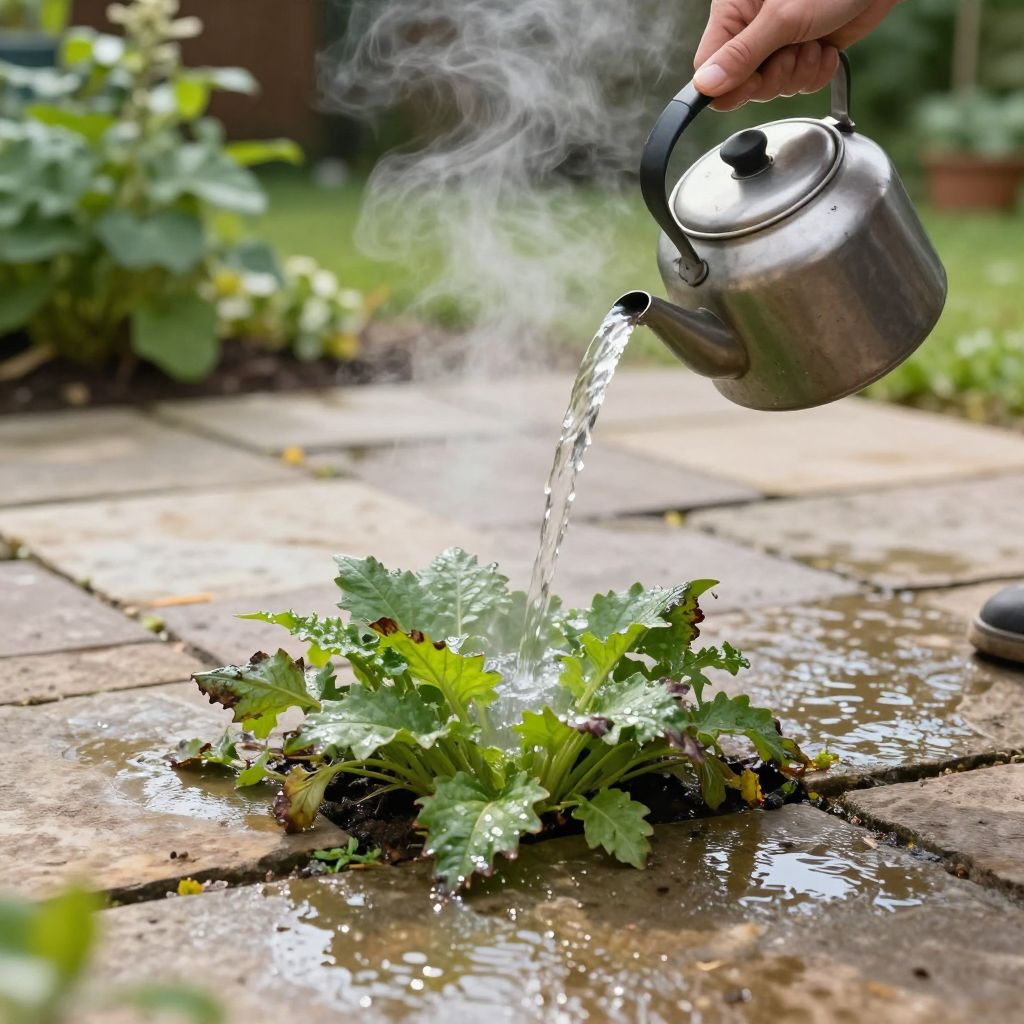
Does boiling water kill weeds? Yes—boiling water can scorch and kill many small weeds on contact, especially seedlings and shallow-rooted annuals. It works best as a spot treatment on hard surfaces, gravel, cracks, and driveways, where you can target weeds without damaging nearby plants.
It is not a perfect all-purpose weed killer. Deep-rooted perennial weeds may regrow, and boiling water can also injure desirable plants, lawn grass, and soil life if you pour it carelessly.
Does boiling water kill weeds?
Yes, boiling water kills weeds by rapidly rupturing plant cells and damaging stems, leaves, and shallow roots. It is most effective on young, small weeds and less effective on established perennials with stored energy in deeper roots or rhizomes. Use it only where you can control where the water lands.
How boiling water works on weeds
Boiling water is a non-selective, contact treatment. That means it damages any plant tissue it touches, whether it is a weed or a desirable plant.
What it does well
- Kills tender annual weeds quickly.
- Works in cracks, pavers, gravel, and along edges.
- Needs no special equipment beyond a kettle or pot.
- Can help reduce weeds before they set seed.
Where it falls short
- May only top-kill deep-rooted perennials such as dandelion, bindweed, or thistle.
- Can require repeat applications for regrowth.
- May not reach roots if the weed crown is protected by soil or mulch.
- Can damage nearby ornamentals, vegetable crops, turf, and beneficial soil organisms.
Best places to use boiling water
Boiling water is most practical in places where precision matters less and soil health is not your main concern. It is especially useful for small, isolated weeds growing in non-planted areas.
- Driveway cracks
- Sidewalk seams
- Gravel paths
- Patio joints
- Fence lines with bare soil
- Areas where you plan to replant after the weeds are gone
Avoid using boiling water in lawns, mixed borders, or vegetable beds unless you can carefully shield every plant you want to keep.
How to use boiling water safely and effectively
For the best results, treat weeds on a dry day when you can see exactly what you are targeting. Small weeds are easier to kill than mature ones, and repeated spot treatments are safer than drenching a whole area.
- Boil water in a kettle or pot.
- Carry it carefully in a stable container with a pouring spout.
- Pour slowly and directly onto the center of the weed, aiming for the crown and nearby soil.
- Use enough to thoroughly wet the plant, but not so much that it splashes onto nearby roots or stems.
- Check the area after a few days and repeat if new growth appears.
Helpful safety tips
- Wear closed-toe shoes and long pants.
- Keep children and pets away while you work.
- Do not carry a full, sloshing pot across a long distance.
- Pour at ground level to reduce splashing.
- Never use boiling water near buried utility lines, irrigation tubing, or roots of valuable shrubs and trees.
Which weeds respond best?
Boiling water is most reliable on small, young weeds with shallow roots. These are the weeds you often see sprouting in pavement cracks or bare patches after rain.
Good candidates
- Seedling broadleaf weeds
- Annual grasses
- Very young weeds before they flower
- Small weeds in confined hardscape areas
Less reliable targets
- Dandelion
- Bindweed
- Creeping buttercup
- Thistle
- Nutgrass or nutsedge
- Any weed spreading by rhizomes, tubers, or deep taproots
For these tougher weeds, you may need repeated treatments, digging, smothering, or a broader weed-management plan.
Will boiling water kill roots too?
Sometimes, but not always. Boiling water can kill shallow roots near the surface, especially in small weeds. However, many perennial weeds store energy below ground, so the top growth may die while the root system survives and sends up new shoots.
If a weed returns after treatment, that usually means the crown or deeper roots were not fully damaged. Repeat applications can weaken it, but persistent perennials often need digging or another control method.
Common mistakes to avoid
Boiling water is simple, but a few mistakes can make it less effective or more damaging than expected.
- Pouring too little water and only wilting the leaves.
- Spraying or splashing onto nearby ornamentals.
- Using it in planted beds where roots of desirable plants are close by.
- Expecting one treatment to solve perennial weeds.
- Applying it on windy days when splashing is harder to control.
- Ignoring regrowth after the first treatment.
How boiling water compares with other weed-control methods
Boiling water is one tool in a larger weed-control strategy. It is useful for quick spot treatments, but it is not always the best choice for every garden situation.
Boiling water vs. hand pulling
Hand pulling is better when you can remove the entire root system, especially in moist soil. Boiling water is faster for cracks and gravel, but it does not physically remove dead plant material.
Boiling water vs. mulching
Mulch prevents many weeds from germinating in the first place. Boiling water is a cleanup method for weeds that are already there. In garden beds, mulch is usually the better long-term solution.
Boiling water vs. hoeing
Hoeing is effective on very young weeds in open soil, especially in vegetable gardens. Boiling water is more precise for hardscape areas but less suitable where you want to preserve soil structure and beneficial organisms.
Will boiling water damage soil?
It can. A small, localized pour is unlikely to ruin an entire bed, but repeated or broad use can stress soil organisms near the surface. Those organisms help break down organic matter and support healthy garden soil.
If you are treating a planted area, think carefully before using boiling water. In beds, it is usually better to mulch, hand weed, or use a hoe so you do not disturb the root zone of nearby plants.
Can you use boiling water before replanting?
Yes, but timing matters. If you are clearing a patch for new planting, boiling water can help knock back weeds first. Afterward, wait for the area to cool fully before planting anything new.
- Remove dead weed material once it has wilted and dried.
- Check for regrowth over the next one to two weeks.
- Improve the area with compost if you plan to plant there.
- Mulch bare soil after planting to reduce new weed germination.
If the area is a walkway or driveway, you can also refill cracks with sand or a suitable jointing material to reduce future weed seeds from settling in.
Seasonal and weather considerations
Boiling water can be used whenever weeds are actively growing, but dry weather often makes the results easier to see. In cool weather, weeds may recover more slowly, while in hot weather the added heat stress can help, though you still need to avoid splashing nearby plants.
After rain, weeds may be easier to pull, but boiling water still works if you can safely access the area. On windy days, choose another method if there is any risk of hitting desirable plants.
When to choose a different method
Boiling water is not the best answer for every weed problem. Choose another approach if you are dealing with large infestations, weeds in established beds, or invasive perennials that spread underground.
- Use hand pulling for isolated weeds in moist soil.
- Use mulch to prevent new weeds in beds and borders.
- Use digging or repeated cutting for stubborn perennial weeds.
- Use edging and crack repair to reduce weeds in hardscape areas.
Practical troubleshooting
The weed looks wilted, but it comes back
That usually means the roots survived. Repeat the treatment on new growth, or dig out the crown if the plant is a perennial.
Nearby plants were damaged
Water nearby plants deeply if they were splashed, and trim only dead tissue once you can see the extent of the damage. In future, use a more targeted method.
Weeds keep returning in the same crack
Seeds are likely collecting there. Clean the crack, remove debris, and seal or refill it if possible to reduce future germination.
The treatment seems weak
Very small amounts of hot water may only wilt leaves. Use enough to thoroughly wet the crown and upper root zone, but keep the application controlled.
Bottom line
Does boiling water kill weeds? Yes, especially small weeds in cracks, gravel, and other non-planted areas. For the best results, target young growth, pour carefully, and expect to repeat treatment on stubborn perennials. Use it as a spot tool, not a blanket solution, and pair it with mulching or hand weeding for lasting control.
If you want more practical garden weed-control ideas, you may also find it helpful to read about how to mulch a garden bed and safe ways to remove weeds by hand.