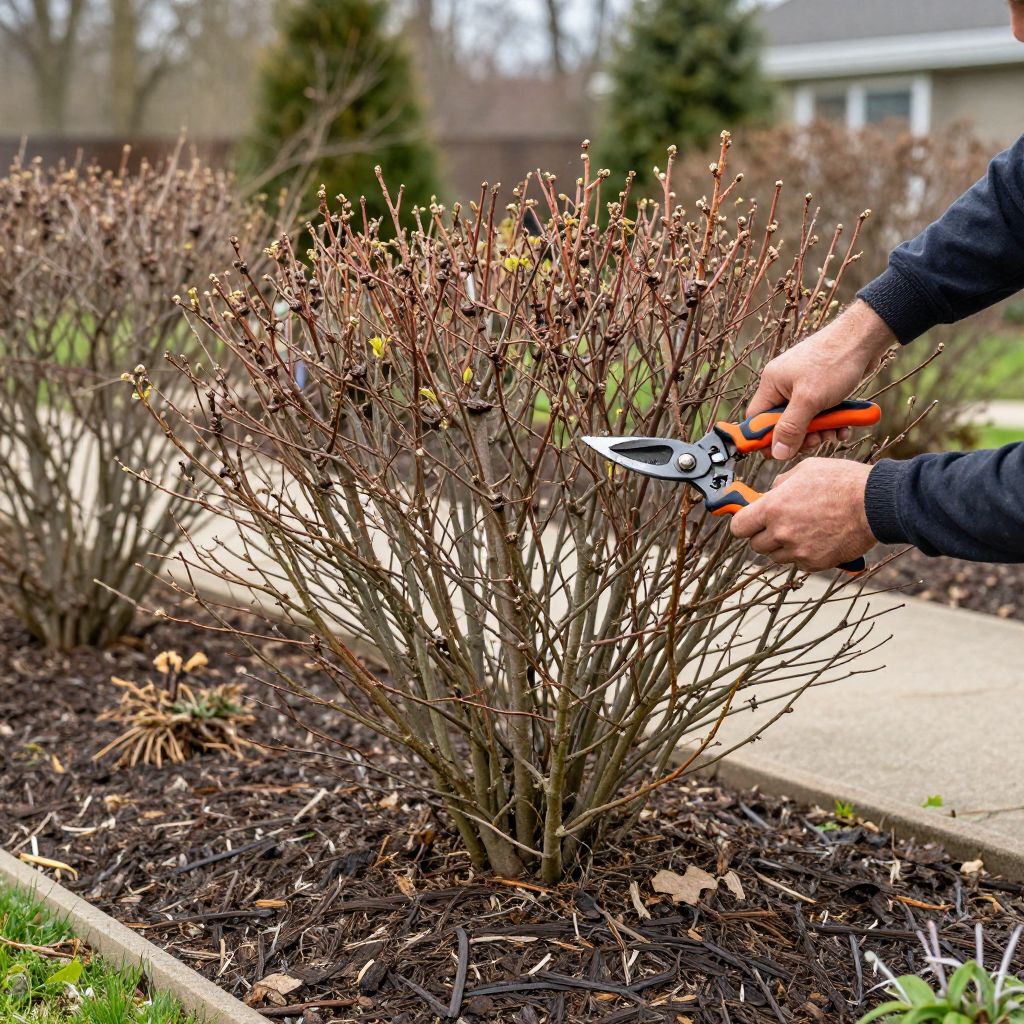
Wondering when to trim burning bush without damaging its shape or fall color? The best time is usually late winter to early spring, while the shrub is still dormant, or right after flowering if you only need light shaping. Heavy pruning at the wrong time can remove next season’s growth and reduce the plant’s natural form.
Burning bush, Euonymus alatus, is often grown for its dense branching and brilliant autumn foliage. With the right timing and pruning method, you can keep it smaller, healthier, and better shaped without stressing the shrub.
When to trim burning bush?
The best time to trim burning bush is late winter to early spring before new growth begins. You can also do light corrective pruning after flowering or during the growing season, but avoid major cuts in late summer or fall if you want the best autumn display and the least stress on the plant.
Why timing matters for burning bush pruning
Burning bush responds well to pruning, but the timing affects both appearance and vigor. If you trim too late in spring, you may remove buds and reduce fullness. If you prune heavily in late summer or fall, the shrub may push tender new growth that can be damaged by cold weather.
For most gardeners, dormant-season pruning gives the cleanest results because the branch structure is easy to see and the shrub can recover as growth starts in spring.
Best pruning windows
- Late winter to early spring: Best for major shaping, size reduction, and renewal pruning.
- After flowering: Good for light shaping or removing stray shoots.
- Any time: Dead, damaged, or diseased branches can be removed whenever you notice them.
How hard can you prune burning bush?
Burning bush tolerates pruning well, but how hard you cut should match the shrub’s age and condition. A light trim can tidy the plant, while older, overgrown shrubs may need renewal pruning over several seasons. Avoid removing too much at once unless the plant is very vigorous and established.
Light pruning
Light pruning is best for younger shrubs or plants that already have a good shape. Remove only the longest or awkward stems, and shorten branch tips just enough to maintain size.
Moderate shaping
If the shrub is getting wide or uneven, you can selectively cut back branches to a side branch or bud. This keeps the plant looking natural instead of clipped into a boxy shape.
Renewal pruning for overgrown shrubs
For a large, neglected burning bush, remove one-third of the oldest stems at ground level in late winter. Repeat over 2 to 3 years rather than cutting everything back at once. This gradual approach helps the shrub recover with less shock.
Step-by-step: how to prune burning bush correctly
- Inspect the shrub first. Look for dead wood, crossing branches, weak stems, and areas that are too dense.
- Remove dead or damaged branches. Cut them back to healthy wood or to the branch collar.
- Thin crowded stems. Open the center slightly so air and light can reach inside the shrub.
- Shorten overlong shoots. Make cuts just above a bud or side branch facing the direction you want new growth to go.
- Step back often. Check the overall shape as you work so you do not over-prune one side.
- Clean up debris. Remove fallen twigs and leaves from around the plant to reduce disease and pest hiding spots.
What tools should you use?
Use sharp, clean tools so your cuts heal cleanly. Bypass hand pruners work well for small stems, loppers are useful for thicker branches, and a pruning saw helps with older woody stems. Clean the blades before and after pruning, especially if you are removing diseased wood.
- Hand pruners: For stems up to about pencil thickness.
- Loppers: For medium branches that need more leverage.
- Pruning saw: For thicker, older stems.
- Gloves: Helpful for grip and protection from scratches.
Common pruning mistakes to avoid
Burning bush is forgiving, but a few mistakes can weaken its shape or reduce its seasonal color. The most common problem is pruning at the wrong time or cutting too much at once.
- Shearing repeatedly: This can create a dense outer shell with a bare interior.
- Pruning too late in the season: Late cuts may stimulate soft growth before frost.
- Removing too much at once: Heavy cuts can stress the shrub and trigger weak regrowth.
- Ignoring the natural form: Burning bush usually looks better when selectively thinned instead of tightly clipped.
- Using dull tools: Ragged cuts take longer to heal.
How to keep burning bush healthy after trimming
After pruning, give the shrub steady but not excessive care. Water deeply if the soil is dry, especially during warm weather, so the root zone stays evenly moist while the plant recovers. Avoid heavy fertilizing right after major pruning unless a soil test shows a need.
Helpful aftercare tips
- Mulch around the base with 2 to 3 inches of organic mulch, keeping it a few inches away from the stems.
- Water during dry spells rather than on a fixed schedule.
- Watch for weak, fast-growing shoots and remove them if they spoil the shape.
- Check for winter dieback in early spring and prune out damaged tips.
Does burning bush need regular pruning?
Not always. A healthy burning bush planted in the right spot may only need occasional shaping and removal of dead wood. If the shrub is in a tight space, near a walkway, or growing faster than expected, annual light pruning can help keep it manageable.
If you want a more natural look, prune less often and focus on thinning crowded stems rather than clipping the outside all the time. This usually gives a fuller, healthier shrub with better branching.
Can you prune burning bush in summer?
You can, but keep it light. Summer pruning is best for removing broken branches, suckers, or a few overly long shoots. Avoid major cuts during hot weather unless you are correcting damage, because the plant may respond with stressed growth and a less balanced shape.
If your shrub is already overgrown in summer, mark the major cuts and wait until late winter to do the real work. That is usually the safest way to reshape it without sacrificing vigor.
What if your burning bush is overgrown?
Overgrown burning bush can often be restored with patience. Instead of cutting it back hard in one season, use renewal pruning over several years. This approach keeps enough foliage on the shrub to support healthy regrowth and reduces the chance of bare, awkward stems.
Best approach for large shrubs
- Remove dead wood first.
- Take out a few of the oldest stems at the base.
- Shorten long branches to a side branch, not just to random points.
- Repeat the process the following late winter if needed.
Growing conditions that affect pruning results
Pruning works best when burning bush is already growing in suitable conditions. Full sun usually gives the strongest fall color, while partial shade can still support healthy growth but may reduce brilliance. Well-drained soil is important because soggy roots make any shrub less resilient after pruning.
If your soil stays wet, improve drainage before relying on heavy pruning to solve size or shape issues. A stressed shrub is slower to recover from cuts.
Pests and diseases to watch for
Burning bush is generally tough, but pruning is a good time to look for problems. Remove branches with obvious dieback, cankers, or unusual spotting. If you see repeated branch decline, do not assume pruning alone will fix it; the issue may be related to site stress, root problems, or pests.
Keep tools clean between cuts if you suspect disease. That simple step helps prevent spreading problems from one branch to another.
Quick answer: the best pruning plan by season
- Late winter to early spring: Best time for major pruning and reshaping.
- Spring after growth starts: Light touch-up only if needed.
- Summer: Minor correction cuts and removal of damaged wood.
- Fall: Avoid major pruning unless you are removing dead or hazardous branches.
Conclusion
If you are asking when to trim burning bush, aim for late winter to early spring for the main pruning job, then use light touch-ups only when needed during the rest of the season. Start with dead wood, thin crowded stems, and keep cuts selective so the shrub stays full, healthy, and attractive.
For more practical shrub care, you may also want to read about how to prune shrubs without ruining their natural shape and choosing the best mulch for landscape plants.