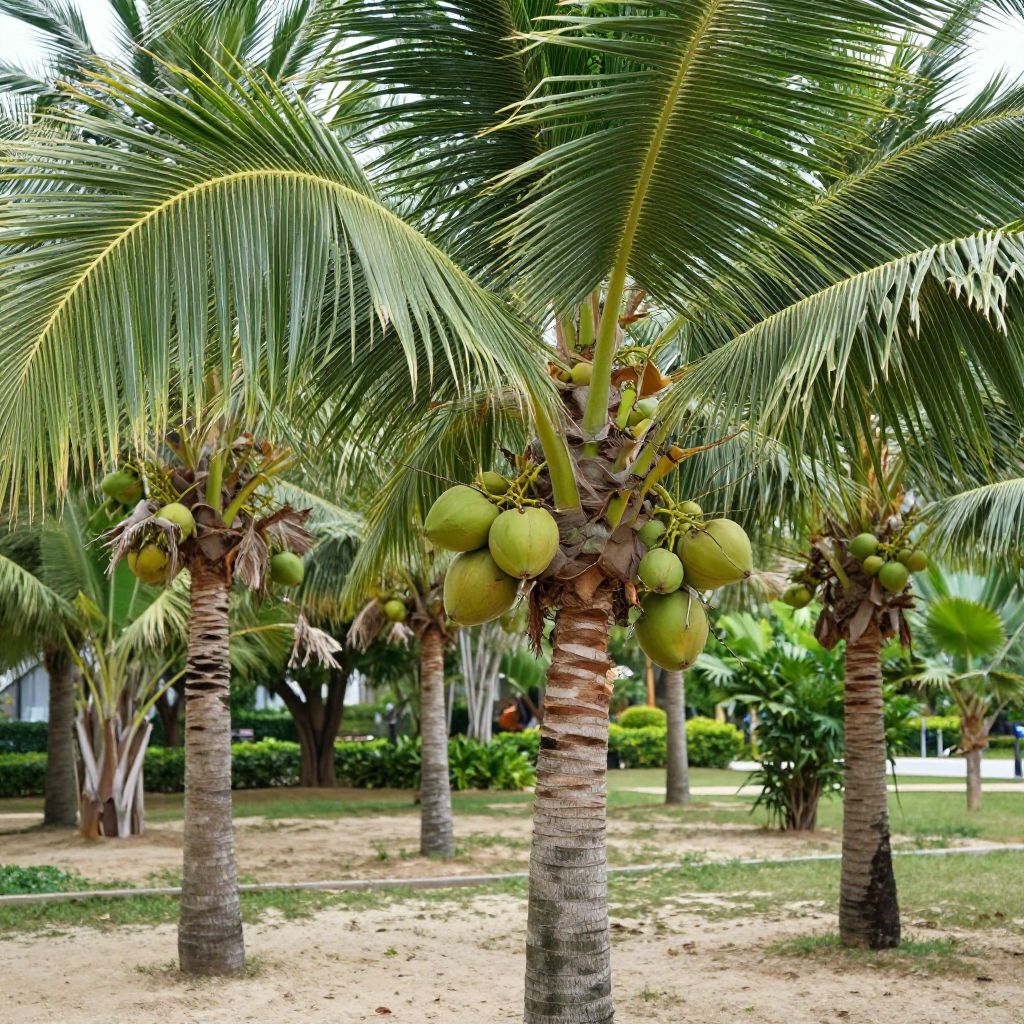
Do all palm trees have coconuts? Not at all. In fact, most palm trees never produce coconuts, and many species are grown for their foliage, shape, or landscape value rather than fruit. If you want a palm for a patio, garden bed, or indoor space, it helps to know which palms make coconuts and which ones do not.
Understanding the difference also helps you choose the right palm for your climate, space, and maintenance level. Some palms are tropical fruit producers, while others are compact ornamentals, cold-hardy landscape plants, or indoor specimens that will never come close to setting coconuts.
Do all palm trees have coconuts?
No. Only the coconut palm, Cocos nucifera, produces coconuts. Many other palm species produce different kinds of fruit, and plenty of ornamental palms produce small berries or seed clusters instead. A palm tree is a plant family, not a single type of tree, so fruiting varies widely by species.
Which palms actually produce coconuts?
The coconut palm is the main species gardeners think of when they picture coconuts. It grows best in warm, frost-free climates with plenty of sun, humidity, and well-drained soil. Even then, it takes time to mature before it can flower and fruit.
Coconut palm growing basics
- Botanical name: Cocos nucifera
- Light: Full sun
- Soil: Loose, sandy, well-drained soil
- Water: Regular moisture, but never soggy roots
- Climate: Warm, tropical to subtropical conditions
If you live outside a warm coastal or frost-free region, a coconut palm usually will not thrive outdoors long-term. It is also not a good choice for cold winters, heavy clay soil, or sites that stay wet after rain.
Why most palm trees do not grow coconuts
Palms include hundreds of species, and each one has its own fruiting habit. Some produce dates, some produce small drupes or berries, and some are grown mainly for their fronds and trunk shape. Many ornamental palms are not fruit-heavy at all, especially when grown as young plants or indoors.
Examples of palms that do not produce coconuts
- Areca palm (Dypsis lutescens)
- Majesty palm (Ravenea rivularis)
- Parlor palm (Chamaedorea elegans)
- Fan palms such as Washingtonia and Livistona species
- Queen palm (Syagrus romanzoffiana), which makes orange fruit, not coconuts
Some of these palms can look tropical enough that people assume they should have coconuts, but appearance alone does not tell you the fruit type.
How to tell what kind of palm you have
If you are trying to identify a palm in your yard, look at the leaves, trunk, and fruiting clusters. The shape of the fronds, the growth habit, and the size of the fruit can help narrow it down. If you are unsure, compare the plant to a reliable identification guide or local nursery reference.
Quick identification clues
- Check the fronds: Coconut palms have long, feather-like pinnate leaves.
- Look at the fruit: Coconuts are large, fibrous, and oval with a hard shell inside.
- Observe the trunk: Coconut palms usually have a tall, ringed trunk with a crown of arching leaves.
- Note the size: Many ornamental palms stay smaller or clump instead of forming a single tall trunk.
If you are still not sure, a local extension office or plant nursery can often identify the palm from a clear photo of the trunk, leaves, and fruit.
Growing conditions that affect coconut production
Even a coconut palm will not always produce fruit if conditions are wrong. Good growth depends on heat, light, drainage, and enough space for the roots and crown to develop. Poor conditions can delay flowering or prevent fruit set altogether.
Sunlight
Coconut palms need full sun to perform well. In partial shade, they may survive but usually grow more slowly and may not fruit reliably.
Soil and drainage
Drainage is critical. Coconut palms dislike compacted or waterlogged soil, which can lead to root stress and decline. Sandy or sandy-loam soil is usually best, especially in coastal landscapes.
Temperature
Cold damage is one of the biggest reasons coconut palms fail. Even brief frost can injure or kill them, and prolonged cool weather reduces growth. If your area gets cold winters, choose a different palm species.
Water
Young coconut palms need consistent moisture while they establish, but mature plants still need soil that drains freely. Overwatering is a common mistake, especially in containers or heavy soil.
How to care for a coconut palm in the landscape
If you are growing a coconut palm in the right climate, focus on steady care rather than heavy feeding or frequent pruning. The goal is to support healthy root growth, a strong crown, and good airflow around the trunk.
Planting tips
- Choose a site with full sun and room for the mature canopy.
- Plant in soil that drains quickly after rain.
- Set the palm at the same depth it was growing in its container.
- Mulch lightly around the root zone, but keep mulch away from the trunk.
Do not bury the trunk or mound soil against the base. Palms can suffer if the crown and trunk stay too wet.
Watering guidance
Water newly planted palms deeply enough to settle the root zone, then adjust based on weather and soil drainage. In hot, dry weather, young palms may need more attention than established ones. In rainy climates, you may need to water very little once the plant is settled.
Feeding
Use a fertilizer made for palms if your soil is poor or the plant shows nutrient deficiency. Palms often need balanced nutrition, including magnesium and potassium, but the right approach depends on your soil and local conditions. A soil test is the best starting point if growth looks weak.
Pruning and maintenance: what to do and what to avoid
Palms are not pruned like shade trees. Removing too many fronds can weaken the plant, reduce energy reserves, and increase stress. Limit pruning to dead, broken, or clearly declining leaves.
Pruning rules for palms
- Remove only fronds that are fully brown or badly damaged.
- Do not cut green fronds just for appearance.
- Use clean, sharp tools to reduce tearing.
- Never damage the central growing point, or crown.
If you are growing a coconut palm for fruit, overpruning can reduce vigor and slow production. Healthy green fronds are part of the plant’s food-making system.
Common pests and diseases
Like other palms, coconut palms can face insect and disease pressure, especially when stressed by poor drainage, cold injury, or nutrient problems. Healthy plants are less likely to suffer serious damage.
Common pest issues
- Scale insects that cling to fronds and stems
- Spider mites in hot, dry conditions
- Mealybugs on sheltered growth
Common disease problems
- Root rot from chronically wet soil
- Leaf spotting in humid, crowded conditions
- Trunk or crown decline after cold damage or poor drainage
The best prevention is simple: plant in the right place, avoid overwatering, keep the crown clean, and remove badly affected tissue only when necessary. If a palm declines quickly, check the roots and growing point before assuming it only needs more fertilizer.
Can you grow a coconut palm indoors?
You can keep a young coconut palm indoors for a while, but it is not a long-term houseplant in most homes. It needs intense light, warmth, and humidity, and it will eventually become too large for typical indoor spaces. It also will not reliably produce coconuts indoors.
Indoor care considerations
- Place it in the brightest possible location.
- Keep it warm and away from cold drafts.
- Use a pot with excellent drainage holes.
- Do not let the pot sit in standing water.
If you want a palm for indoors, choose a species better suited to interior conditions, such as a parlor palm or areca palm, rather than expecting a coconut palm to perform well as a houseplant.
Why your palm may not fruit even if it is the right species
Even when you have a coconut palm, fruiting is not guaranteed. A palm may be too young, stressed, underfed, or growing in a climate that is only borderline suitable. Wind, salt exposure, and poor pollination can also affect fruit set.
Common reasons for poor fruiting
- The palm is not mature enough yet.
- It does not receive enough direct sun.
- The soil stays too wet or too dry.
- Cold weather has damaged growth.
- Nutrient deficiencies are reducing vigor.
Before trying to force fruiting, focus on overall plant health. A strong, well-sited palm is much more likely to flower and set fruit over time.
Choosing the right palm for your garden
If your goal is a tropical look, you do not need coconuts to enjoy palms in the landscape. Many palms are chosen for their texture, shade, or compact size rather than fruit. The best choice depends on your climate, space, and maintenance preferences.
Ask these questions before buying
- Will this palm survive my winter temperatures?
- Do I want fruit, shade, or purely ornamental foliage?
- Is my soil fast-draining enough for this species?
- Will the mature size fit my yard or container?
Reading the plant tag carefully can save you from buying a palm that is too tender, too large, or simply wrong for your site.
Conclusion
So, do all palm trees have coconuts? No, only coconut palms produce coconuts, and most palms never will. If you want a healthy palm in your garden, match the species to your climate, give it full sun and good drainage, and avoid overpruning or overwatering.
If you are still identifying a palm in your yard, it can help to compare its leaves, trunk, and fruit with a reliable guide like this tree identification resource before you decide how to care for it.