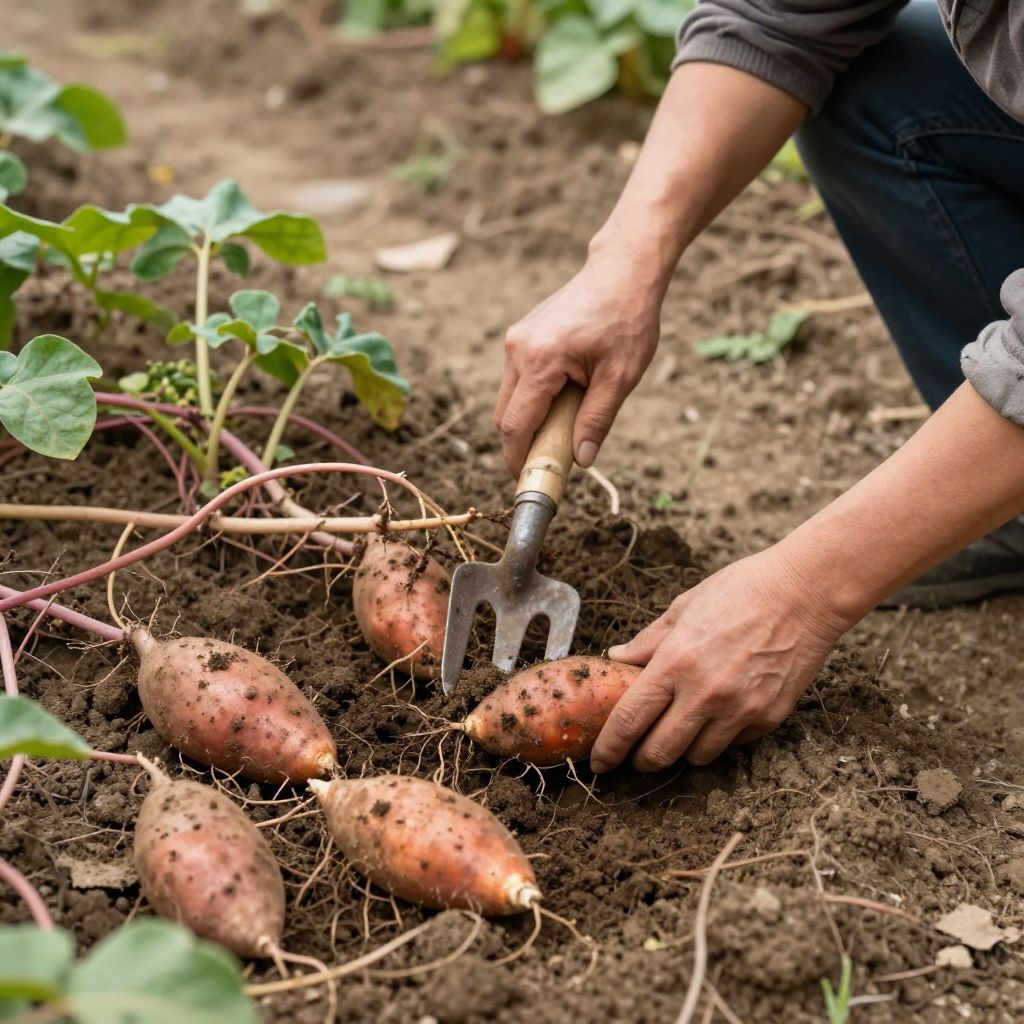
Wondering when do you harvest sweet potatoes so they’re fully sized but still tender and flavorful? Timing matters with this crop, because sweet potatoes need warm weather to bulk up, but they also need to come out before cold soil or frost damages the roots.
The good news is that harvest timing is easier to judge than it sounds. With a few simple checks—days to maturity, vine growth, weather, and root size—you can harvest sweet potatoes at the right moment for your climate.
When do you harvest sweet potatoes?
Harvest sweet potatoes when the vines begin to yellow or after the first light frost, but before a hard freeze damages the roots. Most varieties are ready about 90 to 120 days after planting slips, though you should confirm readiness by checking root size and local weather rather than relying on the calendar alone.
How to tell sweet potatoes are ready to dig
Sweet potatoes do not always give a dramatic above-ground signal, so use several clues together. The best harvest time is usually when roots are large enough to eat, the vines are starting to decline, and the soil is still warm enough to avoid chilling injury.
Signs your crop is mature
- Vines begin to yellow or thin out naturally as the plant finishes growth.
- Leaves may start to look tired, especially in late season.
- Roots feel sizable when you gently probe near the edge of the bed.
- Enough days have passed since planting slips, usually 3 to 4 months depending on variety and climate.
- Weather is turning cooler, which is often the final cue to harvest even if the vines still look healthy.
If you are unsure, dig one test plant. A single root can tell you whether the rest of the crop is worth waiting on or ready to lift.
Why frost matters
Sweet potatoes are warm-season plants. A light frost can damage the vines, and a hard freeze can injure the roots in the soil. If frost is forecast, harvest promptly rather than waiting for perfect size.
Seasonal timing: what to expect in different climates
Sweet potato harvest timing depends on your local growing season, not just the calendar. In warm regions, roots may keep sizing up into fall. In shorter-season areas, you may need to harvest earlier to avoid cold soil and poor storage quality.
Warm climates
In long, warm seasons, sweet potatoes can stay in the ground longer as long as the soil remains warm and the vines are healthy. Many gardeners harvest in late fall, before the weather turns consistently cool.
Short-season climates
If your summers are brief, choose early-maturing varieties when possible and watch the calendar closely. Once you are near the expected harvest window, test a plant rather than waiting too long and risking cold damage.
Container-grown sweet potatoes
Sweet potatoes grown in containers often mature a bit sooner because the root space is limited and the pot warms quickly. Check them carefully as the season progresses, especially if nights begin cooling off.
How to harvest sweet potatoes without damaging them
Sweet potatoes bruise easily. Careful digging matters because damaged roots do not store as well and are more likely to rot during curing or storage.
- Choose a dry day if possible.
- Cut back the vines to make digging easier.
- Use a garden fork or spade to loosen soil several inches away from the plant.
- Lift the roots gently instead of pulling on them.
- Brush off loose soil by hand; do not wash them before curing.
- Set undamaged roots aside for curing and separate any cut or bruised ones for immediate use.
Do not dig too close to the plant crown. Sweet potatoes often spread farther than you expect, and a fork placed too near the base can slice into the tubers.
Should you harvest all at once or in stages?
Most gardeners harvest the main crop all at once before cold weather arrives. However, if you are checking for size or want a few early roots, you can carefully harvest one plant first and leave the rest in the ground a little longer if conditions are still warm.
When a staged harvest makes sense
- You want to sample root size before committing to the full harvest.
- The weather is still warm and frost is not imminent.
- You have several plants and do not need all the roots at once.
Once nights get cool, staged harvesting becomes riskier. At that point, it is usually better to lift the whole planting.
What affects sweet potato size and harvest timing?
Some crops mature faster than others because of variety, soil conditions, and growing care. If your sweet potatoes seem small at harvest time, the issue is often environmental rather than a sign that you waited too little or too long.
Soil and drainage
Sweet potatoes grow best in loose, well-drained soil. Heavy clay or compacted ground can limit root expansion and make digging difficult. Raised beds or mounded rows often help the roots develop more evenly.
Sunlight
Full sun supports strong vine growth and better root production. In partial shade, plants may survive but often produce fewer or smaller roots.
Watering
Even moisture helps early growth, but soggy soil can reduce root quality. After plants are established, consistent watering during dry spells is better than frequent shallow watering. Avoid overwatering late in the season, especially if the soil drains slowly.
Fertilizer and compost
Rich soil helps, but too much nitrogen can push leaf growth at the expense of roots. Compost is useful for improving soil structure, but avoid overfeeding with high-nitrogen fertilizers if your goal is tuber production.
How to cure sweet potatoes after harvest
Curing is one of the most important steps after harvest. It helps heal small cuts, improves flavor, and prepares the roots for storage. Freshly dug sweet potatoes are not at their best right away.
Basic curing conditions
- Warm temperatures around 80–85°F are ideal.
- High humidity helps the skin toughen without drying out.
- Good airflow reduces rot risk.
Many home gardeners cure sweet potatoes in a warm indoor space, such as a spare room or heated area, for about 7 to 14 days. Keep them out of direct sun and handle them gently.
After curing, store them in a cool, dry, well-ventilated place. Avoid refrigeration, which can harm texture and flavor.
Common harvest mistakes to avoid
Sweet potatoes are forgiving in the garden, but a few mistakes can reduce your harvest quality or storage life.
- Waiting too long after frost and letting roots sit in cold, damaged soil.
- Digging too early before the roots have reached usable size.
- Using too much force and bruising or cutting the tubers.
- Washing before curing, which can encourage rot.
- Storing unhealed roots without curing them first.
What if the sweet potato vines look great but the roots are small?
This is a common frustration. Healthy-looking vines do not always mean large tubers underground. If the roots are small at harvest, the cause is often too much nitrogen, too little heat, compacted soil, or not enough time in the ground.
How to improve next season
- Choose a site with full sun and warm soil.
- Loosen the bed deeply before planting slips.
- Use compost to improve texture, not excessive fertilizer.
- Give plants enough time before harvesting, especially in warm weather.
- Consider varieties suited to your local season length.
Can you leave sweet potatoes in the ground after maturity?
You can leave mature sweet potatoes in the ground for a short time if the weather stays warm and dry, but they are not a crop to ignore. Once temperatures start dropping, the risk of rot and cold damage increases quickly.
If you need to delay harvest briefly, mark the planting clearly and keep an eye on the forecast. Harvest before the first hard frost whenever possible.
Quick harvest checklist
- Check the days since planting slips.
- Look for yellowing or declining vines.
- Watch the weather for frost or prolonged cool nights.
- Dig a test plant to judge root size.
- Harvest carefully on a dry day if you can.
- Cure the roots before storage.
Conclusion
When do you harvest sweet potatoes? Harvest them when the roots are sized up, the vines are fading, and cold weather is approaching—usually about 90 to 120 days after planting. If you are unsure, dig one test plant, then harvest the rest before frost threatens. For more seasonal growing help, you may also want to read about how to grow sweet potatoes in raised beds and storing root vegetables after harvest.