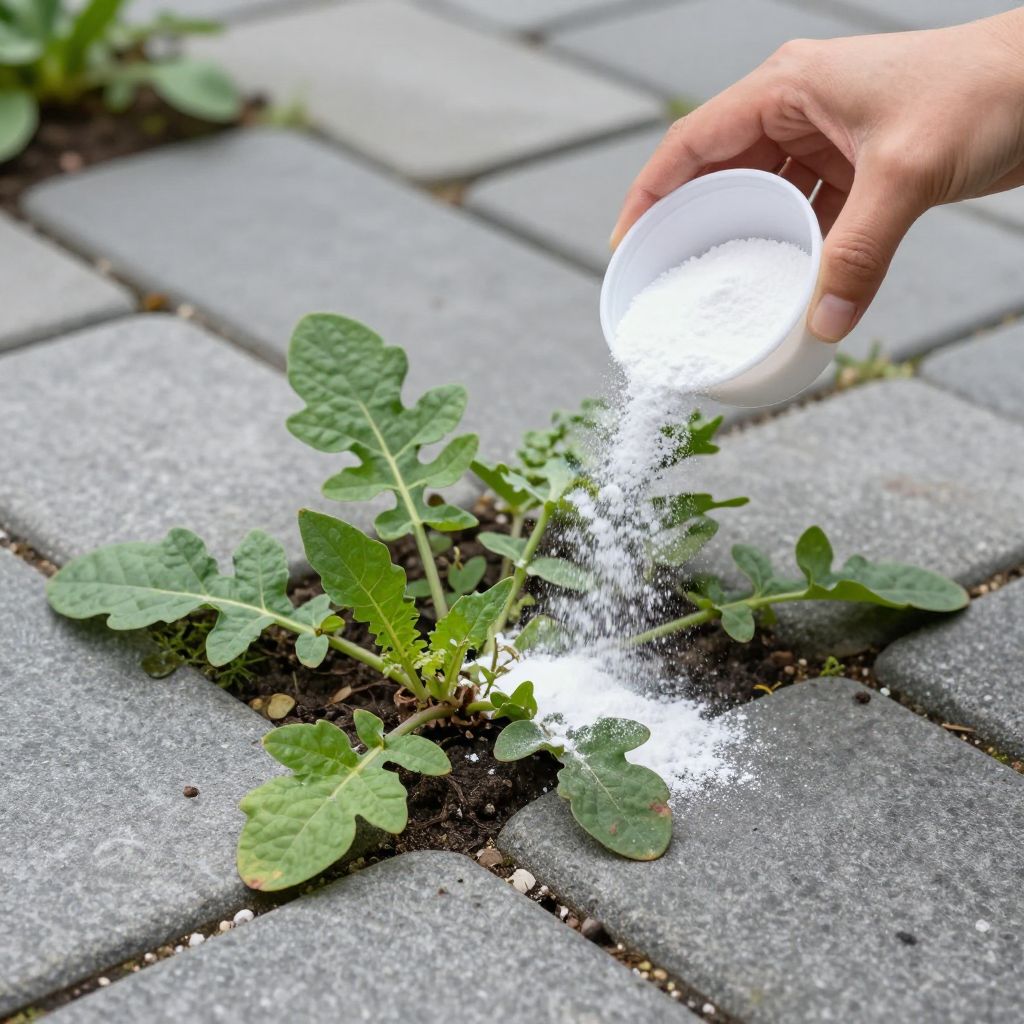
Does baking soda kill weeds? It can, but only in a limited, inconsistent way. Sodium bicarbonate may scorch young weeds when applied directly and heavily, yet it is not a reliable long-term weed control method and can also damage nearby plants and soil if overused.
If you want a safer, more effective approach, it helps to understand when baking soda might work, where it falls short, and what to use instead. The best weed control usually combines removal, mulch, and prevention rather than relying on a single home remedy.
Does baking soda kill weeds?
Baking soda can kill or weaken some small weeds by drying out tender leaves, especially when applied in dry weather and directly onto the foliage. However, it rarely kills established weeds with deep roots, and repeated use can harm soil health, lawn grass, and nearby ornamentals.
How baking soda affects weeds
Baking soda is sodium bicarbonate, and its main effect is contact injury. It can dehydrate soft tissue and create a salty, alkaline surface that stresses plant cells.
That means it may brown the top growth of very young weeds, but it usually does not move through the plant systemically to kill the roots. If the root remains alive, the weed often regrows.
Where it may work best
- Very small seedlings with thin leaves
- Weeds growing in cracks, pavers, or gravel where you do not want to use herbicides
- Spot treatments on isolated weeds, not broad applications
Where it usually fails
- Perennial weeds with strong roots, such as dandelions or bindweed
- Dense clumps or mature weeds
- Weeds growing close to desirable plants
How to use baking soda on weeds safely
If you decide to try it, use baking soda as a spot treatment only. The goal is to limit contact with soil and nearby plants, because sodium can build up and cause damage over time.
- Pull or cut back larger weeds first so you are treating only the new growth.
- Choose a dry day with little wind so the powder stays where you place it.
- Lightly dust the weed leaves, or apply a small amount only to the crown and leaf surfaces.
- Avoid dumping piles of baking soda onto the soil.
- Check the area after a few days and remove dead foliage.
Important: do not use baking soda as a blanket treatment across beds, lawns, or vegetable gardens. It is not selective, and repeated use can leave sodium in the soil.
What not to do
- Do not spray or dust it near seedlings or shallow-rooted ornamentals
- Do not use it repeatedly in the same spot as a routine weed killer
- Do not assume browned leaves mean the weed is dead
- Do not rely on it for invasive or perennial weeds
Why baking soda is not a great long-term weed control method
Even if baking soda damages the leaves, weeds often recover from the roots. More importantly, sodium can accumulate in soil, which may reduce soil structure and make it harder for plants to take up water and nutrients.
In containers, the risk is even higher because pots have limited soil volume and less room for excess salts to leach away. In garden beds, repeated use can create patchy injury to nearby plants and make the soil less friendly over time.
Signs you may be overusing it
- Plants nearby develop scorched leaf edges
- Soil surface develops a crust or white residue
- Weeds keep returning despite repeated treatment
- Container plants look stressed even when watered properly
Better alternatives for killing weeds
If your goal is dependable weed control, use methods that target the whole plant or prevent new weeds from emerging. The best option depends on where the weeds are growing.
For cracks, paths, and gravel
- Hand pulling when the soil is damp, so roots come out more easily
- Boiling water for isolated weeds in hardscape areas, used carefully to avoid nearby plants
- Flame weeding only where appropriate and legal, with strict fire safety
For garden beds
- Mulch 2 to 4 inches deep to block light and suppress germination
- Landscape fabric only where it makes sense, and covered with mulch
- Hand weeding before weeds flower and set seed
For lawns
- Improve turf density through proper mowing height, watering, and overseeding when appropriate
- Remove weeds by hand or use lawn-safe weed control products labeled for your grass type
- Address compacted soil and thin areas so weeds have less room to move in
How to prevent weeds from coming back
Weed control works best when you prevent new seedlings from getting established. That usually means reducing bare soil, limiting weed seed spread, and keeping desirable plants healthy and competitive.
- Mulch bare soil after planting.
- Water deeply enough for your plants, not for weed growth in unused areas.
- Remove weeds before they flower and seed.
- Clean tools and shoes if you are moving between weedy areas and clean beds.
- Fill gaps in beds with groundcovers or closely spaced plants where appropriate.
Healthy, well-covered soil is one of the best weed suppressors you can grow. Sunlight reaching bare ground triggers weed seeds to sprout, so reducing open soil is a simple and effective strategy.
Special considerations for containers and raised beds
Baking soda is especially risky in pots and raised beds because there is less soil to dilute salts. If you are growing herbs, flowers, or vegetables in containers, avoid using baking soda as a regular weed treatment around the edges or surface.
Instead, pull weeds while small, top up mulch carefully, and inspect potting mix for volunteer seedlings before they root deeply. In raised beds, hand weeding and mulch are usually safer and more effective than repeated home remedies.
Container gardening tips
- Use fresh potting mix, not garden soil, for containers
- Check drainage holes so water does not sit and stress plants
- Remove weed seedlings as soon as you see them
- Refresh the top layer of mulch or compost as needed, but keep it away from stems
Common mistakes gardeners make with baking soda
Most problems happen when baking soda is treated like a universal weed killer. It is not selective, not especially strong on mature weeds, and not a substitute for root removal or prevention.
- Using too much: heavy applications can damage soil and nearby plants
- Applying in the wrong place: it can drift onto ornamentals or turf
- Expecting permanent results: many weeds regrow from the roots
- Ignoring the cause: bare soil, poor mulch, and thin turf invite more weeds
When to choose another method
If the weed is deep-rooted, spreading by rhizomes, or already flowering, skip baking soda and choose a more dependable method. Pulling, digging, smothering, or using a labeled weed control product will usually give better results.
Also avoid baking soda if you are working around acid-loving plants, young transplants, or any area where soil health matters over the long term. In those situations, prevention is far more valuable than a quick leaf burn.
Bottom line for home gardeners
Baking soda may damage small weeds on contact, but it is not a reliable weed killer for most garden situations. Use it, if at all, only as a very limited spot treatment in places where you can tolerate some risk to soil and nearby plants.
For better results, pull weeds early, mulch bare soil, and keep plants dense and healthy so weeds have less room to grow. If you want more practical garden guidance, look for advice on mulching, hand weeding, and maintaining healthy soil in your beds and containers.