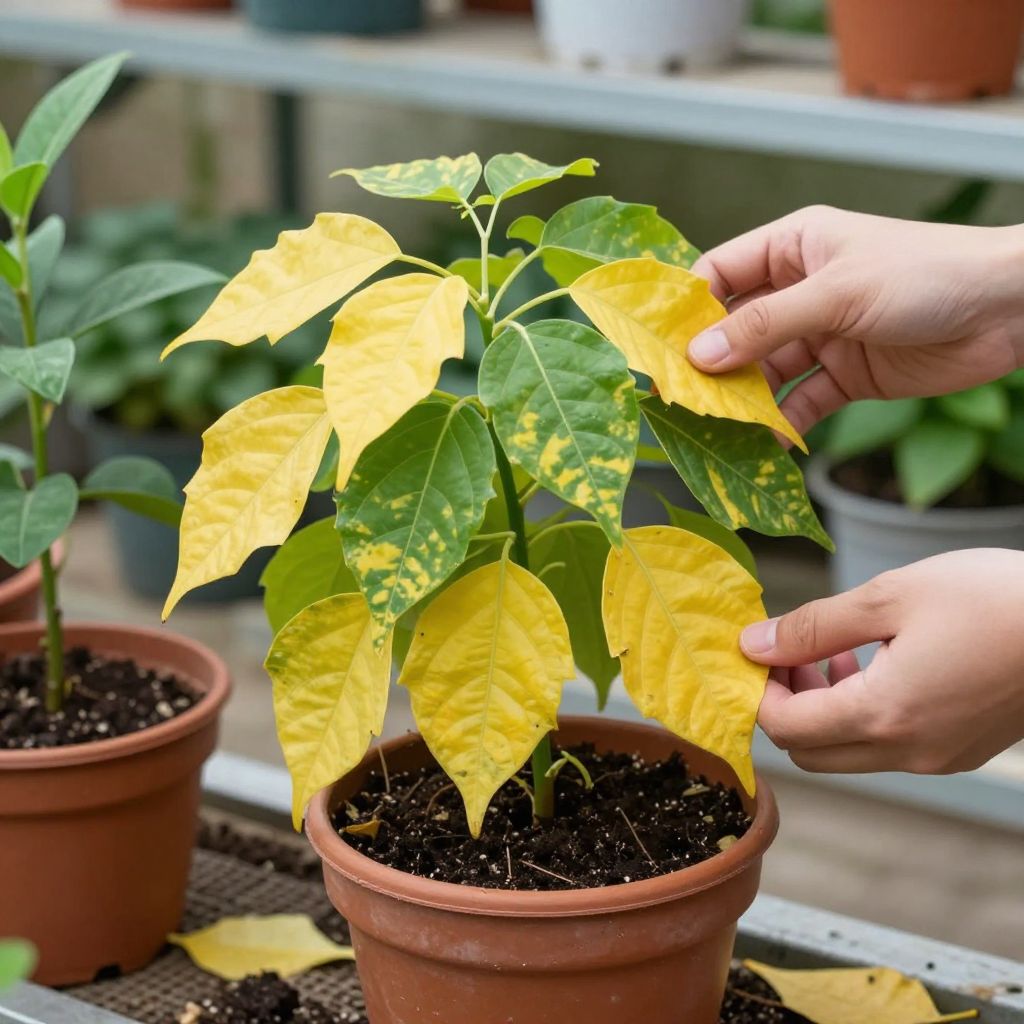
Why are my plants leaves turning yellow? Yellow leaves are a common warning sign, but they do not always mean the same thing. The cause may be watering stress, poor drainage, low light, nutrient problems, pests, disease, temperature swings, or simply normal aging leaves.
The key is to look at which leaves are yellowing, how fast it is happening, and what the rest of the plant looks like. Once you match the symptom to the growing conditions, you can usually correct the problem before more leaves are lost.
Why are my plants leaves turning yellow?
Yellow leaves usually mean the plant is under stress and cannot make enough chlorophyll, the pigment that keeps foliage green. The most common causes are overwatering, underwatering, poor drainage, low light, nutrient imbalance, root problems, pests, or natural leaf aging. The pattern of yellowing tells you where to start.
Start with the pattern of yellowing
Before you reach for fertilizer or water the plant again, inspect the yellow leaves closely. The location and look of the damage often point to the real cause.
What the yellowing looks like
- Older, lower leaves yellow first: often watering issues, nitrogen shortage, or normal aging.
- New growth turns yellow: often iron or other micronutrient problems, root stress, or poor light.
- Yellowing with green veins: can suggest chlorosis, often linked to nutrient uptake problems or high-pH soil.
- Yellow leaves plus wilting: often inconsistent watering, root damage, or root rot.
- Yellow leaves with spots, webbing, or distortion: often pests or disease.
Check the whole plant and the roots
Look at stems, new growth, soil surface, and the underside of leaves. If the plant is in a pot, gently slide it out and inspect the roots. Healthy roots are usually firm and light-colored; black, mushy, or foul-smelling roots point to rot.
Watering problems are the most common cause
Both too much and too little water can cause leaves to yellow. The difference is that overwatered plants often look soft, limp, or swollen, while underwatered plants usually look dry, crisp, or droopy.
Overwatering and poor drainage
When soil stays wet too long, roots lose oxygen and stop working properly. The plant then cannot take up nutrients, so leaves yellow even if fertilizer is present.
- Check whether the pot has drainage holes.
- Make sure saucers are emptied after watering.
- For garden beds, confirm that water drains within a few hours after rain or irrigation.
- Repot or replant into a freer-draining mix if soil stays soggy.
Underwatering and irregular watering
Dry soil can also trigger yellowing, especially in containers, hanging baskets, and newly planted shrubs or vegetables. Inconsistent watering stresses roots and can cause older leaves to yellow and drop.
- Water deeply so moisture reaches the root zone.
- Check soil with your finger rather than watering by calendar alone.
- Mulch outdoor plants to slow moisture loss.
- For containers, water until excess runs from the drainage holes.
Light levels may be too low
Plants need enough light to produce healthy green foliage. When light is too weak, leaves often fade to pale green or yellow, especially on indoor plants or shrubs shaded by trees or buildings.
Signs low light is the issue
- Yellowing is worse on the side facing away from the light.
- Stems stretch or lean toward windows or open space.
- New leaves are smaller than usual.
- The plant grows slowly even when watering seems correct.
How to fix light stress
Move indoor plants closer to a bright window if the species tolerates it, or rotate the pot every week or two so growth stays even. Outdoors, prune nearby growth that is shading the plant, or transplant it to a better location if it is in the wrong spot.
Nutrient problems can cause yellow leaves
Yellowing can happen when a plant cannot access enough nutrients, especially nitrogen, iron, magnesium, or other minerals. The fix depends on whether the problem is a true deficiency or a soil condition that prevents uptake.
Nitrogen deficiency
Nitrogen shortages usually show up first on older leaves, which turn pale green to yellow before dropping. This is common in vegetables and fast-growing ornamentals, especially in poor soil or heavily planted containers.
Use compost, a balanced fertilizer, or another appropriate organic amendment based on the plant’s needs. Avoid overfeeding, because excess fertilizer can damage roots and worsen the problem.
Iron chlorosis and pH issues
If new leaves are yellow but the veins stay green, the plant may be struggling to absorb iron. This is often linked to alkaline soil, compacted roots, or poor drainage rather than a lack of iron in the soil itself.
- Test soil pH if the problem keeps returning.
- Improve drainage and root health first.
- Use amendments suited to the plant and your soil type.
- For containers, refresh old potting mix if it has broken down and become dense.
Root stress and compacted soil can block uptake
Even if water and fertilizer are present, damaged or cramped roots cannot support the plant properly. This is common in containers, heavy clay soil, and beds that have become compacted over time.
Common root problems
- Rootbound containers: roots circle the pot and leave little room for water or nutrients.
- Compacted soil: roots struggle to spread and oxygen levels stay low.
- Transplant shock: newly moved plants may yellow while re-establishing.
- Root rot: roots decay in wet, poorly drained conditions.
What to do
For potted plants, move up one pot size if roots are tightly packed, and loosen circling roots gently if appropriate for the species. In garden beds, top-dress with compost and avoid stepping on the root zone. If root rot is present, reduce watering and improve drainage immediately.
Pests and diseases can also turn leaves yellow
Insects and pathogens often cause yellowing along with spotting, curling, mottling, or distorted growth. These problems are easier to manage when caught early.
Look for pest damage
- Aphids: sticky residue, curled leaves, clusters on tender growth.
- Spider mites: fine stippling, webbing, dusty-looking foliage.
- Whiteflies: tiny flying insects that rise when leaves are disturbed.
- Scale insects: small bumps on stems or leaf undersides.
Rinse pests off with water, remove heavily infested leaves, and use a control method suitable for the plant and setting. Check the underside of leaves, where many pests hide.
Watch for disease patterns
Fungal and bacterial diseases often create yellow patches around brown or black spots. If yellowing spreads quickly, especially in humid weather or after overhead watering, remove affected foliage and improve airflow around the plant.
Temperature and seasonal changes matter
Plants can yellow in response to sudden cold, heat, or seasonal shifts. This is especially common in spring after transplanting, in late summer heat, or as older leaves naturally age in autumn.
When yellowing is normal
Some lower leaves yellow and drop as part of normal growth, especially on mature houseplants, annuals nearing the end of their life cycle, or deciduous plants preparing for dormancy. If the rest of the plant is healthy and new growth looks good, this may not be a serious problem.
When weather is the trigger
- Cold snaps can cause temporary yellowing or leaf drop.
- Heat waves can stress roots and speed moisture loss.
- Strong sun after a move from indoors can scorch leaves.
- Sudden shade can reduce vigor in sun-loving plants.
A practical step-by-step troubleshooting routine
If you are not sure why your plants leaves turning yellow, use a simple process to narrow it down. Start with the easiest checks first.
- Inspect the yellowing pattern. Note whether old leaves, new leaves, or the whole plant is affected.
- Check the soil moisture. Feel 2 to 3 inches below the surface in the ground, or check the potting mix more deeply in containers.
- Confirm drainage. Make sure water is not pooling around the roots.
- Review light exposure. Compare the plant’s current location with its light needs.
- Look under leaves and along stems. Search for pests, spots, webbing, or sticky residue.
- Consider recent changes. Repotting, transplanting, heat, cold, or fertilizer changes can all trigger yellowing.
- Adjust one thing at a time. That makes it easier to see what actually helped.
How to prevent yellow leaves in the future
Prevention is mostly about matching the plant to the right conditions and keeping roots healthy. Healthy roots mean healthy leaves.
- Choose plants suited to your light, soil, and climate.
- Water based on soil moisture, not a rigid schedule.
- Use pots with drainage holes and a quality potting mix.
- Refresh tired container mix periodically, especially for long-term potted plants.
- Add compost to improve soil structure in garden beds.
- Mulch outdoor plants to moderate moisture and temperature.
- Inspect plants regularly so pests and disease are caught early.
When to worry and when to wait
A few yellow leaves are not always a crisis. If only older leaves are yellowing and the plant is otherwise growing well, you may simply need to remove the faded foliage and keep caring for it normally.
Worry more if yellowing is rapid, widespread, or paired with wilting, blackened stems, mushy roots, heavy spotting, or severe leaf drop. In those cases, act quickly on watering, drainage, light, and pest checks before the plant declines further.
If you want to keep troubleshooting, a good next step is to compare your plant’s symptoms with guidance on watering houseplants correctly or improving soil drainage and compost use.