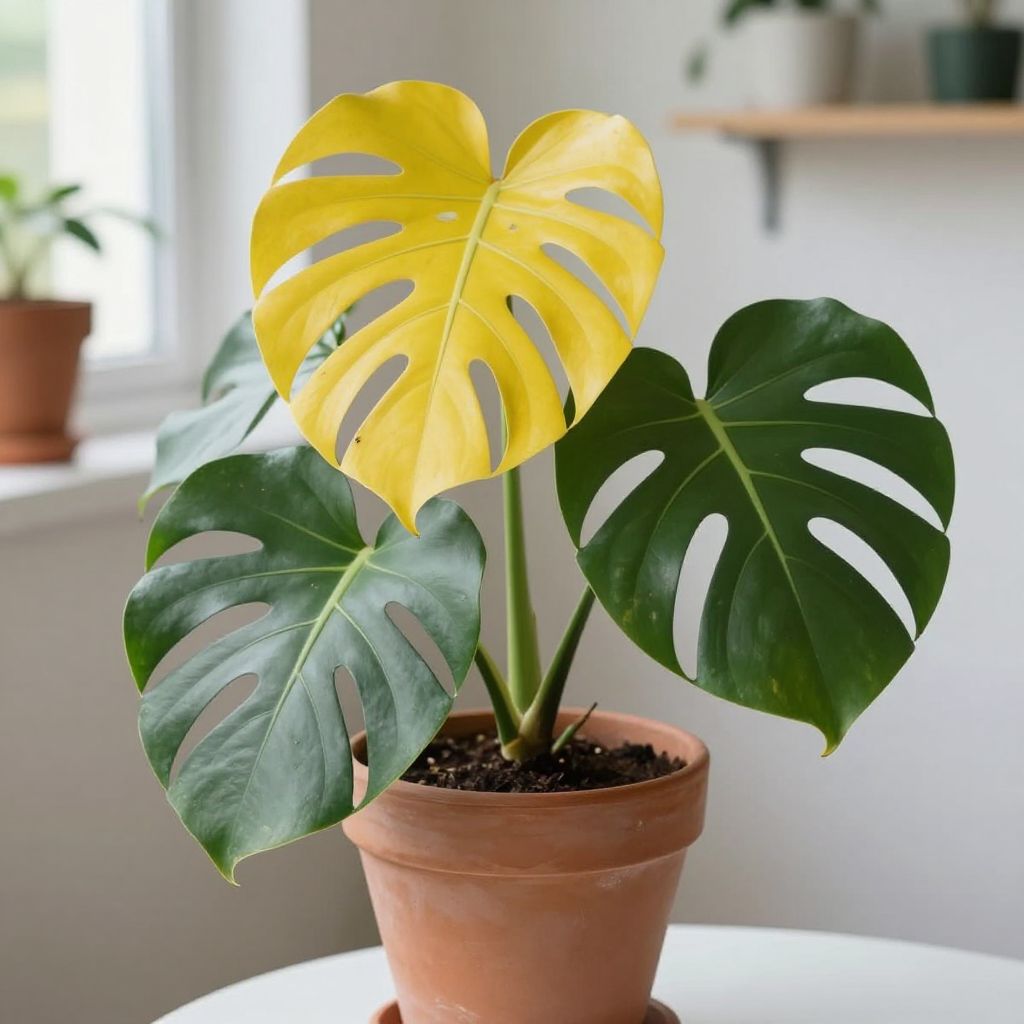
Why are my Monstera leaves turning yellow? In most cases, yellowing leaves are a sign that your Monstera is reacting to watering problems, poor drainage, too much direct sun, low light, pests, or normal aging. The key is to look at where the yellowing starts, how fast it spreads, and what changed in the plant’s care.
Monstera deliciosa and related Monstera types are tropical houseplants that prefer evenly moist, airy soil and bright, indirect light. Once you match those conditions more closely, new growth usually improves and existing yellow leaves help you pinpoint the problem.
Why are my Monstera leaves turning yellow?
Yellow Monstera leaves usually mean the roots, light, or watering routine are out of balance. The most common causes are overwatering, underwatering, compacted or soggy soil, insufficient light, nutrient issues, pests, or natural leaf aging. Check the pattern of yellowing first, then adjust care based on the plant’s conditions.
Start by reading the yellowing pattern
The way a leaf turns yellow gives you useful clues. Not every yellow leaf means the same thing, and the fix depends on whether the problem is at the bottom of the plant, across several leaves, or on new growth.
Common yellowing patterns and what they often mean
- Older, lower leaves yellow first: often normal aging, or a watering/drainage issue if it happens repeatedly.
- Several leaves yellow at once: usually overwatering, root stress, or a sudden change in light or temperature.
- Leaves yellow with brown, soft spots: often too much moisture, root rot, or leaf damage from cold.
- Pale yellow leaves with weak growth: can point to low light or nutrient deficiency.
- Yellowing with stippling, webbing, or sticky residue: check for pests.
Overwatering is the most common cause
Monstera roots need air as well as moisture. If the pot stays wet for too long, roots can struggle to absorb oxygen, and the leaves often turn yellow before the plant declines further.
Signs you may be overwatering
- Soil feels wet several days after watering
- Leaves are yellow and limp rather than crisp
- Stems feel soft near the soil line
- The pot has no drainage holes, or water sits in a saucer
- The plant smells sour or musty
How to fix it
- Stop watering until the top few inches of soil dry out.
- Empty any standing water from the saucer or cachepot.
- Check that the pot has drainage holes.
- If soil is dense or stays wet for a long time, repot into a chunkier indoor potting mix.
- Trim away any black, mushy roots if you find them during repotting.
Important: Do not “correct” yellow leaves by watering more often. That usually makes the problem worse.
Underwatering can also turn leaves yellow
Although overwatering is more common, a Monstera that dries out too much may also yellow, especially if the plant is rootbound or exposed to hot, dry indoor air.
Signs you may be underwatering
- Leaves look dull, droopy, or curled before yellowing
- Soil pulls away from the sides of the pot
- Pot feels very light soon after watering
- Leaf edges may turn brown and crispy
How to fix it
- Water thoroughly until excess drains from the bottom.
- Make sure the entire root ball is moistened, not just the surface.
- If water runs straight through, the mix may be too dry, compacted, or rootbound.
- Increase watering only when the top layer of soil has dried, not on a fixed calendar.
Light problems can make Monstera leaves yellow
Monstera does best in bright, indirect light. Too much direct sun can bleach or scorch leaves, while too little light can slow growth and cause older leaves to yellow and drop.
Too much sun
If the plant sits in harsh midday sun, leaves may yellow in patches, then develop brown, crispy areas. Move it a few feet back from a sunny window or filter the light with a sheer curtain.
Too little light
In low light, the plant may keep its leaves for a while, but growth becomes weak, internodes stretch, and lower leaves may yellow. Move it closer to a bright window with indirect light, or supplement with a grow light if needed.
For indoor Monsteras, east-facing light or a bright spot near a south- or west-facing window with filtered light often works well. Outdoor Monsteras in warm climates usually need dappled shade rather than full sun.
Soil and drainage matter more than many gardeners realize
Monstera roots prefer a loose, airy mix that drains well but still holds some moisture. Heavy garden soil or a dense potting mix can stay wet too long and lead to yellow leaves.
What good Monstera soil should do
- Drain freely after watering
- Hold enough moisture for a few days, not constantly soggy
- Allow air movement around the roots
When to repot
Repot if the plant is rootbound, the soil breaks down and stays wet, or water pools on top instead of soaking in. Choose a pot only one size larger, because an oversized pot can hold excess moisture.
What to look for in a mix
- Quality indoor potting mix
- Perlite or pumice for drainage
- Orchid bark or similar chunky material for airflow
If you are growing Monstera outdoors in a suitable climate, make sure the planting area drains well after rain. Yellowing can appear quickly if roots sit in heavy, waterlogged soil.
Nutrient issues can contribute to yellow leaves
A Monstera that has been in the same pot for a long time may use up available nutrients. Yellowing from nutrient stress is usually gradual and often shows up as paler overall growth rather than sudden collapse.
What nutrient-related yellowing may look like
- Older leaves fade first
- New leaves are smaller or lighter than usual
- Growth slows during the active growing season
How to correct it safely
- Feed lightly during active growth if the plant is otherwise healthy.
- Use a balanced houseplant fertilizer according to the label.
- Avoid heavy feeding on a stressed plant, especially one with wet soil or suspected root damage.
- Refresh old potting mix when repotting.
Tip: If the roots are unhealthy, fertilizer will not solve the problem. Fix drainage and root conditions first.
Yellow leaves can be a sign of pests
Spider mites, thrips, scale, and mealybugs can weaken Monstera leaves and cause yellow speckling, patchy fading, or general decline. Pests are more likely on plants in dry indoor air or on plants that have been stressed by poor light or watering.
What to check
- Undersides of leaves
- Leaf joints and stems
- New growth and unfurling leaves
- Sticky residue, fine webbing, or cottony clusters
What to do
- Isolate the plant from others.
- Wipe leaves and stems with a damp cloth.
- Remove heavily infested leaves if needed.
- Treat according to the pest you find, repeating as directed.
- Inspect nearby houseplants too.
Because pests can hide well, check the plant weekly for a few weeks after treatment. Early action is much easier than trying to recover a badly weakened Monstera.
Root rot and other disease problems
If yellowing is paired with soft stems, a sour smell, or black roots, root rot may be the issue. This usually follows chronic overwatering or poor drainage rather than appearing on its own.
What to do if you suspect root rot
- Remove the plant from its pot and inspect the roots.
- Healthy roots are usually firm and light-colored.
- Trim away mushy, dark, or foul-smelling roots with clean tools.
- Repot into fresh, airy mix and a clean pot with drainage holes.
- Water sparingly until new growth resumes.
Do not leave a rotting plant in wet soil hoping it will recover on its own. The earlier you intervene, the better the chance of saving it.
Natural aging is normal on Monstera
Sometimes a yellow leaf is simply an old leaf finishing its life cycle. This is especially common on the lowest leaves as the plant grows upward and focuses energy on new foliage.
How to tell normal aging from a problem
- Only one or two oldest leaves are affected
- The rest of the plant looks healthy
- New leaves are still emerging normally
- Yellowing happens slowly, not all at once
If the plant is otherwise healthy, you can remove the yellow leaf once it is mostly yellow or fully yellow. Use clean pruners or scissors and cut near the base of the petiole.
Seasonal and indoor care factors to keep in mind
Monstera care changes with the seasons, especially indoors. In cooler months, growth slows and the plant uses less water, so the same watering routine that worked in summer may become too much.
Adjust care through the year
- Spring and summer: growth is faster, so the plant may need more frequent watering and light feeding.
- Fall and winter: growth slows, so allow the soil to dry more between waterings.
- Dry indoor heat: can increase stress and pest pressure, especially near vents or radiators.
If your Monstera is near a drafty window, heater, or air conditioner, temperature swings can also contribute to yellowing. Aim for a stable indoor spot with bright, indirect light and consistent conditions.
A simple troubleshooting checklist
If you are not sure what is causing the yellow leaves, work through the plant step by step. This helps you avoid treating the wrong problem.
- Check whether the oldest leaves are yellowing first.
- Feel the soil several inches down, not just at the surface.
- Confirm the pot drains freely.
- Review light exposure over the last few weeks.
- Inspect for pests on both sides of the leaves.
- Look at roots if the plant seems soggy, smelly, or unstable.
How to prevent yellow Monstera leaves
Prevention is mostly about consistency. Monsteras prefer a balance: not too wet, not too dry, and not too much direct sun.
- Use a pot with drainage holes.
- Choose a chunky, well-draining potting mix.
- Water only when the top layer of soil has dried and the pot feels lighter.
- Give bright, indirect light.
- Rotate the plant occasionally so it grows evenly.
- Inspect regularly for pests.
- Repot when roots are crowded or the mix has broken down.
Once you correct the underlying issue, yellow leaves will not usually turn green again. Focus on the health of new growth, because that tells you whether your changes are working.
If you want to keep improving your Monstera care, it can help to read more about indoor plant watering basics and how to repot houseplants without stressing the roots.