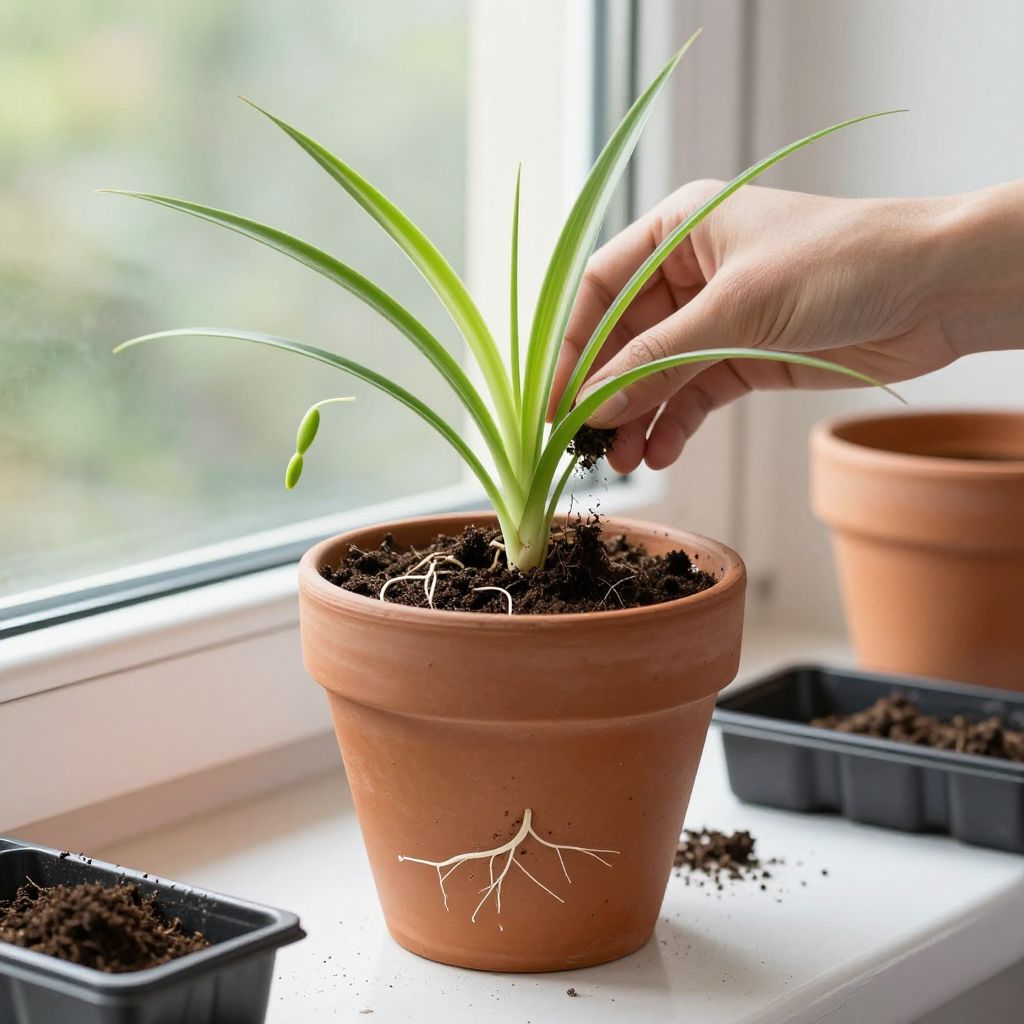
Do spider plants like to be root bound? Yes—up to a point. Spider plants (Chlorophytum comosum) often grow well when their roots fill the pot, and a slightly snug container can even encourage more baby plantlets. But if the roots become tightly packed for too long, growth slows, water drains poorly, and the plant can start to decline.
The key is learning the difference between “comfortably snug” and “too crowded.” With the right pot size, soil, and care, you can keep a spider plant healthy, leafy, and producing those classic arching runners without stressing the roots.
Do spider plants like to be root bound?
Spider plants tolerate and often prefer being a little root bound, especially as mature houseplants. A slightly crowded root system can help them focus on foliage and plantlet production, but severe root binding eventually causes stunted growth, dry soil that repels water, and reduced vigor. Repot when roots fill the container and the plant starts showing stress.
How to tell if a spider plant is root bound
A spider plant usually gives you clear signals before it becomes severely pot-bound. Check the plant by looking at the drainage holes, the pot’s moisture behavior, and the overall growth pattern.
Common signs
- Roots are circling tightly around the inside of the pot.
- Roots emerge from drainage holes or push the plant upward.
- Water runs straight through the pot or sits on top before soaking in.
- The plant dries out much faster than before.
- Leaves look smaller, pale, or less vigorous.
- Few new leaves or fewer plantlets appear during the growing season.
When root bound is helpful vs. harmful
- Helpful: slightly snug roots, healthy leaves, normal watering response, active growth.
- Harmful: dense root mass, poor water absorption, yellowing or browning leaves, slowed growth, root stress.
Why spider plants often do better slightly crowded
Spider plants are adaptable houseplants with fibrous roots that can handle a modestly tight pot. In many homes, they actually perform better when not over-potted. A pot that is too large can hold excess moisture for too long, which raises the risk of root rot.
The balance to aim for
Think “snug, not cramped.” A pot that is only one size larger than the root ball is usually enough when repotting. For many spider plants, moving up 1 to 2 inches in pot diameter is all they need.
When you should repot a spider plant
Even though spider plants can handle being root bound, they should not stay crowded forever. Repot when you see clear stress or when the plant has outgrown its container enough that care becomes difficult.
Good reasons to repot
- Roots are tightly packed and circling heavily.
- The plant is tipping over because the root mass is pushing it upward.
- Watering has become difficult because the mix dries out too quickly or too unevenly.
- Leaves are declining despite proper light and regular care.
- You want to divide the plant or refresh old potting mix.
Best timing
Repot during active growth if possible, usually in spring or early summer for indoor plants, when the plant can recover more quickly. If the spider plant is severely stressed, however, don’t wait for the “perfect” season.
How to repot a root-bound spider plant
Repotting a spider plant is straightforward, and a gentle approach helps prevent transplant shock. Use a pot with drainage holes and fresh, airy potting mix.
- Water the plant lightly a few hours before repotting so the root ball is easier to remove.
- Choose a pot 1 to 2 inches wider than the current one.
- Gently slide the plant out and loosen tightly coiled roots with your fingers.
- Trim only dead, mushy, or broken roots if needed; avoid heavy root pruning.
- Set the plant at the same depth it was growing before.
- Fill around the roots with fresh potting mix and press lightly to remove air pockets.
- Water thoroughly, then let excess water drain away completely.
Best soil for spider plants
Use a light, well-draining indoor potting mix. A standard houseplant mix works well, and you can improve drainage by adding perlite if the mix feels heavy. Spider plants dislike soggy soil, so avoid dense garden soil in containers.
- Good drainage: essential for healthy roots.
- Airy texture: helps roots breathe and prevents compaction.
- Drainage holes: always important in a spider plant pot.
What happens if you leave a spider plant root bound too long?
A mildly crowded spider plant may stay attractive for a while, but severe root binding eventually causes problems. The plant may stop growing, become harder to water, and produce fewer offsets. In extreme cases, roots can become so dense that they circle tightly and struggle to absorb moisture and nutrients.
Common problems caused by severe root binding
- Wilting even after watering.
- Brown leaf tips from stress, dry air, or salt buildup.
- Yellowing leaves from poor root function or exhausted mix.
- Reduced plantlet production.
- Root rot if the crowded mix stays wet too long.
If your plant is root bound and the potting mix has broken down, refreshing the soil is often as important as increasing pot size.
Watering a root-bound spider plant the right way
Root-bound plants dry out faster, so watering needs may change. The trick is to water deeply enough to moisten the root ball without leaving the plant sitting in excess moisture.
Practical watering tips
- Check the soil with your finger before watering.
- Water when the top 1 to 2 inches feel dry, adjusting for your home’s temperature and light.
- If water runs straight through, soak the pot slowly in stages so the mix can absorb moisture.
- Empty saucers after watering.
In warm, bright rooms, a root-bound spider plant may need water more often than one in cooler, lower light. Always adjust to your conditions rather than following a fixed schedule.
Light, feeding, and grooming for healthy growth
Root-bound or not, spider plants do best with bright, indirect light. Too little light can make a crowded plant weaker, while harsh direct sun can scorch the leaves.
Light conditions
- Best: bright, indirect light near an east- or north-facing window, or a few feet back from a sunny window.
- Too much sun: bleached or scorched leaf tips and patches.
- Too little light: sparse growth, limp leaves, fewer plantlets.
Fertilizer and salt buildup
Because root-bound plants have less soil volume, fertilizer salts can build up more quickly. Feed lightly during active growth if needed, and flush the pot occasionally with plain water to help reduce residue. If leaf tips brown, salt buildup may be part of the problem, especially if you fertilize often.
Pruning and cleanup
- Trim brown leaf tips with clean scissors if the damage is cosmetic.
- Remove dead or badly damaged leaves at the base.
- Cut back tired runners if you want the plant to focus on foliage.
Should you divide a root-bound spider plant?
Yes, division is often a smart option for an overcrowded spider plant. If the plant has become very large or the root ball is dense, dividing it can refresh the parent plant and give you new plants to grow.
How to divide
- Remove the plant from its pot.
- Gently tease the root mass apart into sections, making sure each section has roots and leaves.
- Pot each division into a small container with fresh mix.
- Water lightly and keep the divisions in bright, indirect light while they recover.
Division is especially useful if the center of the plant is crowded, the outer leaves are sprawling, or you want to reset an older specimen without moving it into a much larger pot.
Common mistakes to avoid
Spider plants are forgiving, but a few common errors can make root-bound plants struggle faster than necessary.
- Using an oversized pot: this can keep soil wet too long and increase rot risk.
- Repotting into heavy soil: compacted mix suffocates roots.
- Ignoring drainage: no drainage holes means standing water and root damage.
- Overfertilizing: salts can build up in a small root zone.
- Waiting until the plant is collapsing: repot earlier if growth slows and watering becomes difficult.
Indoor vs. outdoor spider plants
Most spider plants are grown indoors, but in warm climates they can be grown outdoors in containers or as seasonal plants. Outdoor plants may grow faster and fill pots sooner because of stronger light, warmth, and rain exposure.
Outdoor container care
- Use a sheltered spot with bright shade or filtered light.
- Check pots more often after hot weather or windy days.
- Make sure the container drains freely after rain.
- Bring plants indoors or protect them if temperatures drop below what your local conditions allow.
Because climate varies so much, outdoor spider plant care should always be adjusted to your local weather, rainfall, and seasonal temperature swings.
Quick answer: how root bound is too root bound?
A spider plant is “too root bound” when the roots are so crowded that the plant can no longer take up water and nutrients efficiently. If the pot dries out extremely fast, roots are circling heavily, or the plant is declining despite proper light and care, it is time to repot or divide.
Conclusion: the best approach for spider plants
Spider plants do like being a little root bound, but not indefinitely. Let them stay snug enough to feel secure, then repot or divide when growth slows, watering becomes difficult, or roots are clearly packed tight.
If you want to keep your plant thriving, check the roots, refresh the potting mix when needed, and move up only one pot size at a time. For more practical houseplant care, you may also enjoy reading about how to repot houseplants without shocking them and the best potting mix for indoor plants.