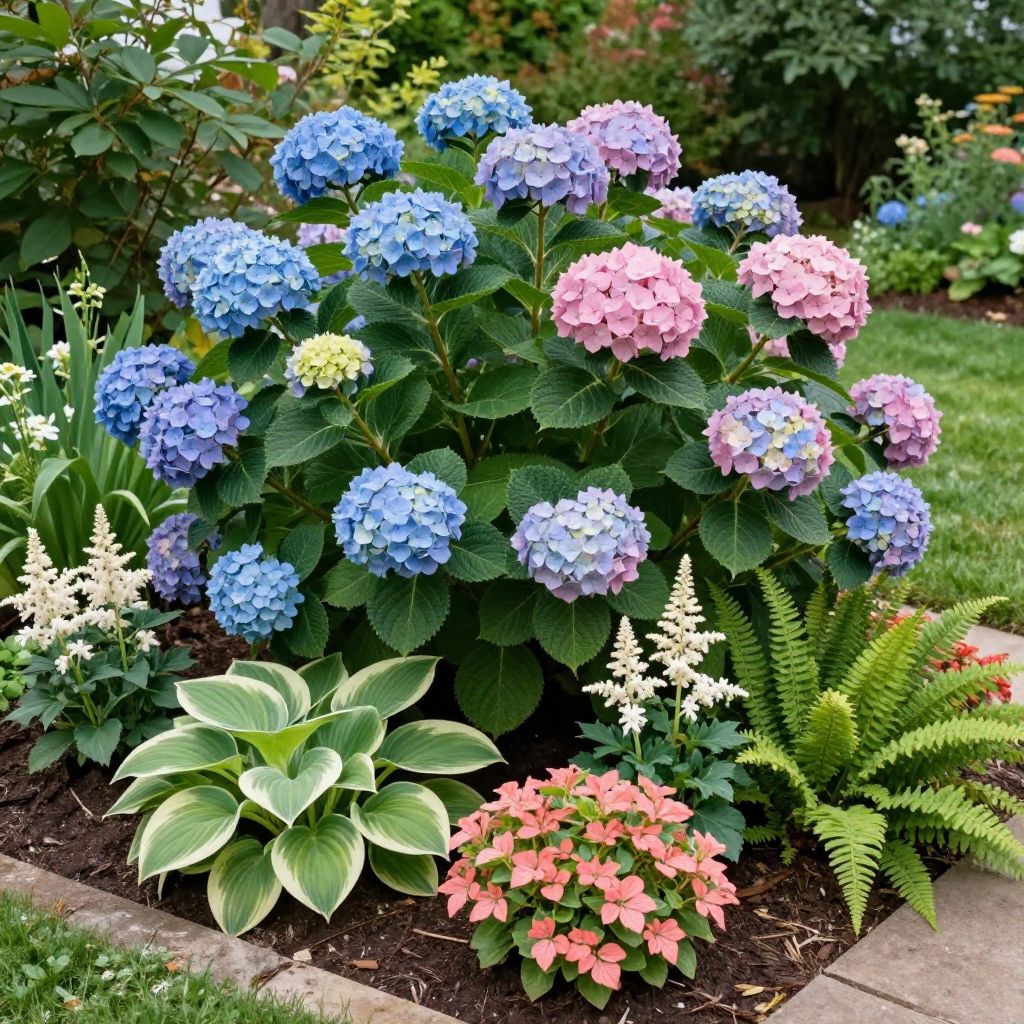
What should you plant with hydrangeas so the whole bed looks full, balanced, and healthy? The best companions are plants that like similar light, moisture, and soil conditions, while also adding contrast in texture, bloom time, and color.
Choose companions that won’t crowd hydrangeas, compete too aggressively for water, or bake the root zone. With the right mix, you can create a layered border that looks good from spring through fall and is easier to maintain than a bed packed with mismatched plants.
What to plant with hydrangeas?
The best plants to grow with hydrangeas are shade-tolerant perennials, shrubs, and ground covers that prefer evenly moist, well-drained soil and partial sun. Good choices include hostas, ferns, astilbe, heuchera, Japanese forest grass, boxwood, and spring bulbs. Pick companions that match your hydrangea’s light and water needs.
Best companion plants for hydrangeas
Perennials that add texture and color
Perennials are often the easiest answer to what to plant with hydrangeas because they fill space without overwhelming the shrub. Look for plants with foliage or flowers that contrast with the large hydrangea blooms.
- Hosta – Excellent for part shade and moist soil. Their broad leaves create a soft, layered look under hydrangeas.
- Astilbe – Feathery flower plumes add a lighter texture and bloom in partial shade.
- Heuchera (coral bells) – Colorful foliage in purple, bronze, lime, or silver gives season-long contrast.
- Ferns – Great for woodland-style plantings and shaded beds with consistent moisture.
- Japanese forest grass (Hakonechloa macra) – Arching leaves soften the base of hydrangeas and move nicely in the breeze.
Shrubs that pair well in mixed borders
If you want structure around hydrangeas, small shrubs can anchor the design. Choose shrubs that stay in proportion and don’t shade hydrangeas too heavily as they mature.
- Boxwood – Useful for formal edging or low evergreen structure.
- Spirea – Works in sunnier spots if your hydrangea also gets enough light.
- Inkberry holly (Ilex glabra) – A good evergreen option for damp, acidic soils in the right climate.
- Sweetspire (Itea virginica) – A strong choice for moist sites and seasonal interest.
Ground covers and edging plants
Ground covers help suppress weeds and keep the bed looking finished, but they should stay low so they do not crowd the hydrangea’s root zone.
- Lamium – Useful in shade, though it spreads, so keep it controlled.
- Ajuga – Low and colorful, but best where it won’t run into paths or lawns.
- Sweet woodruff – A classic shade ground cover for woodland-style beds.
- Liriope – Tolerates a range of conditions and gives a neat edging effect.
Bulbs for seasonal interest
Bulbs are a smart companion because they bloom before hydrangeas leaf out or flower, then disappear as the hydrangea fills in. That gives you color without long-term crowding.
- Tulips
- daffodils
- crocus
- alliums
- snowdrops
How to match companions to hydrangea growing conditions
Before you plant anything, check the type of hydrangea you have and the light in your site. Most hydrangeas do best in morning sun and afternoon shade, or bright filtered light, though some types tolerate more sun in cooler climates and more shade in hot regions.
Soil and moisture
Hydrangeas prefer soil that holds moisture but drains well. The best companion plants should tolerate the same conditions, especially if your garden dries out quickly in summer.
- Work in compost to improve soil structure.
- Avoid planting in heavy clay unless drainage is improved.
- Mulch to help keep roots cool and evenly moist.
- Choose plants that do not need dry, sandy conditions if your hydrangeas are watered regularly.
Sun exposure
Light is one of the biggest factors in deciding what to plant with hydrangeas. A bed that gets morning sun and afternoon shade can support a wider range of companions than a hot, full-sun border.
- Part shade: hostas, ferns, astilbe, heuchera, Japanese forest grass.
- Brighter sun: some hydrangeas, spirea, daylilies, ornamental grasses, and sun-tolerant perennials.
- Deep shade: fewer hydrangeas perform well here, so focus on shade-loving companions and make sure the shrub still gets enough light to bloom.
How to design a hydrangea planting bed
A good hydrangea bed usually works best in layers: tall shrubs in back or center, medium perennials around them, and low edging plants or bulbs at the front. This keeps the planting full without blocking blooms.
- Place the hydrangea first and leave enough room for its mature width.
- Group companion plants in odd numbers for a natural look.
- Put taller companions behind or beside the hydrangea, not in front of it.
- Use repeated plants to create rhythm instead of mixing too many species.
- Leave open soil around the main stem so air can move and watering is easier.
As a rule, avoid crowding. Hydrangeas need space for airflow, and overly dense plantings can increase disease pressure and make pruning and deadheading harder.
Plants to avoid near hydrangeas
Not every attractive plant is a good neighbor. Some species compete too strongly, need very different conditions, or become too large for the space.
- Drought-loving plants such as lavender, rosemary, and many succulents.
- Very aggressive spreaders that can smother the hydrangea root zone.
- Large trees or shrubs that create deep shade and root competition.
- Plants that need sharp drainage and dry soil if your hydrangea bed stays evenly moist.
Also avoid planting too close to the base of the shrub. Even if a plant is compatible, it still needs enough root space and air circulation to stay healthy.
Planting hydrangea companions the right way
Good planting technique matters as much as plant choice. Most companion plants establish better when the bed is prepared before planting and watered in thoroughly.
- Clear weeds and grass from the planting area.
- Loosen the soil and mix in compost if needed.
- Check drainage by watering the area and seeing how quickly it absorbs.
- Dig holes wide enough for the root balls, not excessively deep.
- Set plants at the same depth they were growing in their pots.
- Backfill, firm lightly, and water well.
- Apply 2 to 3 inches of mulch, keeping it a few inches away from stems.
Do not bury the hydrangea crown or pile mulch against the stems. That can lead to rot and pest problems over time.
Seasonal care for mixed hydrangea beds
Spring
In spring, remove winter-damaged stems, refresh mulch, and divide or replant any perennials that have outgrown their space. This is also a good time to spot where the bed needs more balance or fewer crowded plants.
Summer
During warm weather, focus on consistent moisture. Hydrangeas and many of their companions may wilt in afternoon heat, especially in sandy soil or during dry spells.
- Water deeply when the top few inches of soil begin to dry.
- Water at the base, not over the foliage, when possible.
- Check mulch coverage so roots stay cool.
Fall
Fall is a good time to tidy spent perennials, plant bulbs, and assess whether any shrubs need more room. Leave some hydrangea flower heads if you like their winter look and if the variety benefits from that protection in your climate.
Winter
In colder regions, avoid heavy pruning late in the season unless your hydrangea type calls for it. Keep the root zone mulched, and don’t let fallen leaves mat down too tightly around the crown.
Common problems and how to fix them
Hydrangea looks crowded or weak
If the shrub is losing vigor, nearby plants may be too close or too large. Thin out surrounding perennials, move aggressive spreaders, and prune back competing shrubs if needed.
Leaves yellow or plants decline in wet soil
Poor drainage is often the issue. Improve soil structure with organic matter, avoid overwatering, and consider relocating plants if the site stays soggy after rain.
Few flowers on the hydrangea
Too much shade, improper pruning, or winter damage can reduce blooms. Make sure the hydrangea gets the right amount of light for its type and that companion plants are not shading it out.
Fungal disease or leaf spots
Dense plantings can trap humidity. Space plants properly, water at soil level, remove diseased leaves, and prune for better airflow.
Simple companion combinations to try
If you want an easy starting point, use plant combinations that suit common hydrangea conditions and look good together right away.
- Part-shade cottage look: hydrangea, hosta, astilbe, and spring bulbs.
- Woodland look: hydrangea, fern, heuchera, and Japanese forest grass.
- Formal border: hydrangea, boxwood edging, and low seasonal bulbs.
- Soft layered border: hydrangea, sweetspire, and low ground cover.
Conclusion
When deciding what to plant with hydrangeas, match the companions to the shrub’s light, moisture, and soil needs first, then choose plants that add contrast without crowding. Start with one bed section, group a few compatible plants, and adjust the spacing as the garden grows.
If you want more ideas for shaping a healthy mixed border, you may also enjoy reading about how to grow hostas and astilbe care and garden uses.