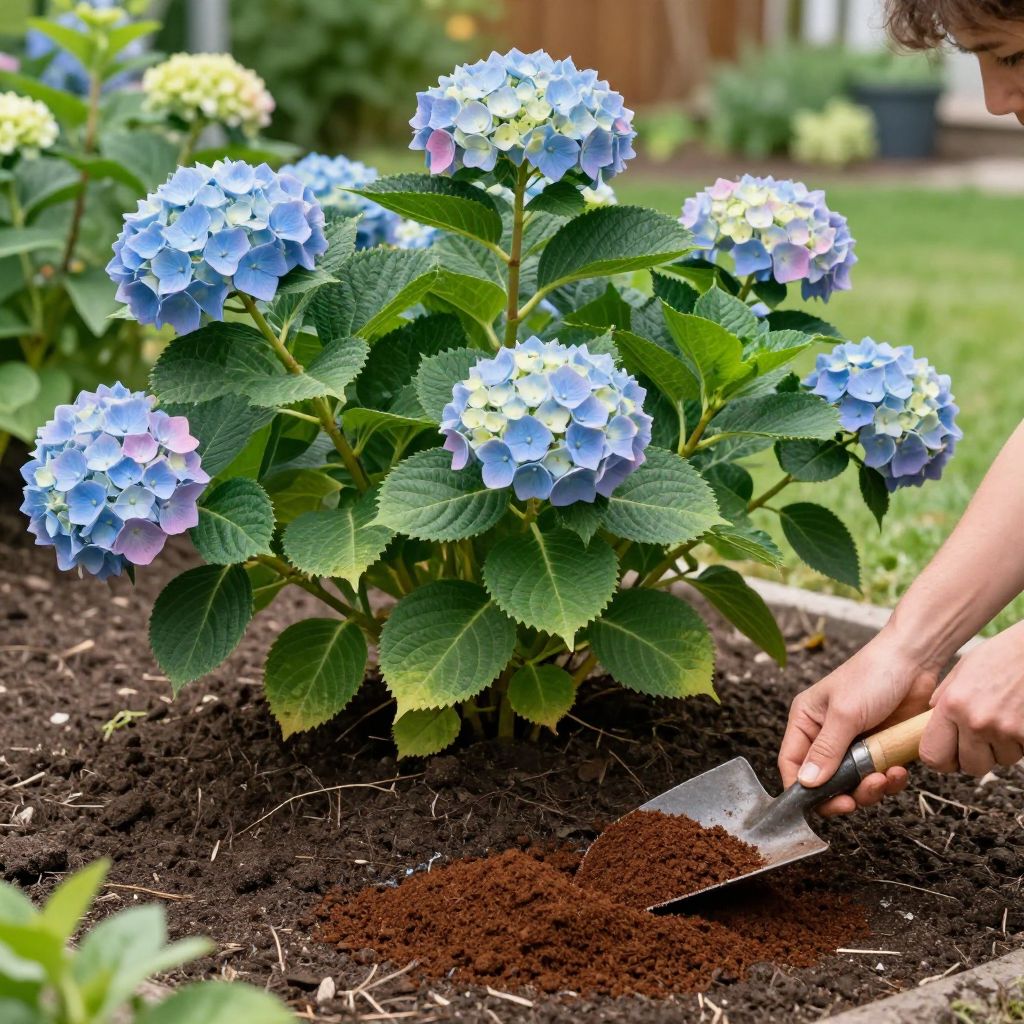
Do hydrangeas like coffee grounds? They can, but only when you use them the right way. Coffee grounds are not a magic fertilizer, and too much can create more problems than benefits for hydrangeas.
Used in moderation, coffee grounds can help improve soil structure and add a small amount of organic matter. The key is to treat them as a light soil amendment or compost ingredient, not as a stand-alone feed.
Do hydrangeas like coffee grounds?
Yes, hydrangeas can benefit from coffee grounds in small amounts, especially when the grounds are composted or mixed into soil with plenty of other organic material. They are best used to improve texture and add organic matter, not to “feed” hydrangeas heavily or change flower color on their own.
How coffee grounds affect hydrangeas
Used properly, coffee grounds can support healthy soil around hydrangeas. Used too heavily, they can compact, repel water when dry, or create an uneven soil surface that slows growth.
What coffee grounds actually do
- Add organic matter as they break down.
- Help feed soil microbes when mixed into compost.
- Can slightly improve the feel of poor soil over time.
- Do not replace balanced fertilizer.
What they do not do
- They do not reliably turn hydrangea blooms blue or pink by themselves.
- They do not correct major soil pH problems quickly.
- They are not a complete nutrient source for established shrubs.
If your hydrangea already grows in rich, well-drained soil, coffee grounds may make only a small difference. If the soil is thin, sandy, or low in organic matter, they can be a useful addition when handled carefully.
Best ways to use coffee grounds around hydrangeas
The safest and most effective approach is to compost coffee grounds first. Composting dilutes their strength, reduces clumping, and makes nutrients more available to plant roots.
1. Add grounds to compost
This is the best option for most gardeners. Coffee grounds are considered a “green” compost ingredient, so balance them with dry “brown” materials such as leaves, straw, shredded cardboard, or paper.
- Mix grounds into the compost pile instead of dumping them in one spot.
- Keep the pile well-aerated so it does not become dense.
- Use finished compost around hydrangeas as a top dressing.
2. Apply a thin surface layer
If you do not compost, you can sprinkle a very thin layer of used coffee grounds around the base of hydrangeas and lightly mix them into the top inch of soil.
- Use only a light dusting, not a thick blanket.
- Keep grounds a few inches away from the main stem.
- Water afterward so they do not dry into a crust.
3. Blend with mulch or leaf mold
Mixing coffee grounds with shredded leaves, bark mulch, or leaf mold helps prevent compaction and makes them easier for soil organisms to break down.
Avoid piling coffee grounds directly against the crown or stems. That can trap moisture, encourage rot, and attract pests.
How much coffee grounds is too much?
For hydrangeas, less is usually better. A thin layer once in a while is enough for most gardens, especially if your soil already contains compost or mulch.
Simple rule of thumb
- Use coffee grounds as a small part of your soil-improvement routine, not a main amendment.
- Think in terms of thin layers, not heavy applications.
- If the soil surface looks dark, sticky, or crusted, you have used too much.
Too many grounds can create a dense surface layer that sheds water or slows air movement into the soil. Hydrangeas prefer evenly moist but well-drained soil, so anything that interferes with drainage can work against them.
Do coffee grounds change hydrangea flower color?
Coffee grounds are sometimes suggested as a way to make hydrangeas blue, but the effect is unreliable and usually too small to matter. Flower color is influenced mainly by the plant type and the soil’s pH and aluminum availability.
What really affects bloom color
- Soil pH plays a major role in many bigleaf hydrangeas.
- Aluminum availability in the soil can affect blue tones.
- Not all hydrangeas change color at all.
If you want to influence bloom color, start with a soil test. That gives you a much clearer picture than relying on coffee grounds alone. Even then, results vary by hydrangea species, cultivar, and local soil conditions.
When coffee grounds help hydrangeas most
Coffee grounds are most useful when your hydrangea is growing in soil that needs more organic matter. They are especially helpful in beds that are light, sandy, or depleted, as long as you use them sparingly.
Good situations for coffee grounds
- New beds that need better soil structure.
- Compost piles that need a nitrogen-rich ingredient.
- Mulched borders where you want to recycle kitchen waste responsibly.
Less useful situations
- Clay soil that already drains poorly.
- Containers with limited root space.
- Hydrangeas showing signs of stress from overwatering or root rot.
In containers, coffee grounds can be risky if used heavily because potting mix has limited airflow. For potted hydrangeas, composted organic matter and a quality potting mix are usually better choices.
How to apply coffee grounds safely
If you want to use coffee grounds around hydrangeas, follow a simple, cautious method. This keeps the soil healthy and avoids the common mistakes that lead to poor growth.
- Collect used coffee grounds and let them cool and drain.
- Mix them into compost, or prepare a very thin top dressing.
- Spread them in a narrow ring under the outer canopy, not against the stem.
- Lightly work them into the top layer of soil if the soil is open and crumbly.
- Water the area well so the grounds settle into the soil.
If you mulch hydrangeas, apply coffee grounds before mulch or mix them into the mulch layer lightly. This helps prevent crusting and keeps the surface more breathable.
Common mistakes to avoid
Most problems come from overdoing it. Coffee grounds are useful, but hydrangeas still need balanced care: moisture, drainage, light, and the right soil conditions.
- Don’t use a thick layer of grounds on the soil surface.
- Don’t replace fertilizer with coffee grounds.
- Don’t bury fresh grounds deeply around roots.
- Don’t let grounds sit in a wet clump near the crown.
- Don’t assume grounds will fix poor drainage.
If you notice mold on a heavy layer of grounds, scrape off the excess and improve airflow. Mold on decomposing organic matter is not always dangerous, but thick, wet layers can stress the plant and invite trouble.
Hydrangea care basics that matter more than coffee grounds
Healthy hydrangeas usually respond more to good planting and care than to any single soil amendment. If your shrub is struggling, check these basics first.
Soil and drainage
Hydrangeas do best in moist, well-drained soil rich in organic matter. If the site stays soggy after rain, improve drainage before adding any amendment.
Watering
Keep the soil evenly moist, especially during hot weather and while the plant is establishing. Water deeply when needed rather than giving frequent shallow sprinkles.
Sunlight
Most hydrangeas prefer morning sun and afternoon shade, though some types tolerate more sun in cooler climates. Too much intense sun can cause wilting, even in moist soil.
Mulching
A 2- to 3-inch layer of organic mulch helps conserve moisture and protect roots. Keep mulch a few inches away from the stems.
Pruning
Pruning depends on the hydrangea type. Some bloom on old wood, some on new wood, and some on both. If you prune at the wrong time, you may remove next season’s flower buds.
Troubleshooting hydrangeas after using coffee grounds
If your hydrangea looks worse after you add grounds, the issue is usually not the grounds alone. It is often a sign that the layer was too thick, the soil is too wet, or the plant already had a root problem.
Wilting leaves
Check soil moisture first. Wilting can come from heat, drought, or root stress. If the soil is wet and the plant still wilts, drainage may be poor.
Yellowing leaves
Yellow leaves can point to overwatering, poor drainage, or nutrient imbalance. Coffee grounds are not a reliable fix for any of these problems.
Poor flowering
Low light, incorrect pruning, winter bud damage, or too much nitrogen can all reduce blooms. Heavy use of coffee grounds may contribute to lush leaves with fewer flowers if the soil becomes too nitrogen-heavy.
Should you use fresh or used coffee grounds?
Used coffee grounds are the better choice for hydrangeas. Fresh grounds are more acidic and may be too strong for direct use around roots, while used grounds are gentler and easier to mix into compost or soil.
- Used grounds are safer for garden use.
- Fresh grounds are better added to compost first.
- Always avoid thick, wet clumps of either one.
Final take: are coffee grounds worth using?
Yes, coffee grounds can be a helpful soil amendment for hydrangeas when used lightly and thoughtfully. They work best as part of a broader soil-care routine that includes compost, mulch, proper watering, and good drainage.
If you want the best results, start with a soil test, then add coffee grounds only in small amounts or through compost. For more plant care ideas, it also helps to read up on hydrangea pruning and mulching so you can support healthy growth all season long.