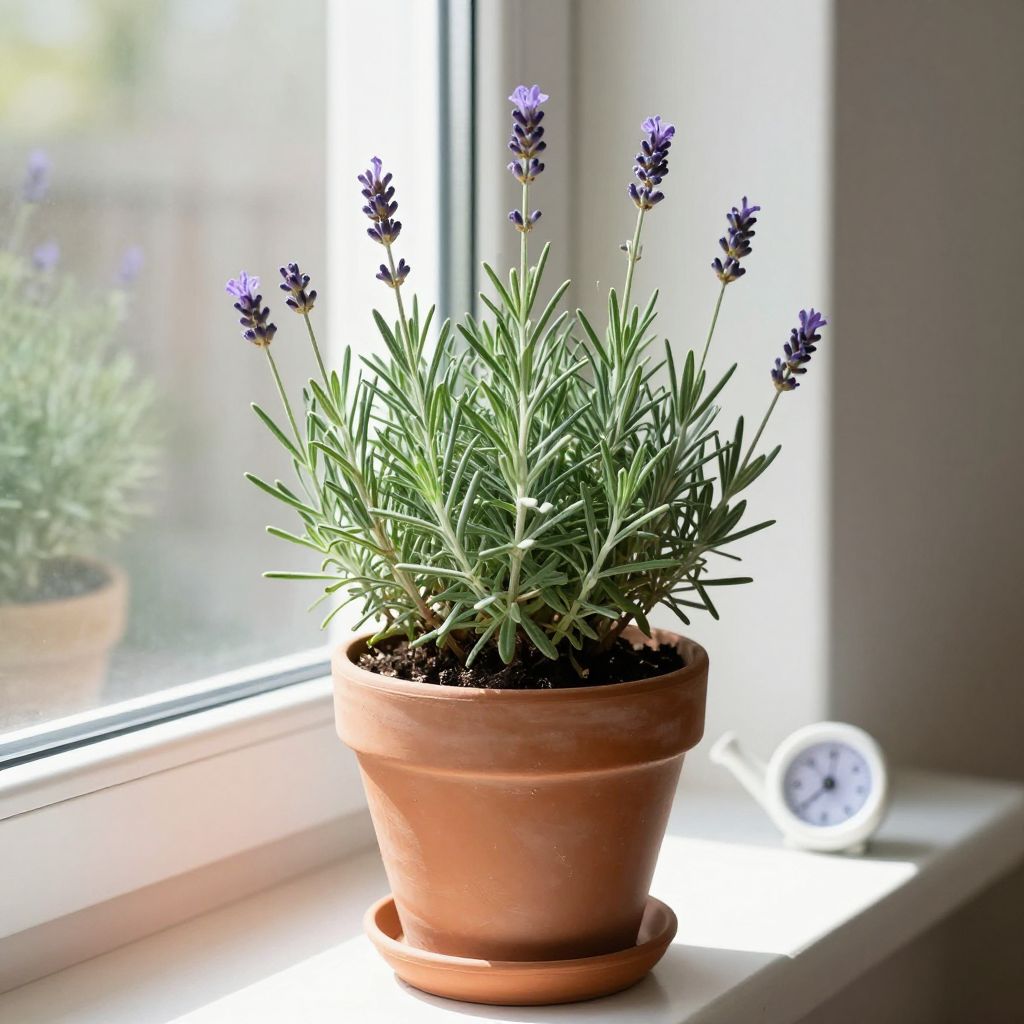
Can lavender grow inside? Yes, lavender can live indoors, but it is much harder to keep happy than many houseplants. The main challenge is giving it enough direct sun, excellent drainage, and cool, dry conditions so the roots do not stay wet.
If you want indoor lavender to thrive, think “bright, airy, and sparing with water.” With the right pot, soil mix, and placement, you can keep a healthy plant for months or longer, and sometimes even get flowers.
Can lavender grow inside?
Lavender can grow inside if you give it at least 6 hours of strong direct light, very fast-draining soil, and a pot with drainage holes. It usually struggles in dim rooms, humid corners, or heavy potting mix. Indoor lavender is best treated as a bright, drought-tolerant container plant, not a typical leafy houseplant.
What indoor lavender needs to survive
Light is the biggest factor
Lavender is a sun-loving Mediterranean herb. Indoors, it needs the brightest spot you have, usually a south-facing window or a very strong grow light.
- Best case: 6 to 8 hours of direct sun through a clear window.
- If natural light is weak: Use a full-spectrum grow light placed close to the plant.
- Rotate the pot: Turn it every week so growth stays even.
If the stems stretch, lean toward the window, or look pale, the plant is not getting enough light.
Drainage matters more than rich soil
Lavender roots dislike wet, compacted soil. Indoors, the safest mix is one that drains quickly and does not hold water for long.
- Use a pot with at least one drainage hole.
- Choose a gritty, airy potting mix made for cacti, succulents, or herbs.
- If needed, mix in extra perlite, pumice, or coarse sand to improve drainage.
A heavy, moisture-retentive mix is one of the fastest ways to lose indoor lavender to root rot.
Temperature and airflow help a lot
Lavender prefers moderate temperatures and good air movement. It often does better in a cool room than in a warm, stagnant one.
- Keep it away from radiators, heat vents, and cooking steam.
- Avoid crowded shelves with no airflow.
- Cooler nights are usually better than consistently warm indoor temperatures.
How to plant lavender indoors
Choose the right pot
Start with a pot that is only slightly larger than the root ball. Oversized containers stay wet too long, which increases the risk of root problems.
- Select a pot with drainage holes.
- Use a container made of terracotta or another porous material if possible.
- Fill it with a fast-draining mix, not standard dense houseplant soil.
- Set the plant at the same depth it was growing before.
- Water lightly to settle the mix, then let excess water drain away fully.
Do not let the pot sit in a saucer of water. Empty runoff after watering.
Can you grow lavender from seed indoors?
You can, but it is slower and less predictable than starting with a young plant or a cutting. Seed-grown lavender often takes longer to become sturdy enough for indoor conditions.
If you are a beginner, a small nursery plant is usually the easier choice. It gives you a better chance of success because the plant is already established.
How to water indoor lavender correctly
Overwatering is the most common reason indoor lavender fails. The soil should dry out between waterings, and the exact timing depends on light, pot size, room temperature, and season.
Use the soil, not the calendar
Check the pot before watering. Insert a finger into the top 1 to 2 inches of soil; if it still feels moist, wait.
- Water thoroughly when the mix is dry enough.
- Let water run through the drainage holes.
- Discard excess water from the saucer or cachepot.
In winter or low light, indoor lavender usually needs less water than during active growth. In bright, warm conditions, it may dry faster.
Signs you are watering too much
- Yellowing lower leaves
- Drooping despite moist soil
- Soft, dark stems near the base
- Musty smell from the pot
Signs it is too dry
- Leaves curling or looking crisp
- Flower buds drying before opening
- Potting mix pulling away from the sides of the container
Can lavender bloom indoors?
Yes, lavender can bloom indoors, but flowering is less reliable than outdoors. The plant usually needs strong light, a cool enough room, and a period of steady growth before it sets buds.
If your plant is healthy but not blooming, the problem is often insufficient light. A grow light can make a major difference, especially in winter or in homes with shaded windows.
How to encourage flowers
- Give the brightest light available.
- Avoid overfertilizing, which can push leafy growth instead of flowers.
- Keep the plant from staying soggy.
- Prune lightly after flowering to keep it compact.
Do not expect constant indoor blooms. Even a well-kept plant may flower only at certain times of year.
Pruning and shaping indoor lavender
Pruning helps indoor lavender stay compact and less woody. Without trimming, it can become leggy and sparse, especially when light is limited.
How to prune safely
- Wait until after flowering, if the plant has bloomed.
- Trim back soft growth lightly, removing spent flower stems.
- Aim to shape the plant without cutting deep into old woody stems.
- Remove dead or damaged growth as needed.
Avoid cutting into bare brown wood with no leaves. Lavender may not resprout well from very old stems.
Fertilizer, compost, and feeding
Lavender does not need rich feeding indoors. Too much fertilizer can reduce fragrance, increase weak growth, and make the plant more prone to problems.
- Use a light hand with feeding, especially in winter.
- If you repot annually or refresh the mix, you may need little or no extra fertilizer.
- Avoid heavy compost-rich mixes that hold too much moisture indoors.
If growth is weak and the plant is in strong light, a very mild, balanced feed during active growth may help, but only if the plant is otherwise healthy.
Common indoor problems and how to fix them
Leggy growth
Long, stretched stems usually mean the plant needs more light. Move it closer to a brighter window or add a grow light.
Root rot
This is one of the biggest risks for indoor lavender. If the plant wilts while the soil stays wet, stop watering, improve drainage, and consider repotting into a drier, grittier mix if roots are still salvageable.
Leaf drop
Lavender may drop leaves if it is too dark, too wet, or stressed by sudden temperature changes. Check light and watering first.
Pests
Indoor lavender can occasionally attract aphids, spider mites, or whiteflies, especially if airflow is poor.
- Inspect stems and leaf undersides regularly.
- Rinse small infestations off with water.
- Isolate the plant if pests spread.
- Improve air movement and avoid overwatering.
Can you move indoor lavender outside?
Yes, and many gardeners do better by moving lavender outdoors during warm seasons. Outdoor conditions usually provide stronger sun and better airflow than most homes.
If you move it outside, do so gradually so the plant can adjust to stronger light and wind. Bring it back inside before cold weather if your climate is not suitable for overwintering outdoors.
Best indoor care routine for lavender
- Place it in the sunniest window you have.
- Use a pot with drainage holes.
- Grow it in a gritty, fast-draining mix.
- Water only when the top layer of soil dries.
- Keep it away from heat vents and humid, stagnant corners.
- Trim lightly to maintain shape.
- Watch closely for pests and root problems.
When indoor lavender is not the best choice
Lavender may be a poor indoor plant if your home is dim, very warm, or humid, or if you tend to water houseplants often. In those conditions, it is usually easier to grow lavender on a sunny patio, balcony, or garden bed.
If you want a fragrant herb for indoor growing and your light is limited, another plant may be a better fit. Lavender rewards careful conditions, but it is not forgiving of neglect in the wrong way.
So, can lavender grow inside? Yes, if you can provide intense light, sharp drainage, and restrained watering. Start with a small pot, place it in your brightest window, and check the soil before every watering. For more practical herb-growing guidance, you may also want to read about growing herbs indoors and lavender plant care.