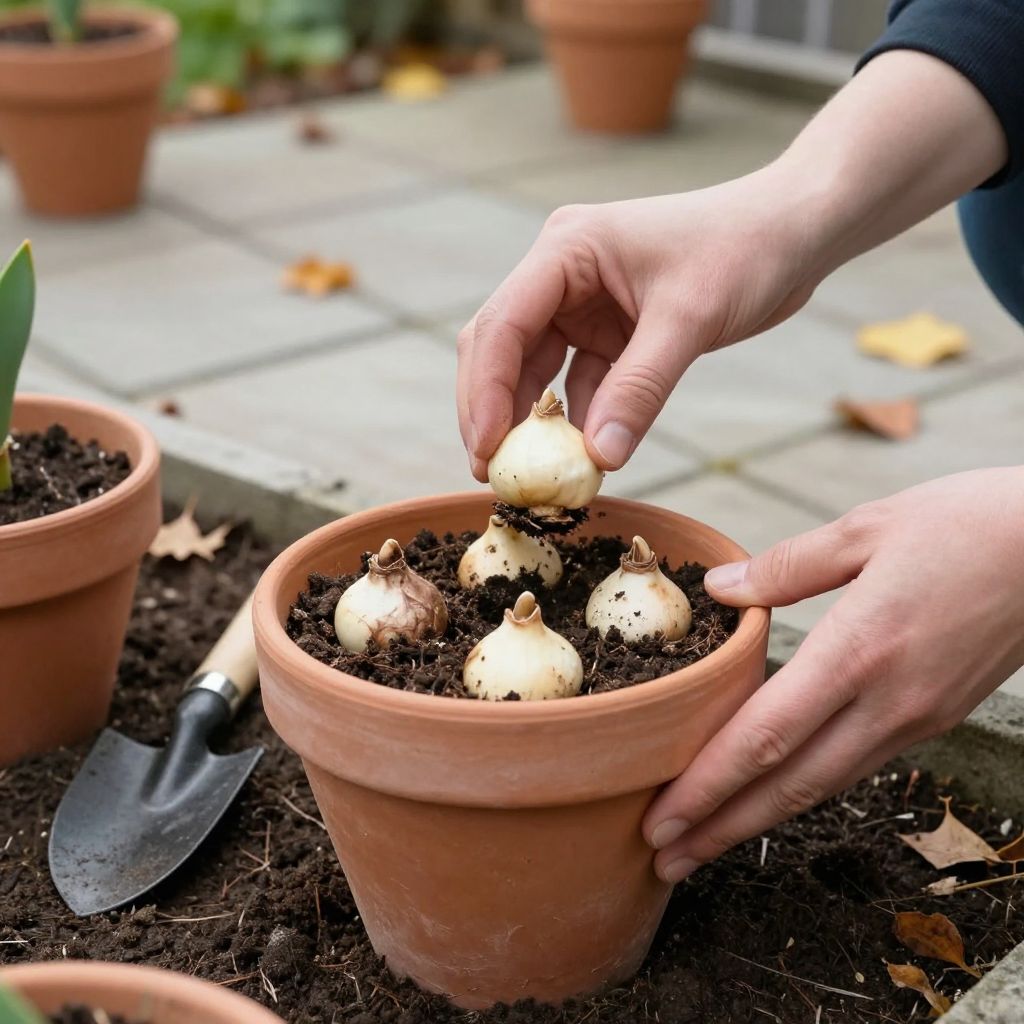
Wondering when to plant tulip bulbs in pots so they bloom well and don’t rot before spring? Timing matters more in containers than in the ground, because potting mix warms and cools faster, and bulbs are more exposed to wet weather.
The good news is that tulips are very manageable in pots if you plant them at the right time, use a free-draining mix, and give them enough cold exposure. With a little planning, you can enjoy a strong spring display on a patio, balcony, or doorstep.
When to plant tulip bulbs in pots?
Plant tulip bulbs in pots in autumn, after the weather has cooled but before the potting mix freezes hard. In many climates, that means roughly 6 to 8 weeks before the ground would freeze, or when daytime temperatures are consistently cool. The goal is to let roots form before winter while avoiding early sprouting in warm conditions.
Why timing matters for potted tulips
Tulips need a cold period to flower properly, but they also need time to root before winter. If you plant too early, warm soil can trigger premature growth. If you plant too late, the bulbs may not establish enough roots and may bloom poorly or not at all.
Containers make timing even more important because pots cool and warm faster than garden beds. That means you want to plant when the weather is cool enough to encourage rooting, but not so late that the bulbs sit in cold, inactive soil for months without settling in.
General seasonal window
- Cool temperate climates: usually autumn, often from early to mid-fall.
- Milder climates: later autumn or early winter may be better, as long as the bulbs still get a proper chill period.
- Cold climates: plant before the soil becomes difficult to work, but after the worst heat has passed.
If you are unsure of the exact month in your area, use the local first frost date and the average time your soil stays workable as your guide. Tulips in pots should be planted while conditions are cool, not during late summer heat.
How to choose the right pot and compost
A good container is just as important as the planting date. Tulip bulbs dislike sitting in soggy compost, so drainage should be excellent from the start.
Best pot features
- Drainage holes: essential.
- Depth: at least 25 to 30 cm deep for most tulips.
- Width: wide enough to space bulbs comfortably, or to plant densely for a fuller display.
- Material: frost-resistant pots are best in cold climates.
Best growing medium
Use a high-quality potting mix that drains well. You can improve it with a little grit or coarse sand if it tends to hold too much water. Avoid heavy garden soil in containers, because it compacts easily and can suffocate bulbs.
A small amount of compost can be useful, but keep the mix open and airy. The main priority is drainage, not rich fertility. Tulips perform better in a potting mix that stays moist but never waterlogged.
How to plant tulip bulbs in pots step by step
Planting is straightforward, but a few details make a big difference. Set the bulbs at the right depth, keep them upright, and avoid crowding them into wet compost.
- Choose a pot with drainage holes and fill it partway with potting mix.
- Place the bulbs with the pointed end up, if visible.
- Plant them about 2 to 3 times the bulb’s height deep, or follow the depth recommended for the type you are growing.
- Space bulbs close enough for a full display, but not touching unless you are intentionally creating a dense layered look.
- Cover with compost and firm gently.
- Water lightly to settle the mix, then let excess drain away.
For a fuller container, many gardeners plant bulbs fairly closely together. That can look impressive, but do not pack them so tightly that air and water cannot move through the compost. Good airflow helps prevent rot.
Layering bulbs for a longer display
If you want a longer flowering period, you can try a layered container planting, sometimes called a “lasagna” style arrangement. Put the largest, latest-flowering bulbs deeper, then add smaller or earlier bulbs above them, as long as each layer has enough soil above it.
This works best when you are mixing bulbs with similar care needs. Keep the pot in a cool place after planting so roots can develop before top growth begins.
Do tulip bulbs in pots need cold treatment?
Yes, tulips need a cold period to bloom well. In many climates outdoors, winter provides this naturally. If you live in a mild-winter area, container bulbs may not get enough chill on their own, and flowering can be weak or irregular.
If your winters are too warm for reliable tulip bloom, you may need to pre-chill bulbs before planting or choose bulbs suited to your climate. Keep in mind that chilling should be done carefully and away from fruit, which can release ethylene and affect bulb performance.
When to move pots into cold conditions
After planting, place the pot where it will stay cool but not waterlogged. An unheated shed, cold frame, or sheltered outdoor spot can work well, depending on your climate. The pot should not dry out completely, but it should also not sit in constant rain.
Once shoots begin to emerge, move the pot into brighter light. If severe frost is expected, protect the container from deep freezes by insulating it or moving it to a sheltered location.
Light, watering, and feeding after planting
Tulips in pots need a balance of cool conditions, moisture, and light. Too much water is one of the most common reasons bulbs fail in containers.
Watering tips
- Water once after planting to settle the compost.
- After that, keep the mix just lightly moist, not soggy.
- Check containers more often in dry, windy weather, because pots dry out faster than garden beds.
- Reduce watering during cold, wet spells if the compost is already damp.
When shoots appear, move the pot into a brighter position with several hours of sun if possible. Tulips flower best with good light, and they stay sturdier when they are not stretched in shade.
Feeding
Tulips do not need heavy feeding in pots. If your potting mix is fresh and reasonably fertile, that is usually enough for one season. Overfeeding can encourage soft growth rather than strong flowers.
If you want to feed, use a balanced bulb or general-purpose fertilizer sparingly and follow the product label. Avoid applying strong fertilizer directly onto dry bulbs or roots.
Common mistakes to avoid
Most problems with potted tulips come from planting too early, using the wrong compost, or overwatering. A few simple corrections can save the display.
- Planting in warm weather: encourages premature growth and weak rooting.
- Using heavy soil: leads to poor drainage and bulb rot.
- No drainage holes: water collects at the bottom and damages bulbs.
- Overwatering in winter: especially risky in containers.
- Keeping pots in deep shade: can reduce flowering quality.
If your bulbs are already planted and the compost stays wet for days, move the pot to a more sheltered position and improve drainage if possible. In severe cases, it may be better to replant into a freer-draining mix before rot develops.
Pests and diseases in container tulips
Potted tulips can still face the same issues as garden bulbs, especially if conditions are damp or crowded. Good sanitation and drainage go a long way toward prevention.
Problems to watch for
- Bulb rot: often linked to wet compost or poor drainage.
- Gray mold: more likely in cool, humid, crowded conditions.
- Squirrels or rodents: may dig up newly planted bulbs.
- Aphids: can appear on emerging shoots in spring.
To reduce digging by animals, place mesh over the pot until growth begins or position containers in a protected area. Remove any diseased foliage promptly and keep debris out of the pot, since decaying material can harbor problems.
What to do after tulips flower
Once blooms fade, remove the spent flowers so the plant does not waste energy making seed. Leave the leaves in place until they yellow naturally, because the foliage is still feeding the bulb.
In pots, this post-bloom period is especially important. Keep the compost lightly moist and place the container in a bright spot while the leaves are green. When the foliage dies back, you can lift and store the bulbs if you want to try reusing them, though many gardeners treat potted tulips as a seasonal display and replant fresh bulbs in autumn.
Can you reuse tulip bulbs from pots?
Sometimes, yes, but results vary. Tulips grown in containers often perform best in their first flowering year. If you want to try reusing them, let the foliage die back fully, dry the bulbs, and store them in a cool, airy place until replanting time.
Even so, many tulips bloom less strongly in later years, especially in pots. For the most reliable display, plan on replacing them with fresh bulbs each autumn.
Quick checklist for success
- Plant in autumn when temperatures are cool.
- Use a pot with drainage holes.
- Choose a free-draining potting mix.
- Plant bulbs at the correct depth and with the pointed end up.
- Water lightly, then avoid soggy compost.
- Give bulbs a cold period before strong spring growth.
- Move pots into brighter light as shoots develop.
Final thoughts
If you are asking when to plant tulip bulbs in pots, the best answer is simple: plant them in autumn, once the weather has cooled, and give them a free-draining container and enough winter chill. That timing sets the bulbs up for strong roots and better spring flowers.
For more container-growing guidance, you may also find related bulb and spring-flowering advice useful on bulb planting basics and how to care for spring bulbs after flowering.