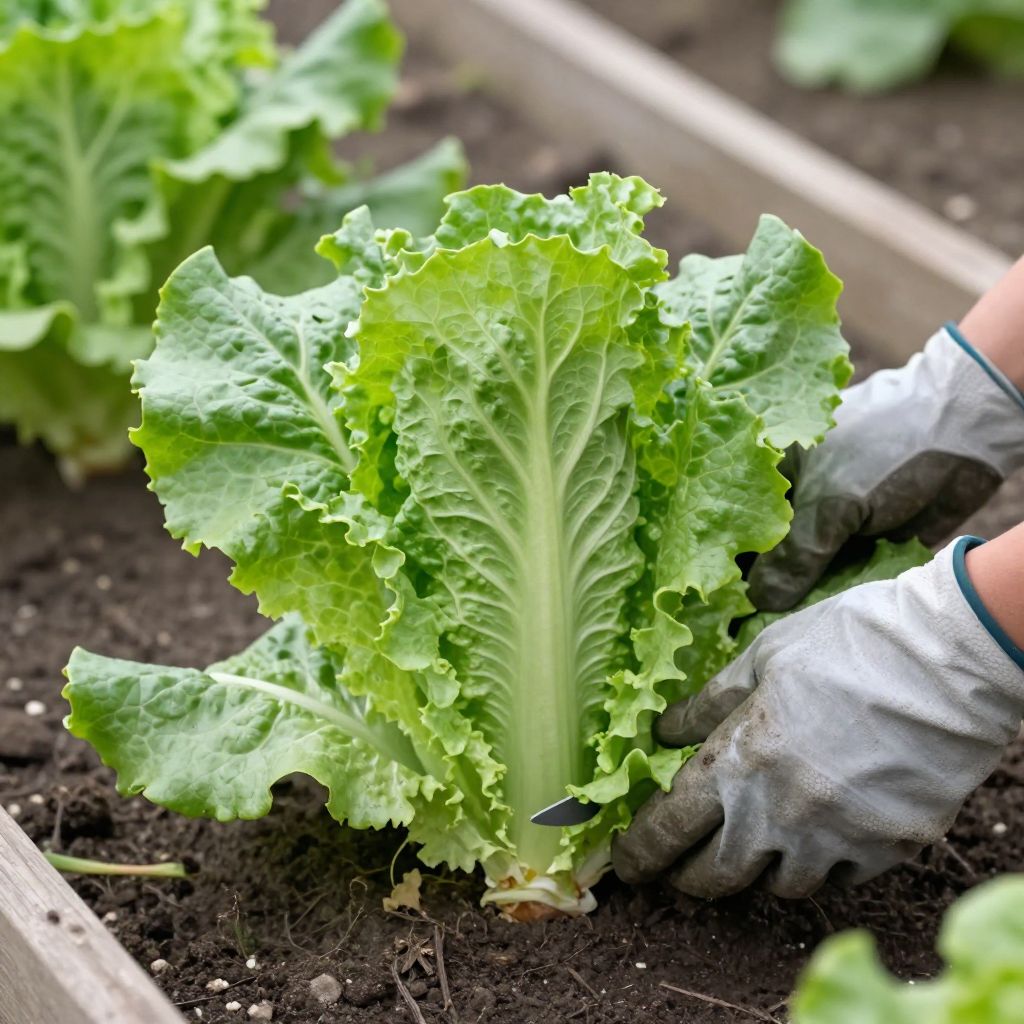
If you’re wondering when to harvest romaine lettuce, the best answer is: pick it when the heads are firm, full-sized, and before the plant starts to bolt or turn bitter. You can also harvest outer leaves earlier for a longer picking window. Timing matters because romaine quality changes quickly once warm weather arrives.
The right harvest stage depends on variety, weather, and how you want to use the lettuce. With a little observation, you can catch romaine at its crispest and avoid the disappointment of tough, bitter leaves.
When to harvest romaine lettuce?
Harvest romaine lettuce when the head feels well developed but still tender, usually before the center elongates or a flower stalk starts forming. For many garden-grown plants, that means picking at a usable size rather than waiting for maximum size. In warm weather, harvest promptly because romaine can turn bitter and bolt quickly.
How to tell romaine lettuce is ready
Romaine is ready when the leaves are upright, layered, and have a crisp texture. A mature head is often 8 to 12 inches tall, but size alone is not the only clue.
Look for these signs
- Firm, tight center: The inner leaves should feel substantial, not loose and floppy.
- Good leaf length: Outer leaves are long enough to use without being overly coarse.
- Fresh color: Leaves look deep green and healthy, not dull or yellowing.
- No bolting signs: The center is not stretching upward into a stalk.
- Mild flavor: Leaves taste sweet or pleasantly crisp, not sharply bitter.
If you are unsure, taste one outer leaf. Flavor is one of the most reliable harvest clues, especially when weather changes quickly.
Harvesting romaine at different stages
Baby romaine
You can begin harvesting baby leaves when they are large enough to handle, often a few inches long. This gives you tender greens for salads and helps thin crowded plants.
Full heads
For a full head, wait until the plant has a solid shape and the inner leaves have filled out. Harvest before the plant starts sending up a tall center stalk, which is a sign it is moving toward flowering.
Outer-leaf picking
If you want a longer harvest period, pick the outer leaves first and leave the center growing. This method works well if you only need a few leaves at a time and want the plant to keep producing.
Best time of day to harvest
Harvest romaine in the cool part of the day, ideally early morning. Leaves are usually crisper then, and the plant loses less moisture. If morning is not possible, late afternoon or evening is better than the heat of midday.
Try to avoid harvesting right after a hot, sunny spell if you can. Heat-stressed lettuce is more likely to taste bitter and wilt quickly after cutting.
How to harvest romaine lettuce cleanly
Use clean scissors, garden snips, or a sharp knife to make a neat cut. Clean tools reduce bruising and help keep the plant and nearby greens healthier.
- Check the plant for maturity and any signs of bolting.
- Choose either the whole head or the outer leaves.
- Cut outer leaves near the base, leaving the center intact.
- For a full head, cut the plant just above the soil line.
- Rinse gently and cool the leaves soon after harvesting.
If you harvest the whole plant, pull it only if the roots come out easily and you do not need the bed for another crop immediately. Otherwise, cutting at soil level is usually cleaner and less disruptive.
What happens if you harvest too late?
Late-harvest romaine often becomes tougher, more bitter, and less juicy. The leaves may also become more upright and the center may stretch upward as the plant bolts. Once bolting begins, the quality drops fast.
Common late-harvest problems
- Bitter flavor: Often caused by heat, age, or stress.
- Loose heads: The plant may have outgrown its best eating stage.
- Stalky center: A sign the plant is preparing to flower.
- Wilting after cutting: Usually from harvesting during heat or not cooling quickly enough.
If your romaine is already bolting, harvest immediately. Even if the texture is not perfect, it is usually better to pick it than to let it decline further.
How growing conditions affect harvest timing
Romaine matures faster in warm weather and more slowly in cool weather. That means the same variety may be ready at very different times depending on the season and your local climate.
Sunlight and temperature
Romaine grows best with plenty of light, but intense heat can shorten the harvest window. In hotter regions or late spring conditions, watch plants closely because they can move from tender to bitter very quickly.
Water and soil moisture
Even moisture helps romaine stay crisp. Dry spells can make leaves more rigid and bitter, while soggy soil can weaken roots and reduce quality.
- Keep soil evenly moist, not waterlogged.
- Use compost to improve soil structure and moisture retention.
- Make sure the bed drains well so roots do not sit in wet soil.
Stress from drought, heat, or poor drainage can all shorten the ideal harvest period.
Harvesting tips for container-grown romaine
Romaine in pots can be ready a little sooner or later than garden-bed plants depending on container size, sun exposure, and how quickly the pot dries out. Smaller containers dry faster, which can speed stress and bolting.
Container harvest checks
- Check moisture often, especially in warm weather.
- Harvest promptly once the head is usable.
- Do not let pots bake in full afternoon sun if temperatures are high.
- Use a deep enough container so roots have room to develop.
Because container plants can dry out quickly, they may need more frequent attention than bed-grown lettuce. That makes harvest timing especially important.
Can you harvest romaine more than once?
Yes, if you harvest by taking outer leaves and leaving the center intact, the plant may continue producing for a while. This is often called cut-and-come-again harvesting. It works best when plants are healthy and weather is still cool.
However, once romaine begins to bolt or the leaves become coarse, repeated harvesting is less useful. At that point, remove the plant and replant the space if the season allows.
Common mistakes to avoid
- Waiting for oversized heads: Bigger is not always better with romaine.
- Ignoring bolting signs: A stretched center means quality is declining.
- Harvesting in midday heat: Leaves wilt faster and may taste less sweet.
- Cutting with dull tools: Bruised leaves spoil faster.
- Letting plants dry out too much: Stress can make lettuce bitter.
If your goal is tender, crisp romaine, it is usually better to harvest a little early than a little late.
What to do after harvesting
Handle romaine gently after cutting. Shake off soil, rinse if needed, and cool it quickly. Store it in the refrigerator loosely wrapped or in a breathable container so it stays crisp longer.
If you harvested the whole plant, clear the bed and consider replanting with another cool-season crop if your weather still suits lettuce, spinach, or similar greens.
Conclusion
The simplest rule for when to harvest romaine lettuce is to pick it when the head is full, crisp, and still tender, before bolting starts. Check plants often in warm weather, harvest in the cool part of the day, and use a clean cut for the best texture. If you want to keep learning about leafy greens, you may also enjoy reading about growing lettuce in the garden and how to harvest lettuce leaves.